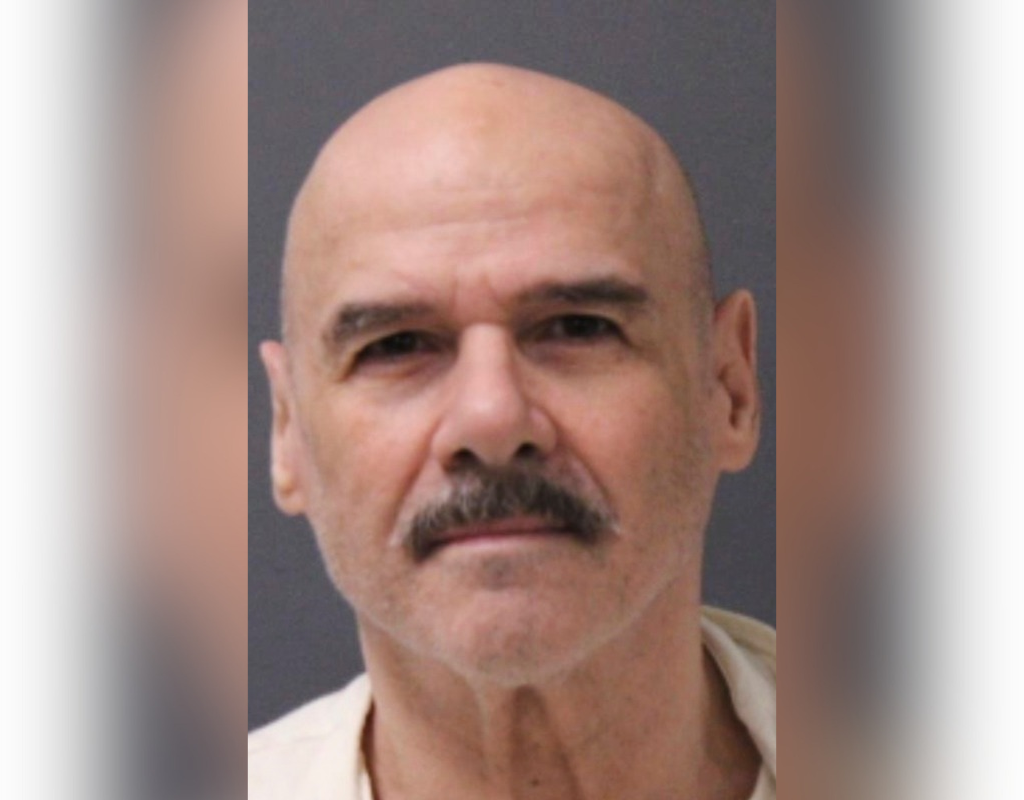
When a lethal injection in Texas stretches past the sixty-minute mark while a condemned man audibly moans in agony on the gurney, the state’s Department of Criminal Justice routinely calls the procedure routine. That administrative disconnect exposes a systemic failure at the heart of American capital punishment. The prolonged suffering observed in the Huntsville death chamber is rarely an unpredictable medical freak accident; it is the predictable outcome of deteriorated prison veins, secretive compounding pharmacy supply chains, and an execution team operating without genuine clinical oversight.
The Anatomy of a Prolonged Lethal Injection
To understand why a Texas execution can drag on for an hour, you have to look closely at the basic mechanics of intravenous access. Unlike a standard hospital operating room where board-certified anesthesiologists establish arterial or central venous lines using ultrasound guidance, prison execution teams rely on technicians working under extreme legal, logistical, and temporal pressure.
The procedure begins long before the viewing room curtains are drawn back for media witnesses and victim families. Behind closed doors, members of the execution tie-down team must locate two usable peripheral veins—one primary and one backup—to deliver a massive, lethal bolus of pentobarbital.
Finding a viable vein sounds simple on paper. In practice, it is often a nightmare. Decades of incarceration take a severe physiological toll on the human body. Many condemned inmates enter death row with histories of intravenous substance abuse that left deep scar tissue along their forearms and antecubital fossae. Others spend twenty or thirty years living in cramped cells with limited movement, poor circulation, and chronic dehydration. Hypertension, diabetes, and age further collapse peripheral vasculature, turning once-resilient blood vessels into brittle, rolling threads that blow out the moment a large-bore catheter pierces the wall.
When peripheral access fails, technicians probe repeatedly. Needle sticks accumulate in the arms, hands, feet, and ankles. Each failed attempt causes localized hematoma, swelling, and intense physical pain. If the team cannot secure a stable peripheral line, they are forced to attempt a femoral cutdown or a central line placement in the groin or neck—invasive medical procedures that carry high risks of error when performed by personnel who do not practice clinical medicine daily.
Even after a catheter is taped into place, the danger of mechanical failure remains high. If the needle slips out of the vein wall during the injection—a complication known as infiltration or extravasation—the caustic chemical solution pumps directly into surrounding muscle and subcutaneous tissue instead of entering the bloodstream. Instead of rapid unconsciousness, the inmate experiences a sensation akin to liquid fire spreading beneath the skin while remaining fully awake and able to vocalize their distress.
What Pentobarbital Actually Does to the Body
Texas transitioned from a traditional three-drug cocktail to a single-drug protocol using pentobarbital in 2012, promising a faster, cleaner, and more humane process. Pentobarbital is a fast-acting barbiturate designed to depress the central nervous system, halt brain activity, and induce respiratory arrest. When administered properly in a clinical setting, high doses cause unconsciousness within seconds.
However, the pharmacology of a massive lethal dose behaves differently when compromised by compromised vascular access or degraded chemical potency. As pentobarbital enters the bloodstream in large quantities, it triggers immediate physiological shock.
- Flash Pulmonary Edema: Autopsy reports from executions across the United States repeatedly reveal that high-dose barbiturates cause fluid to rush violently into the air sacs of the lungs. Medical experts compare the physical sensation to drowning from the inside out.
- Vocalization and Agonal Breathing: Before total brain stem death occurs, the body often exhibits severe involuntary reflexes. Gasping, throat clearing, groaning, and sustained moaning occur as the airway fills with fluid and the diaphragm spasms against failing oxygenation.
- Delayed Absorption: If the intravenous line is partially obstructed, kinked, or infiltrated into soft tissue, the drug trickles rather than floods. The inmate lingers in a twilight state of partial sedation and acute physical trauma, stretching a process meant to take ten minutes into an agonizing ordeal lasting an hour or longer.
Prison officials frequently dismiss moans and gasps as unconscious muscle twitches or simple snoring. Yet independent forensic pathologists who have reviewed execution logs and post-mortem lung weights consistently point out that conscious suffering cannot be ruled out when the execution team fails to perform basic consciousness checks—such as applying a sternal rub or checking pupillary reflexes—before and during the drug administration.
The Secrecy Shield and Compounding Pharmacies
Where does Texas get its execution drugs? Nobody outside a tight circle of state officials is allowed to know.
For decades, states purchased FDA-approved sodium thiopental and pentobarbital directly from major pharmaceutical manufacturers. That supply chain collapsed in the early 2010s when European and American drugmakers instituted strict distribution controls, refusing to allow their products to be used in capital punishment. Facing an empty medicine cabinet, the Texas Legislature passed sweeping secrecy laws shielding the identities of lethal injection suppliers from public records requests, defense attorneys, and even the courts.
Forced into the shadows, the Texas Department of Criminal Justice (TDCJ) turned to unregulated compounding pharmacies. Unlike commercial pharmaceutical manufacturers, compounding pharmacies do not produce FDA-approved medications. Instead, they mix raw active pharmaceutical ingredients from scratch in small batches.
This shift introduced glaring quality control vulnerabilities into the Huntsville death chamber:
- Sub-potent Batches: Compounded drugs can lose potency rapidly if improperly formulated or stored outside strict temperature ranges. Weakened pentobarbital takes significantly longer to depress the central nervous system, extending the window of pain.
- Particulate Contamination: Improper filtration during compounding leaves microscopic solid particles suspended in the liquid. When injected, these particles irritate blood vessel linings, cause excruciating pain at the injection site, and trigger localized clotting that blocks the IV line mid-execution.
- Unstable pH Levels: Pentobarbital sodium is naturally alkaline, typically sitting around a pH of 9.5 to 11. If a compounding pharmacist fails to buffer the solution accurately, the liquid becomes caustic enough to burn venous tissue on contact, causing severe burning pain before the sedative effect reaches the brain.
Because Texas state law treats supplier information as a closely guarded state secret, independent chemists cannot inspect the facilities making the drugs. Defense lawyers cannot verify expiration dates, storage logs, or sterility testing before their clients are strapped to the gurney. When an execution goes wrong and stretches for an hour, the state investigates itself behind closed doors and routinely clears its own staff of any wrongdoing.
Why Texas Remains the Epicenter of Execution Controversies
Texas carries out more executions than any other state in the country, operating a streamlined judicial and correctional pipeline built specifically to move capital cases from conviction to the Walls Unit in Huntsville. That high volume creates institutional momentum—and dangerous complacency.
Other states have paused executions for years after experiencing a single botched procedure. When botched lethal injections occurred in Arizona, Ohio, and Oklahoma—resulting in inmates gasping, writhing, and taking up to two hours to die—governors and state attorneys general ordered external commissions, overhauled protocols, or halted executions altogether.
Texas operates differently. In Huntsville, the machinery rarely stops for self-reflection. When media witnesses report that an inmate groaned in pain for minutes on end, or that the curtain remained closed for forty-five minutes while unseen technicians struggled to find a vein, TDCJ spokespeople issue brief statements asserting that the execution proceeded according to protocol.
This institutional insulation relies on three pillars:
- Judicial Deference: Federal courts, bound by strict Supreme Court precedent, set an extraordinarily high bar for Eighth Amendment claims. To halt an execution on grounds of cruel and unusual punishment, a condemned prisoner must not only prove that the state’s method creates a substantial risk of severe pain, but must also identify a readily available, feasible alternative method that the state refuses to adopt.
- Medical Ethics Boycotts: Major medical organizations—including the American Medical Association, the American Nurses Association, and the American Society of Anesthesiologists—explicitly prohibit their members from participating in executions. Because ethical physicians refuse to enter the death chamber, states rely on contracted paramedics, phlebotomists, or corrections personnel operating outside standard medical peer review.
- Media Restrictions: Witnesses in the Huntsville viewing room are separated from the gurney by thick glass. Audio is strictly controlled via an overhead microphone that officials can switch off at any moment. Once the curtain closes, reporters have zero visibility into how many times an inmate is stabbed with needles or what resuscitation or sedation measures occur out of sight.
The Myth of the Medicalized Execution
Lethal injection was originally adopted in the late 1970s specifically to look like a peaceful medical procedure. Lawmakers wanted to distance the state from the visceral brutality of the electric chair, the gas chamber, and the gallows. By using white gurneys, heart monitors, sterile alcohol swabs, and intravenous drips, states created the visual illusion of a peaceful hospital passing.
That illusion masks a profound structural contradiction. Medicine exists to preserve life and alleviate suffering; capital punishment exists to end life on behalf of the state. When you strip away trained doctors, FDA-regulated pharmaceuticals, and clinical monitoring equipment—yet keep the syringes and IV lines—you are left with medical theater devoid of medical competence.
Concrete Accountability Standards the System Lacks
If states insist on maintaining lethal injection protocols, hiding behind secrecy statutes guarantees that prolonged, painful executions will continue to happen. Eliminating these catastrophic failures requires dismantling the administrative opacity surrounding the death chamber and enforcing basic forensic transparency:
- Repeal Secrecy Statutes: States must disclose the identity of compounding pharmacies, batch testing certificates, potency assays, and expiration logs prior to any scheduled execution. Public scrutiny is the only reliable check on chemical quality when FDA oversight is absent.
- Mandate Independent Ultrasound Guidance: Protocols must require pre-execution vascular mapping using portable ultrasound technology to prevent blind, repeated needle punctures and verify deep venous placement before any chemical enters the tubing.
- Require Unedited Audio and Video Recording: Every phase of the execution—from the moment the prisoner enters the chamber until death is pronounced—must be recorded on continuous, unedited video and audio preserved for judicial review, eliminating the blind spots created by viewing-room curtains.
- Enforce Mandatory Autopsies and Toxicology: Independent medical examiners outside the correctional system must perform full autopsies, lung weight measurements, and post-mortem blood toxicology panels on every executed prisoner to detect flash pulmonary edema or sub-therapeutic drug levels.
Until lawmakers force the death chamber into the light, the state will continue calling an hour of audible agony a standard procedure.