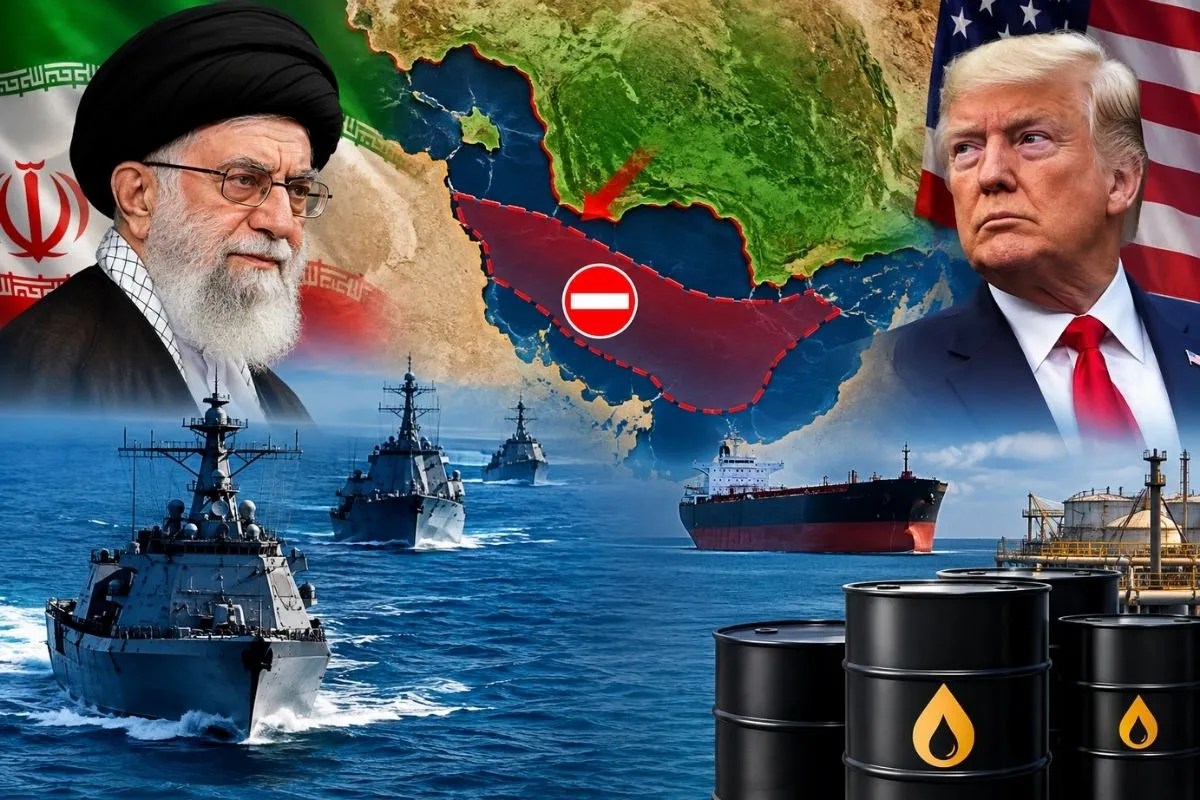
The global energy trade lives on a knife-edge, and the blade is currently resting against the Strait of Hormuz. When Mohsen Rezaei, secretary of Iran’s Supreme National Security Council, announced plans for a sprawling restricted maritime zone adjacent to this critical chokepoint, international shipping desks reacted with immediate, quiet panic. Tankers dropped anchor in open waters, insurance underwriters hastily recalculated risk premiums, and energy futures climbed. Yet beneath the immediate panic over oil supply disruptions lies a more complex structural reality that few analysts are willing to unpack. This is not merely a sudden geopolitical outburst. It is the logical culmination of a long-term strategy of maritime coercion, economic retaliation, and a total breakdown of diplomatic guardrails in the Persian Gulf.
To understand the weight of this announcement, one must look past the theatrical language coming out of Tehran and Washington. The Strait of Hormuz handles roughly a fifth of the world's petroleum liquids consumption and a significant share of liquefied natural gas. When transit numbers drop from historical norms of over a dozen daily commercial transits down to a skeletal trickle, the shock waves do not stay local. They register immediately at fuel pumps from Mumbai to New York.
The Architecture of the Restricted Zone
The mechanics of Iran's proposed exclusion zone reveal an intent to institutionalize control over maritime traffic rather than simply close the waterway outright. According to statements broadcast by state media, the designated zone will stretch outward from the line established by the ongoing United States naval blockade, pushing deep into sectors of the Persian Gulf.
Vessels caught within this administrative net face severe penalization, explicitly targeted by Iranian sanctions lists. This creates a bizarre legal and logistical purgatory for shipowners. If a commercial master obeys the United States naval blockade, they risk incurring the wrath and direct kinetic retaliation of Tehran's military apparatus. If they attempt to steam through unauthorized channels, they face interdiction.
Simultaneously, Tehran has moved forward with bilateral arrangements with Oman to map out an alternative international transit corridor running primarily through Omani and Iranian territorial waters. Under this framework, management and entry control would fall under Iranian supervision. This maneuver serves a dual purpose. It attempts to bypass traditional shipping lanes while carving out a legalistic pretext that shifts the blame for navigation blockages onto American enforcement policies.
The Illusion of Clean Bypasses
Market commentators frequently point to regional oil pipelines as an easy safety valve during Persian Gulf crises. This represents a dangerous misunderstanding of physical infrastructure limits. While Saudi Arabia and the United Arab Emirates maintain cross-peninsula pipelines designed to export crude directly to the Red Sea or the Gulf of Oman, their effective spare capacity is severely constrained.
Imagine a hypothetical scenario where every drop of oil normally moving through tankers in the Strait of Hormuz is suddenly forced onto overland transport systems. The physical pipe diameters, pumping stations, and terminal offloading points simply cannot absorb the volume. Millions of barrels per day would instantly find themselves stranded without an outlet.
Furthermore, the pipeline routes are themselves vulnerable to regional asymmetric warfare and political friction. Relying on them as a permanent substitute for open sea lanes is a fantasy entertained only by those far removed from the physical realities of petroleum logistics. When the chokepoint narrows, global supply contracts break down, regardless of how much oil sits underground in the Arabian Peninsula.
The Breakdown of Mediation
The timing of this escalation underscores the failure of backchannel diplomacy. Earlier arrangements brokered by regional mediators like Oman, Qatar, and Pakistan had temporarily lowered the temperature, producing a fragile framework for de-escalation. That framework disintegrated under the weight of mutual recriminations.
Washington's persistent enforcement of an economic blockade against Iranian petroleum exports, paired with active military strikes on tankers, left Tehran with few non-military levers to pull. When an economy faces sustained external pressure aimed at zeroing out its primary revenue source, weaponizing geography becomes an expected defensive reflex.
The Iranian leadership has made it clear that normal transit operations will not resume until the enforcement actions orchestrated by Western navies come to a complete halt. Because neither Washington nor Tehran is willing to blink first, the Strait remains a militarized zone where commercial vessels are treated as geopolitical proxies.
Economic Fallout Across Asia
While Western officials frequently debate the domestic political fallout of higher fuel prices, the acute pain is concentrated elsewhere. Major Asian economies rely heavily on the unhindered flow of hydrocarbons through this specific corridor.
India, for instance, imports the vast majority of its crude requirements, with a massive proportion passing directly through the threatened waterway. Even when special diplomatic exemptions or informal understandings prevent direct toll collections on specific friendly nations, the inflationary pressure of global benchmark spikes hits importing nations indiscriminately. Refineries face higher feedstock costs, petrochemical sectors contract, and national trade deficits widen.
The assumption that regional conflicts can be quarantined to the immediate combat zone ignores the unified nature of modern commodity pricing. A barrel of Brent crude is priced on global sentiment, risk, and insurance availability. When insurance underwriters refuse to issue policies for vessels entering the upper Gulf without extortionate premiums, those costs bake permanently into the global supply chain.
The Long-Term Cost of Maritime Fragmentation
What we are witnessing is the steady erosion of the post-war order governing freedom of navigation. For decades, international trade relied on the foundational premise that vital straits and international waters would remain open to commercial shipping during regional disputes.
By turning the approaches to the Strait of Hormuz into a patchwork of restricted zones, declared exclusion lines, and state-managed corridors, the conflict has established a dangerous precedent. Other regional powers watching this standoff take note of how effectively maritime disruption can alter strategic calculations.
The situation cannot be resolved through military escort operations alone. Escorts can manage individual convoys, but they cannot restore the baseline confidence required for global commerce to function efficiently. Until a durable political settlement addresses the underlying security anxieties and economic sanctions choking the Gulf, maritime traffic will remain hostage to the next escalation cycle. The ships anchored off the coast are waiting for a diplomatic breakthrough that currently shows no sign of materializing.