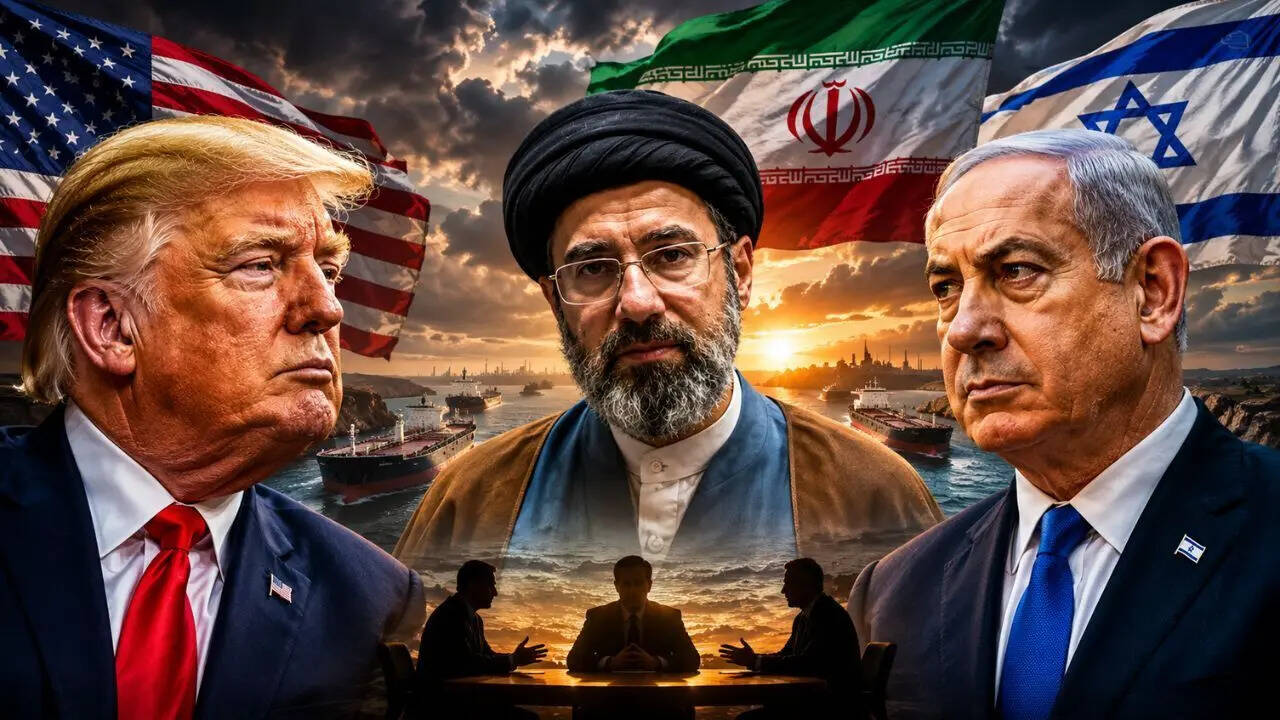
The narrative currently framing the White House press briefings is deceptively clean. If you listen to the sudden flurry of social media posts and official statements, Washington and Tehran are on the precipice of a diplomatic masterstroke that will simultaneously close a three-month-old war and reopen the world's most vital energy chokehold. This polished optimism is a mirage. The reality inside the Persian Gulf is a tangled web of maritime standoffs, unresolved nuclear redlines, and a deeply fractured consensus among regional powers that a simple signature will not fix.
A Memorandum of Understanding, brokered through frantic, high-stakes Pakistani mediation, is reportedly sitting on the table. The public is being told that a phased withdrawal from the brink is imminent. The United States would lift its suffocating naval blockade on Iranian ports, and in exchange, the Strait of Hormuz would return to regular international commerce.
It sounds like a classic geopolitical transactional victory. It is not.
Dig beneath the surface of the optimistic statements coming from Washington, and the structural cracks in this prospective peace deal become impossible to ignore. Commercial shipping executives, naval commanders in the Arabian Sea, and state-backed media in Tehran are painting a vastly different picture of what the day after a ceasefire actually looks like. The fundamental disagreement is not about the wording of a memorandum; it is about who holds the physical keys to the global economy.
The Sovereignty Trap in the Shallows
The core friction of the current negotiations centers on a reality that the initial wave of optimistic press coverage ignored. Iran has no intention of returning to the pre-war status quo in the Strait of Hormuz.
While Washington envisions a return to unrestricted international transit without interference or financial penalties, Tehran is signaling something entirely different. State-aligned outlets, including the Fars News Agency, have made it explicitly clear that any final text preserves exclusive Iranian management over the waterway. This does not just mean patrolling for security. The Islamic Republic is asserting the right to determine shipping routes, dictate transit timing, enforce specific passage procedures, and issue mandatory permits for vessels crossing the narrow corridor.
For decades, international maritime law has treated the strait as an international highway under the doctrine of transit passage. If the emerging framework implicitly or explicitly codifies Iran's right to manage the strait like a private toll road or a sovereign canal, the geopolitical leverage shifted permanently during this conflict.
The shipping industry understands this danger. Insurance underwriters in London are already factoring this into their models. Even if a ceasefire is formally signed tomorrow, the risk premium on hulls transiting the Gulf will not vanish.
A senior maritime logistics executive, speaking on the condition of anonymity, noted that commercial fleets will not treat a signed piece of paper as a green light. They require physical safety, clear rules of engagement, and a complete cessation of asymmetric threats.
The Physics of the Chokehold
The logistical wreckage of the last three months cannot be cleared by diplomatic decree. When the conflict erupted, the effective closure of the strait triggered a global energy shockwave. Brent crude shot past $103 a barrel, sending inflationary ripples through manufacturing, agriculture, and retail sectors worldwide.
The immediate economic damage is visible, but the structural delays are what will paralyze the recovery. Hundreds of commercial vessels, including massive oil tankers and critical fertilizer transports, have spent weeks trapped in the Persian Gulf or anchored outside the enforcement zones.
The physical environment of the strait has become a minefield. Iranian patrol forces utilized fast-attack craft to deploy sea mines throughout the shipping channels. While the United States military has engaged in mine-clearing operations, the complete sanitization of these waters is a painstaking process.
The timeline for a true economic reset is measured in quarters, not days. The leadership of the Abu Dhabi National Oil Company recently warned that even under a best-case diplomatic scenario where the war ends immediately, full, normalized energy flows through the strait are unlikely to resume before the first half of 2027.
The supply chains are broken. Tanker schedules are inverted, crews are stranded, and the physical infrastructure of several regional ports has suffered damage from localized defensive strikes.
The Nuclear Redline and the Shadow Players
The most volatile element of this negotiation is the arbitrary timeline attached to the most complex issue on earth. The draft agreement allegedly splits the crisis into distinct phases. The immediate focus is an economic trade-off: the U.S. lifts its naval blockade, and Iran permits shipping.
The actual catalyst for the war, however, is pushed down the road. The framework establishes a tight 30-to-60-day window to negotiate the complete dismantling of Iran's highly enriched uranium stockpile.
This is where the diplomatic choreography threatens to fall apart. Israel has maintained a fierce independence throughout the conflict. While Washington signals a willingness to entertain a phased, deliberate negotiation, Israeli leadership has reiterated that any acceptable resolution must completely eliminate the nuclear threat. This means the immediate physical removal of enriched material and the destruction of enrichment infrastructure.
A classic geopolitical mismatch is unfolding. The United States is negotiating for a stabilization of global energy markets and an orderly exit from a costly naval deployment. Israel is looking at an existential security threat that a temporary maritime memorandum does not solve. If Tehran refuses to surrender its nuclear leverage within the designated window, the entire agreement collapses, and the military option returns with higher intensity.
The Abraham Accords Gamble
There is a broader diplomatic maneuver happening behind the scenes that explains the sudden shift in American rhetoric. The White House is attempting to leverage the termination of this conflict to achieve a massive regional realignment. High-level congressional figures have openly suggested that the peace proposal should be tied to an expansion of the Abraham Accords, dangling the prospect of bringing major regional heavyweights into a formalized diplomatic relationship with Israel.
This is a high-stakes gamble. Forcing regional powers to choose between stabilizing a catastrophic maritime crisis and rewriting their long-term foreign policy architectures could alienate the exact partners needed to police a post-war Gulf.
Monarchies in the Gulf are practical. Their primary concern is the immediate stop to the disruption of their primary export routes. Forcing a grand ideological realignment as a condition for maritime peace introduces a layer of diplomatic friction that could stall the talks entirely.
The White House has publicly adopted a posture of strategic patience, stating that negotiators should not rush and asserting that time is on the American side. The economic indicators suggest otherwise. Every week the blockade remains in effect, and every day the strait remains contested, global supply chains fray further. The American public is being primed for a quick, decisive foreign policy win, but the technical reality on the water points toward a long, unstable, and highly contested transition.


