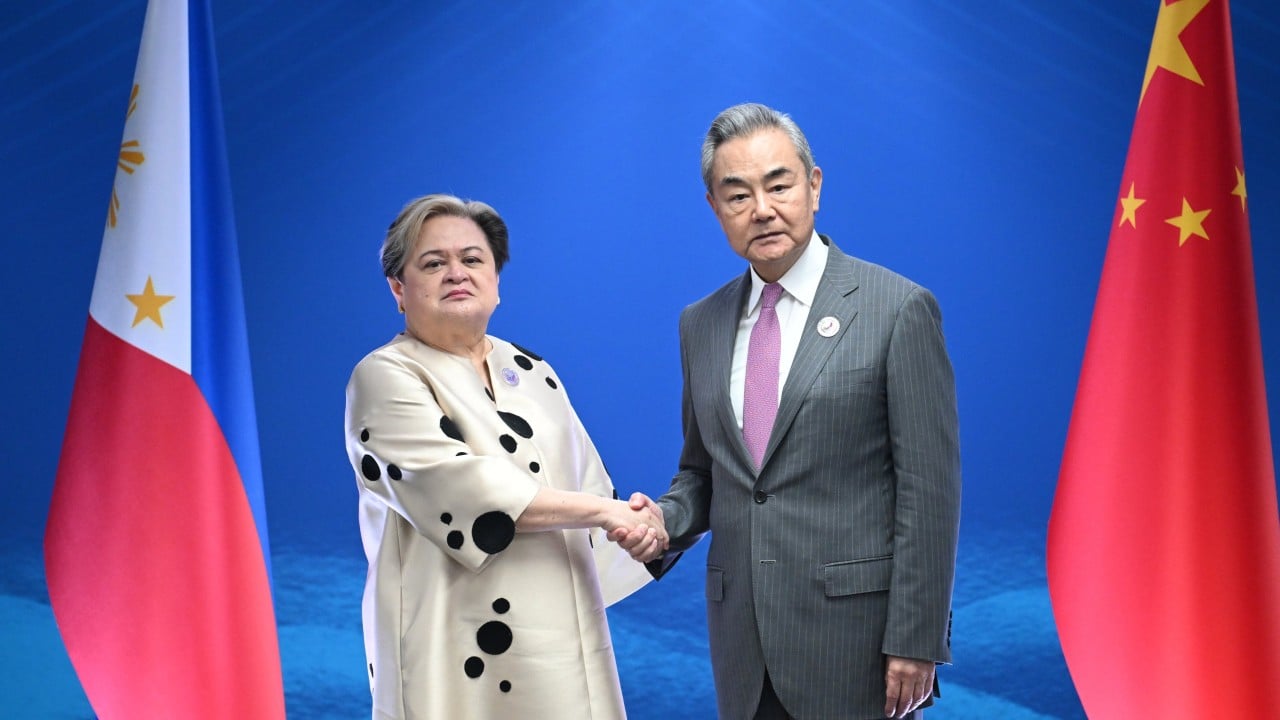
Negotiations for the South China Sea Code of Conduct (COC) between the Association of Southeast Asian Nations (ASEAN) and China are currently locked in a cycle of institutional exhaustion, where accelerated monthly meetings mask an absolute vacuum on core legal disputes. Despite repeated diplomatic assertions from foreign ministers pointing toward a year-end completion deadline, the underlying architecture of the agreement remains entirely fractured over four non-negotiable structural roadblocks: geographic scope, legal enforceability, the shadow of the 2002 Declaration on the Conduct of Parties, and the definition of military self-restraint.
For over two decades, diplomats have treated this text as a mythical anchor capable of stabilizing one of the planet's most volatile maritime environments. Decades of continuous dialogue have produced little more than diplomatic theatre. While negotiators burn through travel budgets and hotel conference rooms, facts on the ocean floor change permanently.
The Anatomy of Institutional Exhaustion
Fatigue in international diplomacy is rarely born from a sudden collapse. Instead, it accumulates through procedural decay. Since the formal agreement to target a final conclusion, bureaucratic machinery has substituted motion for progress. Monthly negotiating rounds have become a badge of honor for rotating ASEAN chairs, yet each session circles the same circular drainage ditch of semantics.
Consider the fundamental disagreement over legal status. Manila and several claimant states insist that the text must carry binding legal weight anchored to the United Nations Convention on the Law of the Sea (UNCLOS). Beijing consistently views a binding multilateral framework as an unacceptable restriction on its historic claims. It prefers a voluntary political document that avoids third-party adjudication.
Bridging this gap requires squaring a geometric circle. One side demands accountability backed by international law. The other demands complete operational autonomy shielded by bilateral asymmetry.
The Mirage of Fast-Tracked Deadlines
Public communiqués issued from diplomatic summits routinely highlight a renewed sense of urgency. Behind closed doors, veteran observers note that velocity does not equal direction. The decision to increase meeting frequency has compressed review cycles, but it has not altered national red lines.
Take, for instance, the ongoing disputes concerning resource extraction and joint military exercises. Proposals floated by major regional powers often include clauses requiring prior notification or veto mechanisms over external partnerships. For smaller claimant states whose economic survival depends on offshore energy development, accepting such terms amounts to signing away sovereign jurisdiction.
When a negotiating text spends twenty years trapped in drafting brackets, the document ceases to be a policy instrument. It becomes a diplomatic security blanket. Officials cling to the process because admitting failure would force an immediate, dangerous recalibration of regional security policies.
Parallel Realities on the Water
While bureaucrats debate commas in air-conditioned halls, maritime reality has rendered the future text obsolete before signature. Vietnam continues expanding its footprint through aggressive dredging and island-building campaigns in the Spratlys. The Philippines actively secures external defense pacts with extra-regional partners like Australia, Japan, and the United States. China maintains a persistent coast guard and maritime militia presence enforcing unilateral resource boundaries.
These actions tell the real story. Capitals across the region treat the code of conduct negotiations as a diplomatic containment strategy. It keeps channels open while everyone prepares for alternative outcomes.
The illusion of an impending breakthrough persists because the alternative is unpalatable. Admitting that a multilateral code cannot solve structural sovereignty disputes leaves regional security exposed to raw power dynamics. Until governments confront the structural impossibility of a consensus text built on fundamentally incompatible worldviews, the diplomatic treadmill will keep spinning.
The next maritime confrontation will not wait for a finalized draft, and every month spent chasing a phantom agreement only widens the gap between diplomatic fiction and the hard water outside.
ASEAN sees progress on South China Sea code, targets year-end conclusion
This video provides direct context on the diplomatic discussions surrounding the ongoing regional push to finalize the long-awaited maritime code of conduct.
http://googleusercontent.com/youtube_content/1