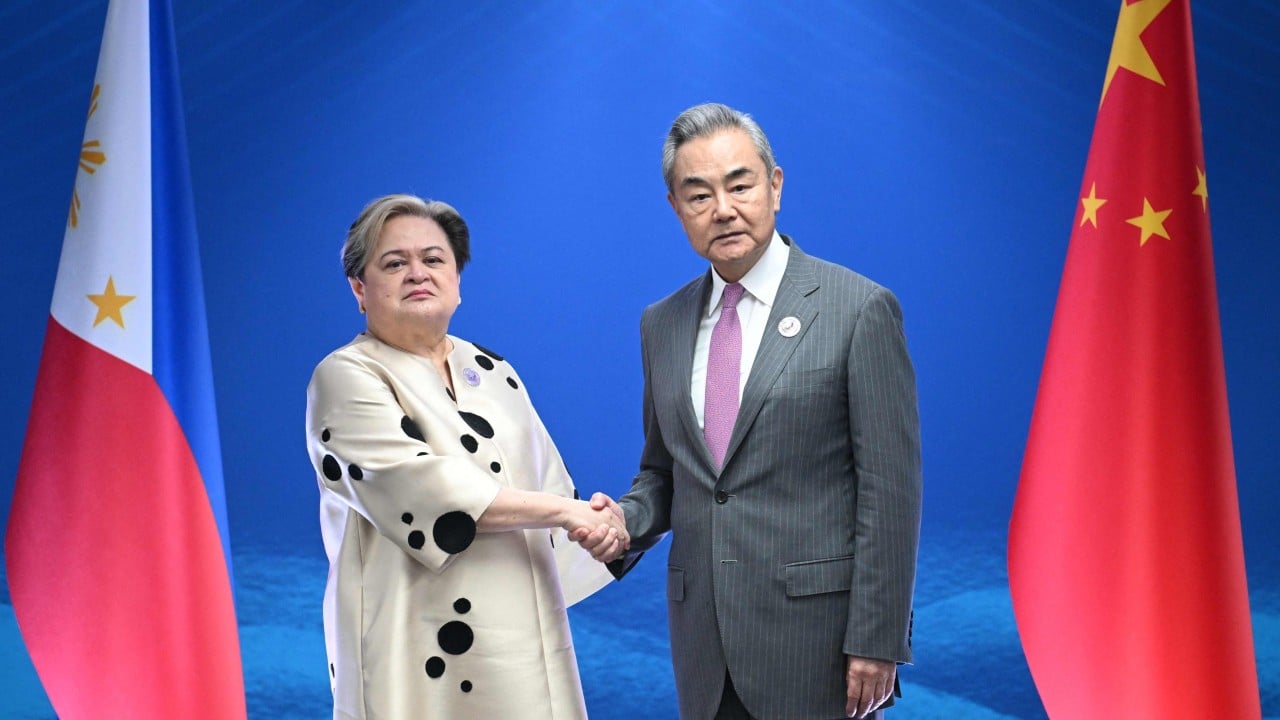
When top diplomats from China and the Philippines sat down in Manila to preach the gospel of avoiding "miscalculation" in the South China Sea, the diplomatic smiles could not disguise the scent of diesel fuel and raw fear lingering over the Second Thomas Shoal. Just forty-eight hours prior, Chinese Coast Guard personnel armed with wooden batons collided with Philippine Navy rubber boats in the shadow of the grounded BRP Sierra Madre, leaving a Filipino sailor injured and both nations summoning each other's ambassadors.
The immediate demand from both capitals is simple on paper. Prevent an accidental spark from igniting a theater-wide conflict that could draw in the United States military. Yet beneath the diplomatic platitudes lies a structural trap. Neither side can back down without compromising its core strategy. Beijing views any Philippine posture as Western-backed encroachment on its sovereign territory, while Manila sees every Chinese water cannon and ramming maneuver as an existential threat to its maritime rights under international law.
The Mirage of De-escalation at Second Thomas Shoal
Diplomatic statements issued after high-level meetings routinely celebrate dialogue as a shield against war. They call for mutual respect, restraint, and accelerated talks on a regional Code of Conduct. But out at sea, those words crumble against the reality of tactical coercion.
The mechanism of confrontation has shifted dramatically. China no longer relies solely on passive blockades or naval intimidation. Its maritime forces deploy grey-zone tactics designed specifically to test the threshold of the US-Philippines Mutual Defense Treaty without crossing into an explicit act of war. By utilizing rubber boats, steel-hulled coast guard vessels, water cannons, and hand-held weapons like batons or axes, Beijing forces Filipino personnel into a high-stakes guessing game.
A single physical mistake by a junior commander in contested waters can trigger a chain reaction that no foreign ministry communique can stop. If a Filipino sailor dies during a clash, public pressure in Manila will force President Ferdinand Marcos Jr. to demand American defensive intervention. Conversely, if Beijing retreats from enforcing its sweeping claims, the Chinese Communist Party risks appearing vulnerable on national security to its domestic audience.
+-----------------------------------------------------------------------+
|                 THE DYNAMICS OF SOUTH CHINA SEA CLASHES               |
+-----------------------------------------------------------------------+
|                                                                       |
|  [ China Coast Guard & Maritime Militia ]                            |
|        |                                                              |
|        |-- Grey-Zone Tactics (Ramming, Water Cannons, Batons)        |
|        v                                                              |
|  [ Contested Waters / Second Thomas Shoal ]                           |
|        ^                                                              |
|        |-- Resupply Missions & Patrols                                |
|        |                                                              |
|  [ Philippine Navy & Coast Guard ]                                    |
|        |                                                              |
|        +==> Risks Triggering Mutual Defense Treaty ==> [ United States ]
+-----------------------------------------------------------------------+
Why the Code of Conduct is Stuck in Neutral
For nearly two decades, the Association of Southeast Asian Nations (ASEAN) and China have pledged to finalize a binding Code of Conduct. The process remains stalled by design.
Beijing wants a framework that bans military exercises with non-regional powers and restricts foreign energy exploration in the waterway. That clause directly targets Washington's military presence and limits Southeast Asian nations from partnering with international energy conglomerates. Manila and its regional neighbors reject those terms outright, knowing that signing such an agreement would effectively surrender their sovereign rights under the 2016 Permanent Court of Arbitration ruling.
Meanwhile, the diplomatic clock keeps ticking without a real consensus on enforceability. A Code of Conduct without legal teeth or third-party arbitration mechanisms is nothing more than a paper tiger. It gives the illusion of progress while aggressive posture continues unchecked on the water.
Washington's Umbrella and the Danger of Over-Reliance
Manila’s strategy relies heavily on its ironclad alliance with Washington. The presence of high-ranking American officials and joint naval patrols is intended to deter Chinese aggression. But relying on foreign security guarantees carries its own set of complications.
- Strategic Ambiguity: While Washington repeatedly confirms that the Mutual Defense Treaty covers armed attacks on Philippine armed forces in the South China Sea, defining what constitutes an "armed attack" in grey-zone warfare remains dangerously vague.
- Escalation Management: An unintended military exchange could pull two nuclear-armed superpowers into direct confrontation over a remote, submerged reef.
- Domestic Political Shifts: Washington's attention is constantly pulled toward conflicts in Europe and the Middle East, alongside domestic political turbulence, creating anxiety in Southeast Asian capitals regarding long-term commitment.
The diplomatic machinery between Beijing and Manila is operating under maximum stress. While foreign ministers shake hands for the cameras in conference halls, ship captains on the water are staring each other down through night-vision goggles. Calling for the avoidance of miscalculation is easy. Building a security architecture that actually prevents it is something entirely different.
If Beijing and Manila cannot establish genuine, real-time crisis management channels that bypass diplomatic posturing, the next encounter at Second Thomas Shoal will not end with summoned ambassadors. It will end with casualties.