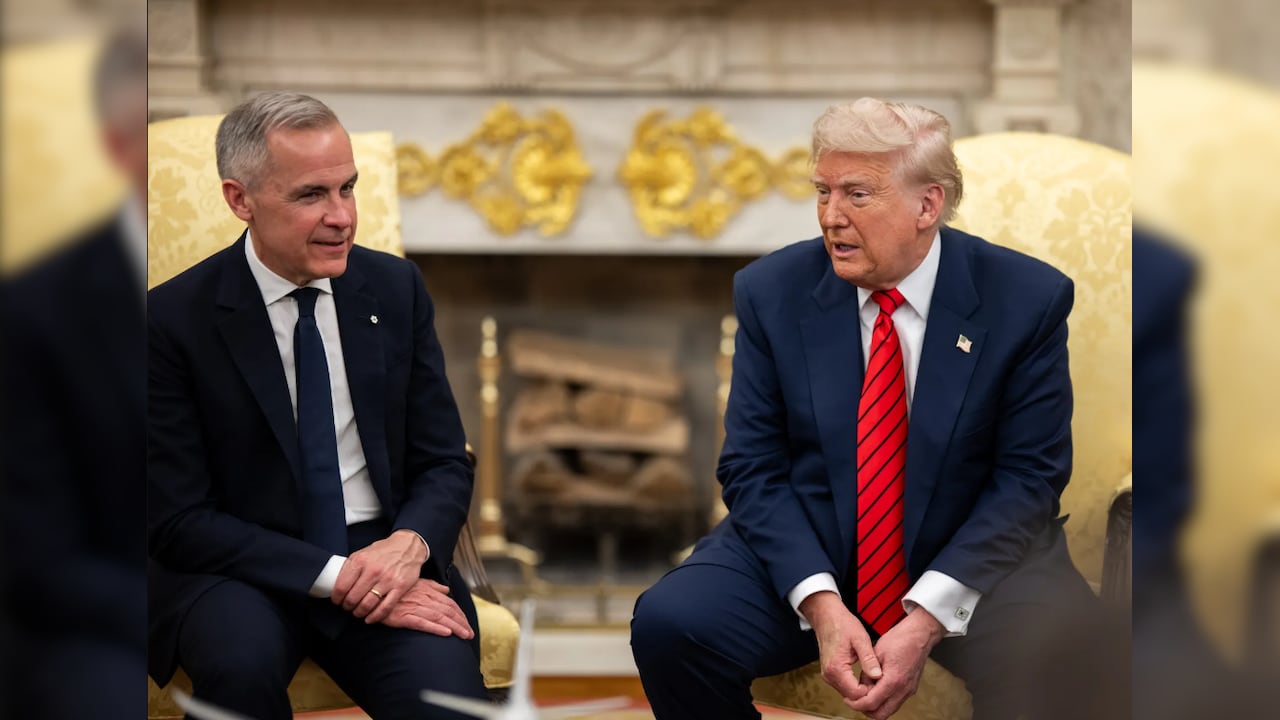
The White House has officially transmitted a high-stakes civil nuclear agreement with Saudi Arabia to Capitol Hill for its mandatory ninety-day congressional review. Under Section 123 of the Atomic Energy Act, lawmakers now possess a narrow window to evaluate a compact designed to anchor American corporate involvement in the kingdom's atomic future for the next three decades. Yet this statutory ritual masks a chaotic diplomatic reality. The pact was formally submitted while remaining shackled to an external political demand that neither Washington nor Riyadh knows how to satisfy.
President Donald Trump insists that the multi-billion-dollar arrangement will stay frozen unless the Saudi government normalizes diplomatic relations with Israel through the Abraham Accords. Riyadh, conversely, has maintained an immovable stance that any diplomatic recognition of Israel must be preceded by a credible, irreversible pathway toward Palestinian statehood—a term flatly rejected by Israeli leadership. By wedding a technical nuclear framework to an intractable regional conflict after the ink was already dry on the treaty, the administration has transformed a commercial energy agreement into a high-risk test of mutual geopolitical credibility.
The Anatomy of a Compromise
For nearly fifteen years, negotiations between Washington and Riyadh over civil nuclear technology stalled on nonproliferation standards. Past administrations pushed for the adoption of the so-called Gold Standard, which requires partner nations to explicitly renounce domestic uranium enrichment and spent-fuel reprocessing. The objective is simple. Enrichment infrastructure required to power a peaceful reactor can, with minor adjustments, be repurposed to produce weapons-grade material.
The text submitted to Congress breaks from that precedent. According to congressional disclosures and policy analyses, the final agreement omits the strict requirement for the International Atomic Energy Agency’s expanded Additional Protocol and lacks an explicit, permanent ban on domestic enrichment.
Proponents argue that refusing a deal leaves a vacuum. Beijing and Moscow stand ready to supply nuclear reactors with far fewer safeguards and zero nonproliferation leverage. Allowing American firms like Westinghouse to capture the market ensures Washington maintains eyes and ears inside a strategic sector. Critics, however, warn that softening these parameters opens a dangerous pathway toward regional proliferation, shifting the Middle East security calculus in unpredictable ways.
The Mechanics of Congressional Paralysis
Lawmakers have ninety days of continuous session to review the classified documents transmitted to Capitol Hill. Stopping the agreement is mathematically difficult. Under the statutory framework, opponents must pass a joint resolution of disapproval. Overriding the inevitable presidential veto requires a two-thirds majority in both the House and the Senate.
Given deep partisan divisions and intense lobbying from domestic energy contractors, mustering a two-thirds supermajority against the pact is a heavy lift. The administration has structured the rollout to minimize legislative interference, utilizing high-level classification to keep the granular details out of public view. Members of Congress are left scrutinizing a text where the legal permissions for commercial tech transfers clash directly with the executive branch's public posturing on foreign policy conditions.
The Normalization Deadlock
The true vulnerability of the 123 agreement lies outside the text of the treaty itself. Nuclear pacts under U.S. law merely lift legal restrictions on commercial sales; they do not force private corporations to build reactors, nor do they compel the White House to issue export licenses if political conditions sour.
By tying project implementation to the Abraham Accords, the administration has created a self-imposed trap. Saudi Crown Prince Mohammed bin Salman faces domestic and regional pressures that preclude signing a normalization deal with Israel while the war in Gaza and the broader Palestinian question remain unresolved. Israeli Prime Minister Benjamin Netanyahu faces an equally rigid political coalition that treats Palestinian statehood as a non-starter.
When two immovable objects collide, third-party agreements fracture. Capitol Hill will spend the autumn months debating nonproliferation standards, enrichment risks, and congressional oversight mechanisms that may ultimately matter very little. If neither Riyadh nor Jerusalem budges on the core territorial and diplomatic dispute, the thirty-year nuclear accord will sit on a shelf, a monument to a grand bargain that promised clean energy and regional transformation but collided with the raw reality of Middle Eastern politics.