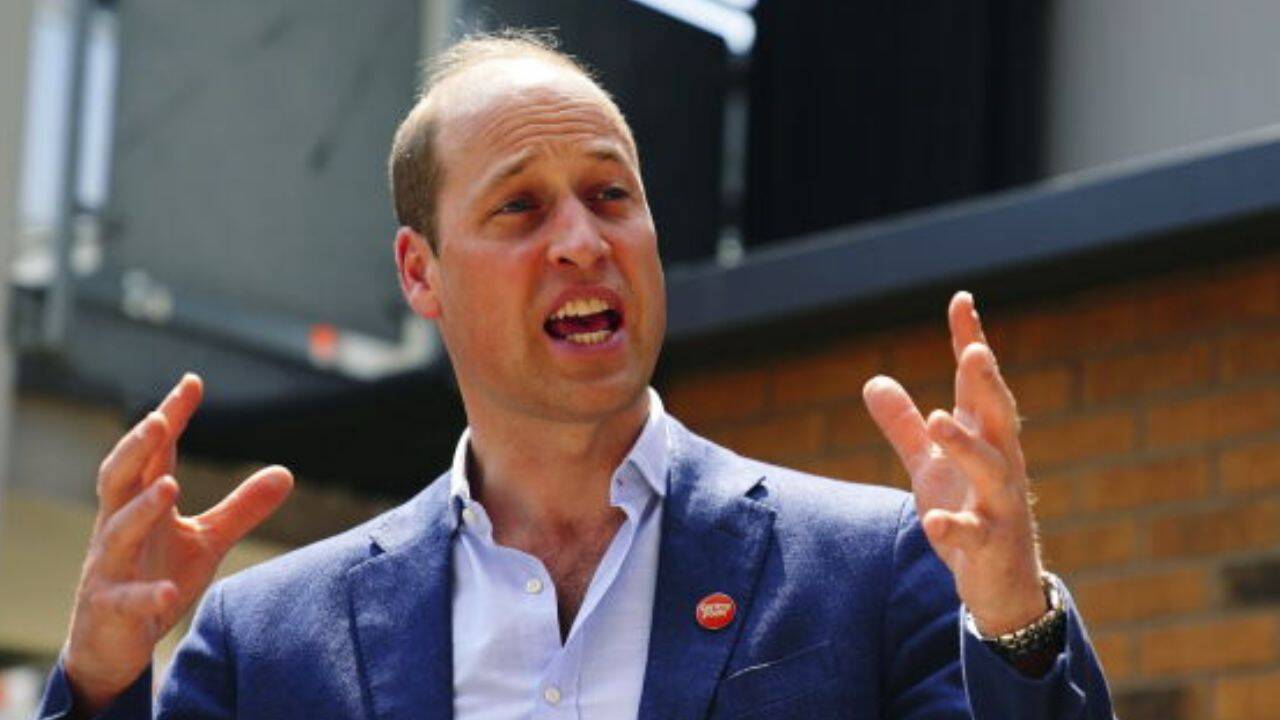
When headlines broke claiming Prince William intends to strip Prince Harry, Meghan Markle, and their children of their royal titles once he ascends the throne, the internet immediately framed the story as a petty sibling vendetta. The reality is far more structural—and legally complicated. According to claims in royal commentator Tom Sykes’s forthcoming book, Dukes of Hazard (scheduled for release in February 2027), the Prince of Wales is drafting a blueprint to convert royal titles and His or Her Royal Highness (HRH) styles from birthrights into strictly professional designations tied to active Crown duties. If enacted, non-working royals—including the Sussexes, Prince Archie, Princess Lilibet, and potentially even William’s younger children—would lose their princely status. However, Kensington Palace has explicitly rejected the book's claims as having "no factual basis," and British constitutional law makes erasing a peerage vastly harder than rewriting palace stationery.
Tabloid coverage thrives on family drama. It is easy to sell a narrative where an aggrieved older brother waits in the wings to exact revenge for Spare, the Netflix docuseries, and public criticisms of Princess Catherine. Yet looking closely at the mechanics of modern European monarchies reveals a cold, institutional logic behind the rumor. Whether William actually holds a secret dossier on his desk or Sykes is amplifying palace whispers to sell books, the debate exposes a fundamental crisis in how the House of Windsor defines its value in the twenty-first century.
The Corporate Monarchy Blueprint
For decades, the British royal family operated as an expansive, multi-generational enterprise where bloodline guaranteed status, subsidized housing, and taxpayer-funded security. King Charles III began trimming that excess long before his coronation, advocating for a "slimmed-down monarchy" centered on the direct line of succession. The blueprint described in Dukes of Hazard takes Charles’s concept and pushes it to a rigid, corporate conclusion.
Under the rumored framework, a royal title ceases to be a biological inheritance and becomes a job description. A source quoted in the reporting summed up the ethos bluntly: if you are out touring the country, handling diplomatic receptions, and taking a train to Sheffield on a wet Wednesday, you get the HRH style, an official residence, and a sovereign salary. If you opt for private enterprise, media deals, or life abroad, you walk away as a private citizen with zero institutional trappings.
This distinction solves a massive public relations headache for the Crown. Right now, the monarchy suffers from brand dilution. When non-working members trade on royal styles while operating outside palace oversight, Buckingham Palace absorbs the reputational fallout without exercising any operational control. Tying the prefix directly to active service creates an unmistakable firewall between the constitutional institution and the extended family.
The Constitutional Roadblocks Nobody Mentions
Here is where viral headlines collide with the stubborn reality of British constitutional law. Even when Prince William becomes King, he cannot simply wake up, sign a decree over breakfast, and erase every title attached to his brother’s name. The legal mechanisms governing British royal styles and peerages are split into two entirely different jurisdictions, one controlled by the sovereign and the other locked behind Parliament.
Letters Patent and the 1917 Precedent
The titles of "Prince" and "Princess," along with the HRH style, fall under the Royal Prerogative. They are governed by Letters Patent—open legal instruments issued directly by the monarch. The current rules date back to November 1917, when King George V restricted princely titles to the children of the sovereign, the children of the sovereign’s sons, and the eldest living son of the eldest son of the Prince of Wales.
Because George V created those rules via Letters Patent, a future King William V could theoretically issue new Letters Patent to rewrite them. That is precisely how Archie and Lilibet acquired their titles in the first place; as grandchildren of the monarch in the male line, they became eligible the moment Queen Elizabeth II died and King Charles III took the throne in September 2022. Similarly, Charles set a stark modern precedent in 2025 when he stripped his brother Andrew of his princely title and HRH style. Revoking the Sussexes' princely ranks and HRH styles requires no parliamentary vote. It requires ink, royal assent, and political nerve.
Why the Duke of Sussex Title is Untouchable Without Parliament
Stripping the "Duke of Sussex" title is an entirely different beast. A dukedom is not a royal style; it is a hereditary peerage granted by the Crown on the day of Harry and Meghan’s wedding in May 2018. Once conferred, a peerage becomes a form of incorporeal property protected by statute and centuries of precedent.
The monarch does not possess the unilateral power to revoke a peerage. Doing so requires an Act of Parliament—meaning bills, committee hearings, debates in the House of Commons, and approval in the House of Lords. The last time Parliament stripped peerages was through the Titles Deprivation Act 1917, which targeted British princes who fought alongside Germany during World War I.
Consider the political absurdity of asking a British Prime Minister to dedicate scarce legislative calendar time to debating Prince Harry’s marriage gift. Westminster politicians dealing with economic stagnation, healthcare backlogs, and foreign policy crises have zero appetite for turning Parliament into an arbiter of Windsor family feuds. Without legislative intervention, Harry and Meghan would remain the Duke and Duchess of Sussex even if every princely style were scrubbed from the record.
| Title or Style | Legal Mechanism | Who Holds the Power | Difficulty to Remove |
|---|---|---|---|
| Prince / Princess | Letters Patent (Royal Prerogative) | The Monarch alone | Moderate — Requires issuing new Letters Patent, but carries heavy PR fallout. |
| His / Her Royal Highness (HRH) | Letters Patent (Royal Prerogative) | The Monarch alone | Low to Moderate — Already held in abeyance by the Sussexes since 2020. |
| Duke / Duchess of Sussex | Hereditary Peerage | UK Parliament | Extreme — Requires passing a formal Act of Parliament through both Houses. |
Collateral Damage Inside the Palace Gates
The sharpest flaw in the "strictly working royals" doctrine has nothing to do with Montecito. It sits inside Kensington Palace. If William enforces an ironclad rule that non-working royals forfeit their birthright titles, the policy inevitably sweeps up his own bloodline and loyal cousins.
Look at Princess Beatrice and Princess Eugenie. Neither is a full-time working royal. Both hold private-sector careers, raise families away from the daily royal rota, and receive no funding from the Sovereign Grant. Yet both have stepped up occasionally for charitable patronages and garden parties when the senior ranks thinned out due to illness. Under a rigid "duty-or-nothing" system, Beatrice and Eugenie would be stripped of the titles they have held since birth.
More importantly, the rule directly impacts Princess Charlotte and Prince Louis. While Prince George’s trajectory as heir apparent is locked in, William has reportedly spoken about wanting his younger children to have the freedom to pursue independent careers without the suffocating weight of royal expectation. Framing title removal as "liberation" for Charlotte and Louis makes sense on paper. In practice, however, asking an adult prince or princess to formally renounce their birthright creates an awkward tiered system within the nuclear family—one sibling elevated as a sacred constitutional figure, the others demoted to ordinary citizens the moment they take a corporate job.
European monarchies have navigated this exact minefield with mixed results. In 2022, Queen Margrethe II of Denmark stripped the princely titles from the four children of her younger son, Prince Joachim, effective January 2023. She argued it would allow them to shape their own lives without institutional constraints. The result was an immediate, public family meltdown, with Joachim telling Danish media his children felt "ostracized" and "hurt." King Carl XVI Gustaf of Sweden pulled off a smoother version in 2019 by removing his grandchildren (outside the direct line) from the Royal House, though he allowed them to keep their personal prince and princess titles as courtesy styles.
Evaluating the Source Behind the Storm
Journalism requires interrogating the messenger as closely as the message. The current wave of headlines stems from a single origin point: Tom Sykes, a veteran royal correspondent and former European editor-at-large for The Daily Beast, promoting his book Dukes of Hazard.
Sykes is deeply plugged into aristocratic circles, and his reporting reliably reflects the mood among a specific faction of British establishment insiders who view the Sussexes as an existential threat to the Crown. However, anonymous quotes from "a friend of William" are not official palace policy.
Kensington Palace rarely engages with biographical gossip, typically hiding behind its standard boilerplate: "As a matter of policy, we don't comment on books or claims made within them". Notably, in this instance, palace officials went further, explicitly pushing back against the narrative and stating that claims William plans to strip the Sussexes' styles have "no factual basis".
When an institution that notoriously refuses to dignify rumors breaks protocol to issue an outright denial, pay attention. It signals one of two things: either the story is genuinely fabricated, or the palace recognizes that broadcasting plans for a future purge makes William look vindictive at the exact moment he needs to project statesmanship.
The Strategic Paradox of Stripping Harry's Titles
Assume for a moment that Kensington Palace’s denial is merely diplomatic cover, and William truly intends to rewrite the Letters Patent on day one of his reign. Would executing that plan actually help the monarchy?
Strategically, it hands Harry and Meghan an unbeatable victim narrative. Since stepping back in 2020, the Sussexes’ commercial relevance has fluctuated whenever they pivot away from royal grievances toward lifestyle branding or philanthropy. Stripping their titles—and especially stripping the titles of Archie and Lilibet, who had no say in their parents' departure—would instantly reignite global sympathy and validate every claim Harry made in Spare about a cold, ruthless institution punishing the "spare".
It also achieves virtually nothing in practical terms. Harry and Meghan have not used their HRH styles publicly since the Sandringham Summit agreement in early 2020. They receive zero taxpayer funds from the Sovereign Grant. They pay market-rate commercial bills for their private security. Removing the word "Prince" from Harry’s passport would not stop him from booking speaking engagements, producing television shows, or launching charitable initiatives. In fact, removing the official royal anchor might liberate the couple from the remaining unspoken rules of royal decorum, freeing them to monetize their story without restraint.
For a future King William, the most devastating weapon isn't a constitutional purge—it is indifference. Leave the titles intact on paper, keep the Sussexes off the Buckingham Palace balcony, and let time and distance erode their institutional relevance naturally. By the time Prince George, Princess Charlotte, and Prince Louis reach adulthood, the public’s attention will naturally gravitate toward the next generation of working royals anyway. A king secure in his crown does not need to rewrite ancient law to prove who holds the power.


