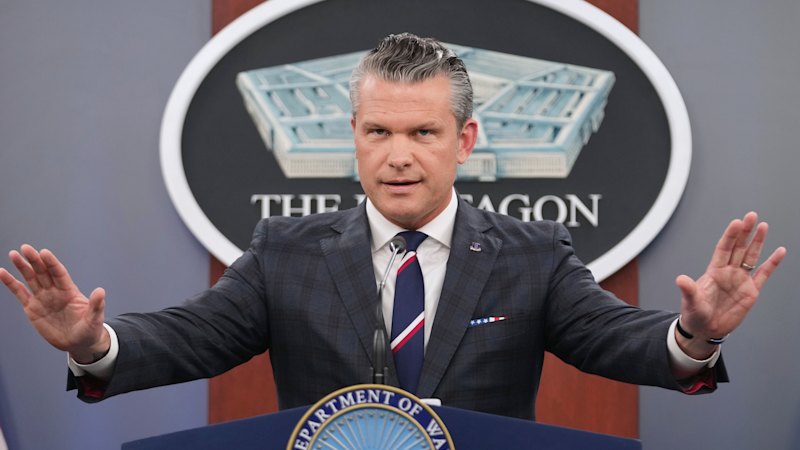
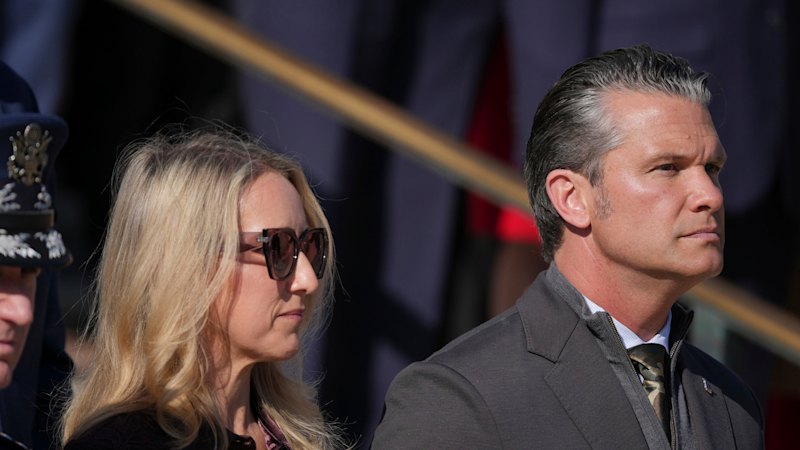
Pete Hegseth is the former Fox News host and combat veteran serving as Secretary of Defense, now fighting a congressional impeachment campaign driven by allegations of operational security breaches, sweeping command purges, and partisan politicization of the military. To understand why a decorated National Guard officer became the lightning rod for a constitutional crisis inside the E-Ring, you have to look beyond the cable television soundbites. This is not merely a clash of personalities in Washington. It is a fundamental stress test of civilian control over the armed forces, pitting a populist disruption strategy against an entrenched defense bureaucracy that has operated on bipartisan consensus for decades.
The Path from Combat Boots to Cable News
Before he was a fixture on weekend morning television, Hegseth was a student of elite institutions and a soldier in asymmetrical wars. Born in Minnesota in 1980, he graduated from Princeton University, where he edited the conservative campus paper The Princeton Tory, before commissioning as an infantry officer in the Army National Guard. His service record is not a fabrication. He deployed to Guantanamo Bay, served as an infantry platoon leader in Baghdad during the Iraq surge, and later worked as a counterinsurgency instructor in Afghanistan. He earned two Bronze Stars and a Combat Infantryman Badge.
Yet his trajectory diverged sharply from the traditional path of defense leaders. Most Secretaries of Defense arrive at the Pentagon after decades climbing the ranks of flag-officer leadership, managing multi-billion-dollar defense contractors, or serving on Senate armed services committees. Hegseth built his influence in the media ecosystem and the nonprofit advocacy sector. He ran Vets for Freedom and later Concerned Veterans for America, organizations that pushed for aggressive military postures abroad while aggressively attacking the Department of Veterans Affairs bureaucracy at home.
Joining Fox News in 2014 transformed him from a policy advocate into a cultural force. As a co-host of Fox & Friends Weekend, he gained a direct line to the ear of Donald Trump. During the first Trump administration, Hegseth informally advised the president on military matters, famously lobbying for presidential pardons for service members accused or convicted of war crimes. That advocacy alienated much of the traditional military brass, who viewed the interventions as a direct threat to the Uniform Code of Military Justice and battlefield discipline. When Trump tapped him to lead the Pentagon in late 2024, the nomination immediately triggered alarm bells across the defense establishment.
The Confirmation Battle and the Paper-Thin Margin
The road to the Secretary’s suite on the third floor of the Pentagon was bruised from the start. Confirmation hearings in early 2025 became a referendum on character, management competence, and institutional norms. Critics pointed to his lack of senior executive experience; managing a small veteran advocacy group is vastly different from overseeing a federal agency with a budget exceeding $850 billion and a global workforce of nearly three million military and civilian personnel.
Opponents also surfaced allegations regarding his personal conduct, financial management at his previous nonprofits, and past public remarks questioning the role of women in combat units. Hegseth countered that he was a reformed man, a dedicated warfighter, and an outsider specifically chosen to break the grip of "woke" ideology and failed forever-war generals on the Pentagon.
The Senate vote reflected a deeply fractured government. When the tally deadlocked at 50-50, with three Republican senators breaking ranks to oppose him, Vice President JD Vance cast the tie-breaking vote. Hegseth entered the Pentagon without the broad bipartisan mandate that historically shields defense secretaries during global crises. He arrived with a clear directive from the White House to clean house, and a razor-thin political margin that left him zero room for operational error.
Anatomy of the Pentagon Shakeup
Once sworn in, Hegseth moved with speed that stunned career officials. Traditional transitions at the Department of Defense are slow, deliberate affairs designed to ensure continuity of deterrence. Hegseth treated his arrival like a hostile corporate takeover.
Within weeks, his office initiated a sweeping review of senior flag officers. The administration removed several high-ranking military leaders, including the Chairman of the Joint Chiefs of Staff and the Chief of Naval Operations, arguing that the top brass had become overly focused on diversity, equity, and inclusion initiatives at the expense of warfighting lethality. To Hegseth and his supporters, these firings were a necessary assertion of civilian control—reminding uniformed generals that they answer to elected leadership, not an internal military hierarchy.
To career defense analysts and retired commanders, the moves looked entirely different. Politicization of the officer corps is the third rail of American civil-military relations. The U.S. military maintains high public trust precisely because it is viewed as an apolitical instrument of national security. By rapidly purging senior officers and publicly framing their dismissals around ideological alignment, Hegseth created a climate of intense anxiety inside the building. Officers began whispering about loyalty tests. Senior civilian aides with limited defense policy backgrounds were placed in key oversight roles, creating bottlenecks in routine procurement and operational planning.
Why the Impeachment Bid Gained Traction
Impeachment of a Cabinet secretary is a rare constitutional weapon, used only once in American history—against Secretary of War William Belknap in 1876 over a kickback scheme. For decades, modern Congresses treated Cabinet impeachments largely as partisan theater. The push against Hegseth moved beyond theater when internal operational controversies collided with congressional oversight.
The catalyst for the formal impeachment articles centered on two converging flashpoints: operational security failures and obstruction of congressional oversight.
The security controversy erupted following revelations that high-level national security discussions—including sensitive deliberations regarding imminent military strikes in the Middle East—had been conducted over commercial, unencrypted messaging apps rather than secure government channels. Worse, reporting indicated that a journalist had been inadvertently added to one of these group chats, exposing real-time operational timelines and target packages before munitions were even launched. While defenders argued no classified war plans were formally compromised and no service members were harmed, intelligence professionals and lawmakers on both sides of the aisle saw a textbook violation of federal records laws and basic operational security protocols.
Simultaneously, friction between the Secretary’s office and Capitol Hill reached a breaking point. Lawmakers on the House and Senate Armed Services Committees complained that the Pentagon was withholding mandatory notifications regarding troop deployments, personnel dismissals, and the redirection of appropriated funds. When House Democrats, joined by a handful of institutionalist Republicans frustrated by the erosion of legislative oversight, introduced articles of impeachment, they framed the effort not as a policy dispute, but as an urgent constitutional intervention to restore accountability over the nation's nuclear and conventional forces.
The Structural Flaws in the Pentagon Bureaucracy
To dismiss the entire crisis as the fault of one man is to miss the deeper pathology inside the Department of Defense. Hegseth did not invent the dysfunction at the Pentagon; he exploited it.
For twenty years, the defense establishment has struggled with glaring institutional failures that left it vulnerable to a populist wrecking ball:
- Acquisition paralysis: Major weapons programs routinely run years behind schedule and tens of billions of dollars over budget, while agile adversaries field cheap drones and hypersonic systems at scale.
- Unaccountable spending: The Pentagon has repeatedly failed independent financial audits, fueling public skepticism that massive budget increases actually translate into frontline readiness.
- Strategic drift: Two decades of inconclusive counterinsurgency wars in Iraq and Afghanistan hollowed out public faith in the "best and brightest" generals who testified every year that victory was just around the corner.
Hegseth’s core message—that the Pentagon needed a street-fighter willing to prioritize the frontline grunt over the four-star bureaucracy—resonated deeply with junior enlisted troops and millions of voters. The tragedy of his tenure is that addressing those legitimate systemic failures requires methodical legislative negotiation, mastery of complex logistics, and deep institutional alliances. Instead, the leadership team opted for shock-and-awe personnel purges and culture-war rhetoric that alienated the very experts needed to fix the machine.
The Counter-Argument from Inside the E-Ring
Defenders of the Secretary argue that the impeachment drive is nothing more than a coordinated counter-attack by the permanent Washington establishment—what they call the "Blob"—to neutralize an outsider threatening their budget turf and ideological hegemony.
From the perspective of Hegseth’s inner circle, the outrage over messaging apps is selective hypocrisy, noting that senior officials across multiple prior administrations have faced scrutiny over communications hygiene without facing removal from office. They point to tangible shifts in recruitment numbers, arguing that stripping away social initiatives and refocusing recruiting campaigns on traditional warrior ethos reversed a multi-year recruiting slump across the Army and Navy.
Furthermore, his allies contend that the Constitution grants the President, acting through the Secretary of Defense, sweeping authority as Commander-in-Chief to hire and fire generals at will. In their view, resistance from career bureaucrats and lawmakers is proof that the reforms are hitting the right targets. If you want to break a stagnant defense industrial complex, you cannot ask permission from the people who built it.
The Strategic Cost of a Distracted Pentagon
Regardless of how the impeachment votes play out in the House and Senate, the immediate casualty is American strategic focus. The Secretary of Defense is not a domestic cabinet post; it is the operational nerve center of global deterrence.
Every hour the Secretary’s legal team spends preparing congressional subpoenas, managing internal leaks, and fighting political survival battles is an hour stolen from the existential challenges facing the United States. In the Indo-Pacific, China continues the largest peacetime military buildup since World War II, testing U.S. alliances in the South China Sea and around Taiwan. In Europe, the long-term security architecture remains volatile, demanding constant coordination with NATO partners who are already anxious about Washington’s reliability. In the Middle East, proxy networks and state actors continuously probe American air defenses and maritime trade routes.
Allies watching the spectacle in Washington do not parse the nuances of House committee rules. They see a Pentagon at war with itself. Adversaries in Beijing, Moscow, and Tehran read the same headlines, calculating whether a distracted, internally divided defense leadership is less likely to respond decisively to a sudden regional crisis.
Civilian control of the military works only when the civilian leadership commands both constitutional authority and institutional trust. You can force compliance through firings and executive directives, and you can survive a partisan impeachment vote if the math in the Senate holds. Neither victory builds the cohesive command structure required to deter a peer adversary in a crisis where decisions must be made in minutes.