The removal of Army Chief of Staff General Randy George was never about routine administrative rotation. Behind closed doors at the Pentagon, a four-star career was abruptly terminated because one officer insisted that military regulations apply to everyone, even when political favorites are involved.
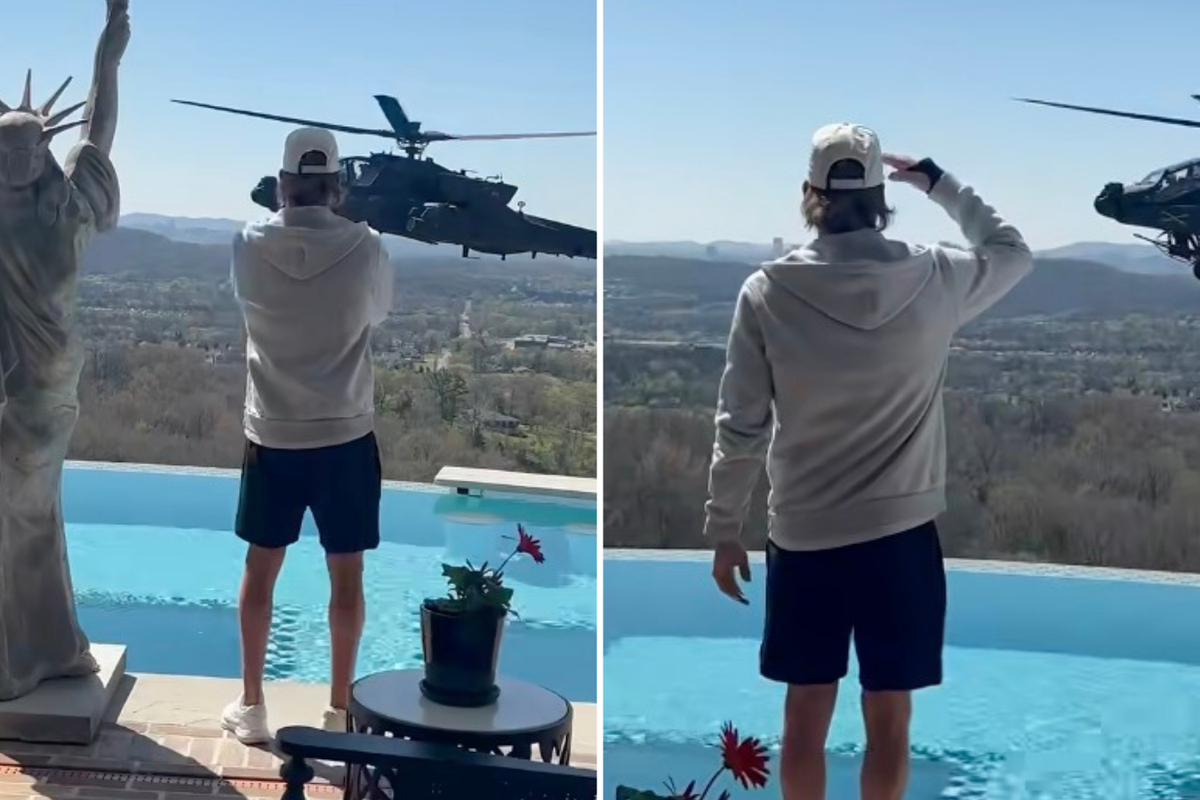
Months after the initial shockwaves of the dismissal settled, the underlying mechanism of his ouster has come into sharp focus. Days before his termination, General George was pressured by his second-in-command, General Chris LaNeve, to shut down an official inquiry into an unauthorized low-altitude flyby by two AH-64 Apache helicopters over the Tennessee estate of musician Kid Rock. George refused to sweep the investigation under the rug, prioritizing standard military protocols and flight safety over political expediency. The price for that refusal was his uniform.
To understand the gravity of what happened, one must examine the mechanics of military justice and command climate. When military assets are deployed, every movement is logged, justified, and tied directly to training mandates or operational necessity. Using multi-million-dollar attack helicopters to perform low-level passes near a celebrity's private property during a localized political demonstration is not standard procedure. It is an extraordinary deviation that demands immediate scrutiny from the chain of command.
When the 101st Airborne Division initially grounded the pilots and launched an administrative review, they were doing precisely what institutional guardrails require. They were asking who authorized the flight, what tactical purpose it served, and whether civilian safety or aviation regulations were compromised. Those questions represent the bedrock of military accountability.
Enter Defense Secretary Pete Hegseth, whose tenure at the Pentagon has been marked by a systematic dismantling of traditional command hierarchies. Hegseth publicly short-circuited the military justice system in real-time, declaring on social media that the grounded aviators would face no repercussions whatsoever. By publicly commanding that the investigation halt before the facts were gathered, the civilian leadership crossed a bright administrative line. They transformed a routine safety inquiry into a test of personal loyalty.
General George found himself trapped between two irreconcilable duties. His oath required him to uphold the integrity of the armed forces and enforce internal regulations without fear or favor. Conversely, the political leadership demanded absolute compliance and the immediate cessation of an embarrassing inquiry. According to sources familiar with the internal discussions, George confided in colleagues that he was deeply troubled by the pressure from LaNeve, who was relaying demands from the defense secretary's office. George believed that ignoring potential safety breaches would set a corrosive precedent down the ranks.
He was right. In military organizations, standard operating procedures are the only thing preventing a disciplined force from devolving into a private militia. If a four-star general cannot order a basic safety review of an unauthorized flight near a political ally's home without losing his career, the chain of command ceases to function as an institutional safeguard.
The political fallout immediately reached Capitol Hill. General LaNeve, who stepped into the role of acting Army chief of staff following George's removal, now faces a rocky road to permanent confirmation before the Senate Armed Services Committee. Lawmakers scrutinizing the nomination are beginning to realize that LaNeve's primary qualification for advancement appeared to be his willingness to execute political directives that senior career officers found professionally untenable.
The broader pattern at the Department of Defense tells a stark story. Since taking office, the current civilian leadership has unceremoniously pushed out dozens of high-ranking flag officers. Many of these departures occurred quietly, without official justification or transparent review. Critics label it a necessary house-cleaning of entrenched bureaucracy. Veteran analysts and retired commanders view it as something far more dangerous: the systematic erosion of apolitical military leadership.
Armies that purge leaders for enforcing regulations do not become more efficient. They become fragile, driven by sycophancy rather than competence. When operational decisions are filtered through the lens of political patronage, tactical readiness inevitably suffers. The Apache pilots who buzzed a Tennessee mansion did not merely commit an aviation infraction; they exposed the raw friction point between constitutional military structure and partisan loyalty.
General George is now retired, quietly exiting a decades-long career that spanned multiple combat zones and high-stakes commands. He did not issue a defiant public manifesto or seek a media circus. He simply stood by the rulebook until the door was shut in his face.
The helicopter rotors have long since stopped echoing over the Cumberland River, but the institutional damage inflicted on the Pentagon remains entirely unresolved.