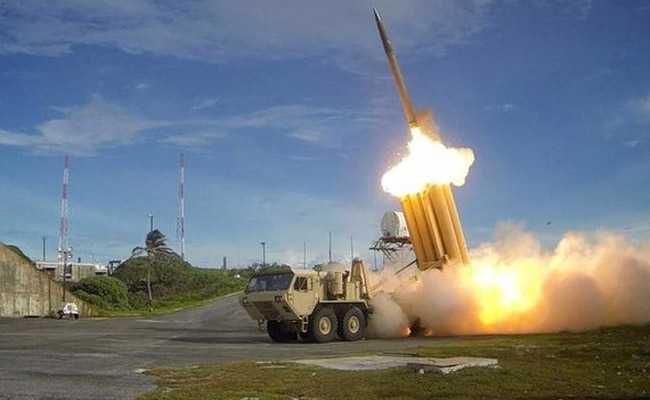
The United States military has quietly burned through nearly its entire global inventory of Army Tactical Missile Systems (ATACMS) and the newer Precision Strike Missiles (PrSM) during the five-month war with Iran. This rapid depletion leaves the Pentagon scrambling to maintain strategic depth against major adversaries like China and Russia. Internal government data indicates that United States Central Command exhausted its pre-war theater stocks of these surface-to-surface weapons early in the campaign, forcing emergency cross-leveling from arsenals earmarked for other global combatant commands.
When a modern military industrial base struggles to sustain a regional conflict without cannibalizing assets meant for superpower deterrence, the math of global security breaks down. The five-month campaign against Iran exposed a structural vulnerability that defense analysts have warned about for decades. Modern high-intensity warfare chews through advanced precision munitions at a rate that peacetime manufacturing lines simply cannot match.
The Cost of Over-Reliance on Long-Range Precision
For years, the Pentagon favored long-range precision strike packages over riskier crewed aircraft incursions. Weapons like the ATACMS and the next-generation PrSM allow commanders to hit high-value nodes hundreds of kilometers away without putting pilots inside contested airspace.
That preference turned into an operational trap. Each of these surface-to-surface missiles costs upward of one million dollars, and their complex guidance systems, rocket motors, and specialized electronics create severe manufacturing bottlenecks.
The industrial reality is stark. While prime defense contractors like Lockheed Martin and Raytheon are ramping up production lines, building a sophisticated precision-guided munition requires intricate supply chains that cannot pivot overnight. When Central Command began drawing down reserves from global stockpiles, it signaled that regional consumption had completely outpaced the baseline output of the defense industrial base.
Defensive Interceptors Under Severe Strain
The erosion of offensive capabilities tells only half the story. The conflict has placed an equally punishing demand on America's defensive shield, particularly the Patriot and Terminal High Altitude Area Defense (THAAD) interceptor inventories.
Assessments from the Center for Strategic and International Studies illustrate the scale of the drain. Between February and July, the military expended approximately sixty-five percent of its global Patriot interceptor stockpile. Meanwhile, THAAD inventories plummeted by at least thirty-eight percent.
"America's military is the most powerful in the world and has everything it needs to execute at the time and place of the President's choosing," chief Pentagon spokesperson Sean Parnell maintained in a formal statement.
Yet independent defense specialists and classified military briefings suggest a different operational reality. The math behind these burn rates means that replacing expended interceptors to pre-war baselines could take until mid-2029 under current manufacturing capacities. If a secondary crisis were to erupt in the Pacific or Eastern Europe, the Department of Defense would face severe inventory constraints on the very weapons required to protect deployed forces and allied population centers.
The Global Ripple Effect on Strategic Deterrence
The strategic implications extend far beyond the Middle East theater. For years, the core of American grand strategy relied on the two-war construct—the ability to fight and win two major regional conflicts simultaneously.
When a regional campaign against Iran consumes virtually all land-based tactical precision missiles and nearly half of the Navy's worldwide Tomahawk cruise missile inventory, that construct ceases to be viable.
Furthermore, the drawdown directly impacts other active theaters. The U.S. Army previously relied on ATACMS deliveries to bolster allied defensive lines in Eastern Europe. Stockpile transfers to support operations abroad, combined with heavy combat expenditure in the Middle East, have left domestic and regional arsenals thinner than at any point since the Cold War.
When the White House insists that defense contractors are currently producing more munitions than ever before, it addresses gross output but ignores the velocity of consumption. Manufacturing volume matters little if a single month of intense combat outpaces an entire year of factory production.
The strategic cushion that once separated the United States from its peer competitors has evaporated. Rebuilding that margin will require a complete overhaul of defense acquisition policies, larger permanent industrial capacity buffers, and a hard look at whether the military can continue to rely on million-dollar missiles for every tactical problem in its path.