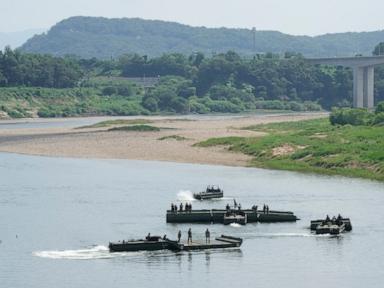
The security architecture of East Asia just absorbed another abrupt shock. South Korea and the United States have officially gutted their summertime Ulchi Freedom Shield military exercises, slashing an 11-day defensive mobilization down to a truncated five-day sprint.
Washington ordered the sudden contraction. The White House pointed explicitly to two divergent pressures: a renewed, unilateral push by President Donald Trump to court North Korean leader Kim Jong Un, alongside deep-seated financial and political frustrations regarding Seoul's refusal to back American military deployments in the Middle East.
For decades, these joint command-post simulations and field drills stood as the unyielding bedrock of the mutual defense treaty forged in the ashes of the Korean War. By lopping nearly a week off the schedule and scrubbing the entire second phase centered on counteroffensive operations, the alliance has traded tactical muscle for speculative diplomacy.
The Mechanics of the Mandate
The timetable tells a stark story. Ulchi Freedom Shield kicked off on a Monday morning with high ambitions, intended to run through August 27. By Wednesday, the Joint Chiefs of Staff in Seoul and defense officials in Washington confirmed the timeline was broken. The plug was pulled on the second phase, which was meant to simulate complex counteroffensive maneuvers—the exact operational posture that triggers visceral fury inside Pyongyang.
Computers simulate most of these command posts, but the collateral damage to actual troop readiness is real. Infantry divisions, artillery batteries, and air wings rely on these synchronized windows to test secure communication lines, logistics chains, and rapid-deployment protocols. When a major exercise is halved on short notice, the institutional muscle memory built across generations of rotating commanders starts to atrophy.
Military planners hate vacuum. Without consistent, full-scale execution, standard operating procedures drift.
Geopolitical Leverage or Alliance Fracture
Why the sudden retreat? Two distinct vectors collided behind closed doors. First, the White House revived its long-standing ambition to re-establish direct communication channels with North Korea. Labeling the traditional exercises costly and inherently hostile to Pyongyang, Washington chose to offer a unilateral concession before any formal nuclear negotiations had even materialized.
Second, friction over global burden-sharing boiled over into peninsular strategy. Washington openly questioned the utility of maintaining massive security guarantees while experiencing diplomatic pushback from Seoul regarding broader military campaigns, such as operations tied to the confrontation with Iran.
Diplomacy rarely operates in a vacuum. Using theater-level readiness as a pressure valve to extract geopolitical compliance elsewhere creates profound anxiety among frontline allies.
The Reaction from the North
Pyongyang's reaction exposed the fundamental flaw of unilateral appeasement. Hours before the reduction was formally announced, North Korea's state-run media outlet KCNA published scathing commentary denouncing the exercises as frantic and dangerous. Even as Washington scaled down the drills to signal goodwill, the North Korean apparatus dismissed the gesture while simultaneously advancing its nuclear triad and missile capabilities.
Kim Jong Un does not view a truncated drill as a peace offering. He views it as proof that persistent pressure yields strategic retreat.
Operational Consequences on the Ground
Commanders on the ground face an immediate logistical headache. Rotating officer corps require rigorous, repeatable simulation cycles to master joint theater defense. When exercises are abruptly truncated, incoming leadership elements miss out on critical integration windows.
Consider a hypothetical infantry brigade commander taking over sector defense without having experienced the full friction of an integrated multi-phase command exercise. The gap introduces friction into a command structure that must react within seconds to incoming ballistic threats.
Seoul's defense ministry insists the combined defense posture remains uncompromised. Independent analysts across the region harbor severe doubts. Trust within an alliance is maintained through predictable, ironclad commitments, not eleventh-hour executive adjustments driven by shifting global agendas.
The countdown to the next security test has already begun, and the margin for error on the 38th parallel is thinner than it was a week ago.