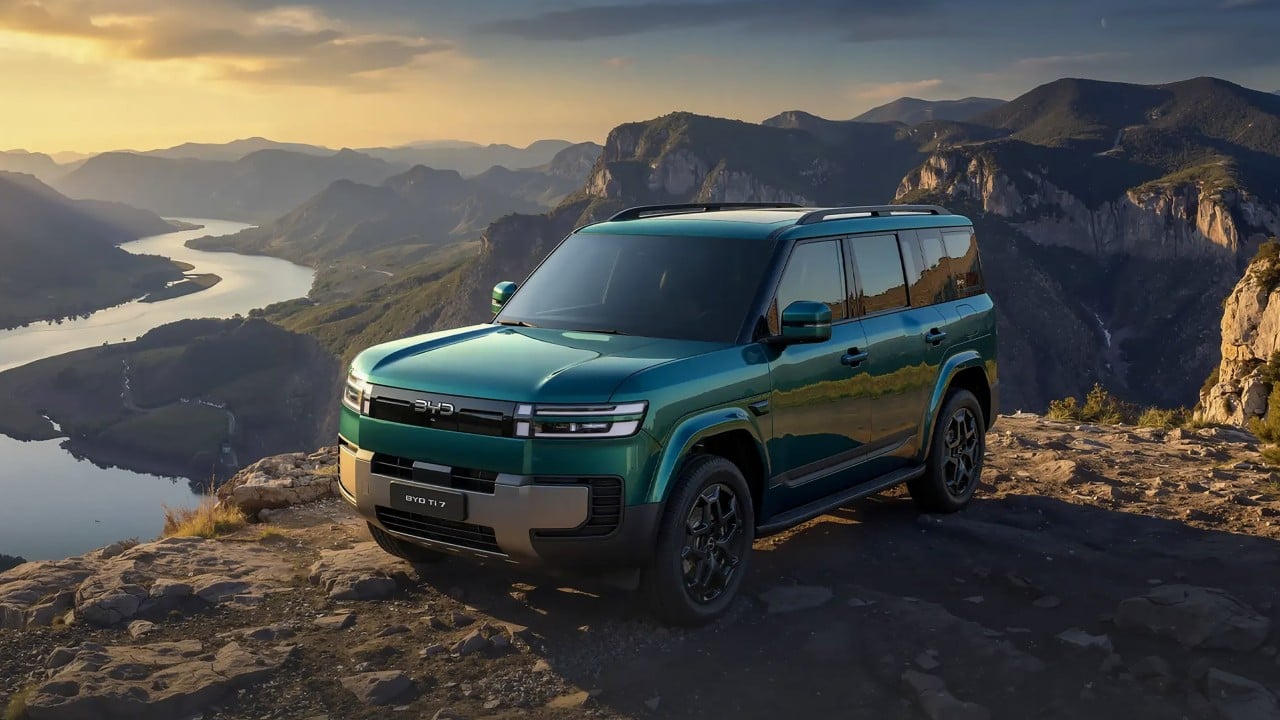
BYD is preparing a full-scale legal counteroffensive after Jaguar Land Rover moved to block the Chinese automaker from selling key electric models across the European Union over alleged patent infringement. The dispute, centered on battery and chassis architecture technologies, threatens to stall BYD’s aggressive push into Western Europe at the exact moment legacy automakers are struggling to match Chinese price-to-performance ratios. While BYD has publicly vowed to fight any sales injunction through European courts and regulatory channels, the battle reveals a much larger shift in how traditional automotive giants defend their turf when tariffs alone fail to slow down a rival.
The Anatomy of an Automotive Border Wall
Tariffs make headlines. Patents stop shipments at the port.
When European policymakers debated import duties on Chinese electric vehicles, the conversation stayed mostly political. Trade tariffs add friction, raise sticker prices, and compress profit margins, yet a well-capitalized manufacturer like BYD—which controls its own battery supply chain, semiconductor manufacturing, and shipping fleet—can absorb a 20% or 30% duty without abandoning a market. Intellectual property litigation operates on an entirely different axis. An injunction granted by the Unified Patent Court (UPC) does not merely tax a vehicle; it legally prohibits its importation, marketing, and sale across multiple participating EU member states simultaneously.
Jaguar Land Rover (JLR), owned by India’s Tata Motors, understands this leverage intimately. Rather than competing head-to-head in a race to the bottom on entry-level EV pricing, legacy European brands have spent decades accumulating dense thickets of patents covering vehicle architecture, thermal management, suspension geometry, and power electronics. When a newcomer enters the European market at scale, those patents transform from defensive shields into offensive weapons.
BYD’s pledge to fight the EU sales ban is not just corporate bravado. For a company that spent its early years fighting off accusations of reverse-engineering before emerging as the world’s largest producer of plug-in vehicles, losing a high-profile IP battle in Europe would carry reputational damage far beyond the immediate lost sales. It would validate the narrative pushed by Western competitors that China’s EV lead relies on borrowed engineering rather than original innovation.
Why This Fight Happens Now
Timing is never accidental in corporate litigation. For years, Chinese automakers operated on the periphery of the European market, selling modest volumes through niche importers. Legacy brands largely ignored them. Filing multi-jurisdictional patent lawsuits costs millions of euros in legal fees and invites countersuits, making it uneconomical against a competitor selling a few hundred cars a month.
That calculus changed once BYD began building dedicated roll-on, roll-off car carriers, signing distribution agreements with Europe’s largest dealership groups, and breaking ground on manufacturing facilities in Hungary and Turkey. Localizing production inside Europe neutralizes import tariffs. It does not, however, neutralize patent claims.
Consider how European patent injunctions work under the Unified Patent Court system, which launched in 2023 to streamline patent enforcement across participating EU nations. Previously, a patent holder had to sue country by country—filing separate actions in Germany, France, Italy, and the Netherlands. Today, a single ruling from a UPC local division—particularly in patent-friendly venues like Munich or Mannheim—can trigger an immediate, multi-country sales ban.
For JLR, targeting BYD’s European commercial rollout achieves three strategic goals simultaneously:
- Immediate Commercial Disruption: Even a temporary injunction freezes dealership inventory, delays customer deliveries, and forces fleet buyers to reconsider long-term contracts.
- Forced Cross-Licensing: Legacy automakers rarely want a permanent ban if they can extract lucrative royalty payments instead. By threatening a sales halt, JLR strengthens its hand at the negotiating table.
- Regulatory Signaling: High-profile infringement claims reinforce political arguments in Brussels that European industrial heritage requires aggressive protection.
The Technical Gray Area Behind EV Patents
Modern electric vehicles are deceptively simple on the surface and wildly complex underneath. Strip away the body panels, and an EV is essentially a skateboard chassis housing high-voltage battery cells, inverters, thermal pumps, and control software. Because every automaker is solving the exact same physics problems—how to pack maximum energy density into a flat floor while surviving side-impact crash tests and dissipating heat—engineering solutions frequently converge.
This convergence creates massive legal gray areas. Take cell-to-body (CTB) or structural battery integration, an area where BYD has heavily marketed its proprietary Blade Battery architecture. Integrating the battery pack directly into the vehicle’s structural frame saves weight, increases torsional rigidity, and frees up cabin space. Yet European automakers, including JLR, have filed foundational patents over the past decade covering modular floor structures, crush zones around battery housings, and multi-material bonding techniques used to join aluminum extrusions to steel safety cages.
To illustrate how easily these disputes arise, consider a hypothetical example involving thermal management. Suppose a legacy automaker holds a broad patent on routing coolant lines through a structural cross-member to regulate battery temperature while simultaneously stiffening the chassis. A rival engineer, working independently years later, designs a similar cooling channel inside a structural beam because basic thermodynamics and packaging constraints leave few other viable paths. In a courtroom, independent invention is not a defense against patent infringement. If the physical implementation falls within the wording of the older patent claims, the newcomer infringes.
BYD’s legal team will almost certainly attack the validity of JLR’s patents rather than merely arguing non-infringement. In European patent litigation, the strongest defense is proving that the asserted patent should never have been granted in the first place due to prior art—existing technical publications, older patents, or commercial products that already disclosed the same concept before JLR’s filing date.
BYD’s War Chest and Counter-Offensive Strategy
Anyone expecting BYD to fold quietly misunderstands the company’s corporate DNA. Founded by chemist Wang Chuanfu in 1995 as a rechargeable battery manufacturer, BYD grew up in the cutthroat consumer electronics supply chain, where patent disputes with Japanese and Korean conglomerates were routine survival tests.
BYD holds tens of thousands of patents globally, heavily concentrated in lithium-iron-phosphate (LFP) chemistry, blade cell geometry, electric drivetrain integration, and power semiconductors. While JLR holds deep portfolios in vehicle dynamics, off-road traction control, and aluminum body construction, it lags behind major Asian battery producers in core electrochemistry and high-voltage power electronics.
This asymmetry gives BYD a potent counter-strategy:
- Nullity Actions: BYD will file parallel challenges at the European Patent Office (EPO) and the UPC seeking to revoke JLR’s asserted patents entirely, pointing to decades-old Japanese and American aerospace and battery patents as prior art.
- Counter-Infringement Suits: BYD’s engineers and patent attorneys are undoubtedly combing through JLR’s current electrified lineup—including its plug-in hybrids and the all-electric I-Pace architecture—to identify potential infringement of BYD’s own battery management and power-electronics patents.
- Design-Around Engineering: Unlike traditional automakers that take five years to modify a vehicle platform, BYD iterates at consumer-electronics speed. If a specific bracket, cooling manifold, or software routine creates legal exposure, BYD’s engineering teams in Shenzhen can often re-engineer the component and validate a non-infringing alternative within months.
What History Tells Us About Auto Patent Wars
The automotive industry historically avoided the scorched-earth patent litigation common in the smartphone sector. During the "smartphone wars" of the 2010s, Apple, Samsung, Motorola, and Microsoft spent billions suing one another across four continents, securing temporary sales bans that rarely lasted long enough to permanently alter market share. Eventually, exhausted executives settled into cross-licensing agreements, deciding that making phones was more profitable than paying lawyers.
Automakers traditionally maintained a quiet truce based on mutually assured destruction. General Motors, Ford, Toyota, Volkswagen, and BMW all held massive patent portfolios. Nobody sued because everybody infringed on everybody else’s minor mechanical patents, and a mutual non-aggression pact kept assembly lines running.
The arrival of pure-play EV challengers shattered that truce. First Tesla, and now Chinese manufacturers like BYD, Nio, and XPeng, entered the global market without decades of legacy cross-licensing agreements. In 2023 and 2024, patent assertion entities and legacy component suppliers began testing the waters against EV makers in Germany, targeting everything from cellular connectivity chips to headlight matrix controls.
JLR’s move against BYD escalates this trend from component-level disputes to existential platform warfare. If a legacy automaker can successfully persuade a European court to halt sales of a rival’s core vehicle lineup over structural or drivetrain patents, every traditional manufacturer in Germany, France, and Italy will immediately pull its own patent portfolios off the shelf.
The Hidden Risks for Jaguar Land Rover
Launching an offensive patent war carries substantial risk for the aggressor, particularly for a company of JLR’s size. Compared to Volkswagen Group, Stellantis, or BYD, JLR is a relatively compact luxury manufacturer. Its R&D budget is a fraction of BYD’s, which has poured tens of billions of yuan into engineering headcount over the past three years alone.
By dragging BYD into court, JLR invites intense scrutiny of its own supply chain. Modern luxury vehicles rely heavily on Tier-1 suppliers—Bosch, Continental, ZF, Magna, and CATL—for electrified components. If BYD uncovers a vulnerability in JLR’s hybrid or upcoming electric Range Rover platforms, BYD can retaliate in jurisdictions like China, which remains one of JLR’s most profitable global markets for high-margin SUVs.
Chinese courts have grown increasingly sophisticated—and increasingly willing—to issue injunctions against foreign firms when domestic champions are threatened abroad. For JLR, winning an injunction in Munich while losing access to showrooms in Shanghai and Beijing would be a pyrrhic victory of historic proportions.
How This Reshapes the European EV Market
For European consumers, fleet operators, and dealerships, the immediate consequence of this legal battle is uncertainty. Fleet buyers—who account for more than half of all new car registrations in major European markets like Germany and the UK—hate legal ambiguity. Nobody wants to lease 500 electric sedans for a corporate fleet if a court order next quarter might freeze spare parts imports or complicate residual values.
Dealership groups that invested millions building out BYD showrooms across Europe face a similar dilemma. While BYD’s pledge to fight the ban reassures partners that the manufacturer will not abandon the region, litigation timelines rarely align with quarterly sales targets. Even an expedited proceeding at the Unified Patent Court takes roughly 12 to 14 months to reach a first-instance decision on the merits, followed by another year for appeals.
During that window, the European EV market will not stand still. Legacy brands are rushing out lower-cost models to meet strict EU fleet emissions targets, while Chinese rivals are accelerating factory construction inside European borders to insulate themselves from geopolitical shocks.
The courtroom battle between BYD and Jaguar Land Rover proves that the struggle for automotive dominance will not be decided solely in wind tunnels, battery labs, or dealership showrooms. Intellectual property offices and patent courts have officially become the new front lines of global industrial policy, where a single technical claim buried on page forty of a patent filing carries more power to block a competitor than any tariff a parliament can pass.