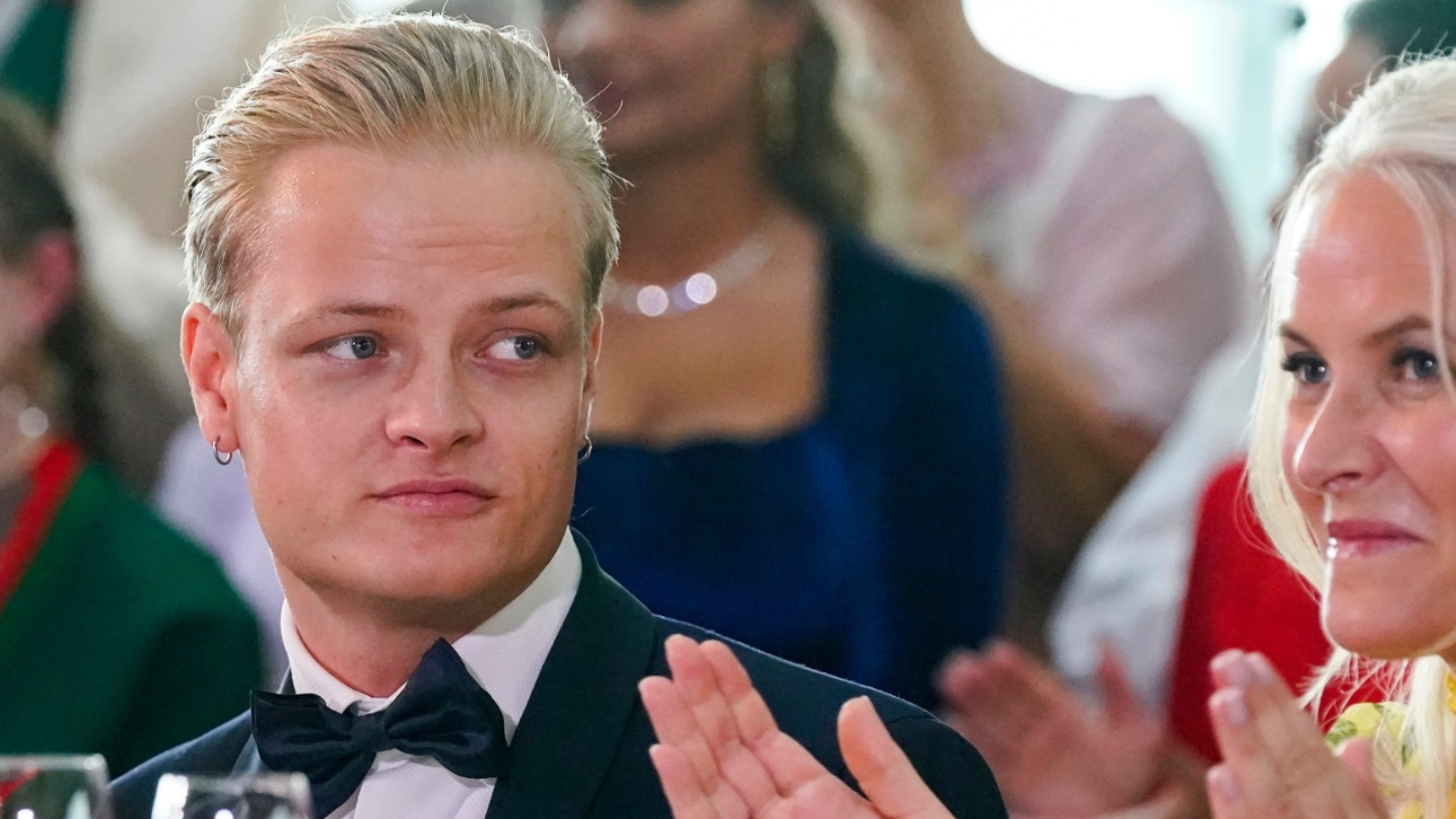
An Oslo district court on Monday dismantled the carefully curated partition separating the Norwegian monarchy from the criminal underbelly of its capital. Marius Borg Høiby, the 29-year-old stepson of Crown Prince Haakon and eldest son of Crown Princess Mette-Marit, was sentenced to four years in prison after judges found him guilty of two counts of rape, domestic violence, and a cascade of lesser offences. He was convicted of 34 out of the 40 charges leveled against him, an outcome that instantly transforms a long-festering private catastrophe into a permanent constitutional scar. The state requested more than seven years; the court landed on four, citing a mixed verdict that included two acquittals on separate rape counts where consent remained legally murky.
The immediate facts are clear, but the institutional fallout is just beginning. This was not a standard celebrity downfall. The evidence presented during the grueling seven-week trial laid bare a dark reality: one of the rapes occurred in the basement of Skaugum, the official residence of the future king and queen.
The Basement at Skaugum
For a quarter of a century, the Palace maintained a deliberate legal fiction. Because Høiby was born before his mother married into the royal family, he held no titles and performed no official duties. He was a private citizen who happened to live in the castle.
The court shattered that fiction by detailing how Høiby used the literal and metaphorical infrastructure of the monarchy to perpetrate and conceal his actions.
Judge Jon Sverdrup Efjestad, delivering the verdict, described video evidence recovered from Høiby's own phone. The footage showed a heavily incapacitated woman lying motionless in the Skaugum basement in December 2018. She did not move, did not react to touch, and was entirely unaware of the assault until police presented her with the footage years later.
The geographic location of the crime matters. Skaugum is not just a house; it is a symbol of state authority, guarded by military personnel and funded by Norwegian taxpayers. To have an active predatory loop operating beneath the feet of the future head of state destroys the argument that Høiby’s life was entirely detached from the Crown.
The defense team has already announced plans to appeal the rape and domestic abuse convictions. They argued throughout the trial that Høiby’s severe substance abuse—which included transporting multi-kilogram quantities of marijuana and heavy cocaine use—clouded his judgment but did not equate to intentional sexual violence. The judges disagreed, drawing a sharp line between addiction and accountability.
The Toxic Privilege of the Crown Non-Member
Høiby’s defense strategy inadvertently highlighted the exact mechanism that allowed his behavior to continue for six years. During his testimony, he lamented the psychological burden of growing up adjacent to supreme privilege without possessing a defined role. He spoke of an extreme need for recognition that manifested in reckless drug use, alcohol abuse, and sexual conquest.
The reality for the victims was far less esoteric.
- Nora Haukland, Høiby's former partner and the only victim publicly named, endured a pattern of serious bodily harm, threats, and systematic abuse within their relationship.
- Three other women, targeted between 2018 and 2024, were assaulted while asleep or heavily intoxicated, unable to resist.
- Over 800 electronic messages introduced by prosecutors established a pattern of intimidation designed to enforce silence.
The trial revealed that Høiby operated with a sense of complete immunity, insulated by the shadow of the throne. While his stepfather, Crown Prince Haakon, publicly stated that Høiby must face the law like any other citizen, the timeline suggests otherwise. Høiby’s legal troubles began with a minor drug fine in 2017. Instead of triggering an intervention or a reduction in his access to royal property, his behavior escalated into severe domestic abuse and sexual violence while he continued to reside at royal addresses.
The Oslo police are now facing quiet, intense scrutiny regarding whether early warning signs were ignored or minimized due to the political sensitivity of investigating the Crown Princess's son.
A Monarchy Under Siege
The timing of the verdict could not be more disastrous for the House of Glücksburg. The trial unfolded while Crown Princess Mette-Marit battles a terminal lung condition—chronic pulmonary fibrosis—and currently sits on a waiting list for a lung transplant.
Høiby’s lawyers unsuccessfully petitioned the appellate court to release him from pre-trial custody so he could visit his ailing mother, a request denied because judges ruled there was a high probability he would commit further offenses or violate existing restraining orders.
Compounding the crisis is a secondary scandal that has resurfaced in the wake of Høiby’s arrest. The Norwegian public has been forced to confront old disclosures regarding Mette-Marit’s past association with the late American sex offender Jeffrey Epstein. Though the Crown Princess apologized for her poor judgment in maintaining contact with Epstein between 2011 and 2014, the proximity of both her past choices and her son's current convictions has created a toxic narrative. It paints a picture of a royal household uniquely blind to predatory behavior within its immediate orbit.
Norway prides itself on egalitarianism. The monarchy has survived in the modern era precisely because it projected an image of modest, accessible, and morally upstanding leadership. The king rides the tram; the princes attend public schools.
The four-year sentence handed to Marius Borg Høiby proves that the Norwegian judicial system remains independent of royal influence. It does not, however, erase the reality that a predator used a royal estate as a hunting ground while the institution looked the other way. The defense will appeal, and the public laundry will be aired once more in a higher court. The cell door at Ila prison has closed on Høiby, but the doors of Skaugum remain open, housing a monarchy that has lost its most valuable asset: the unquestioned trust of its people.