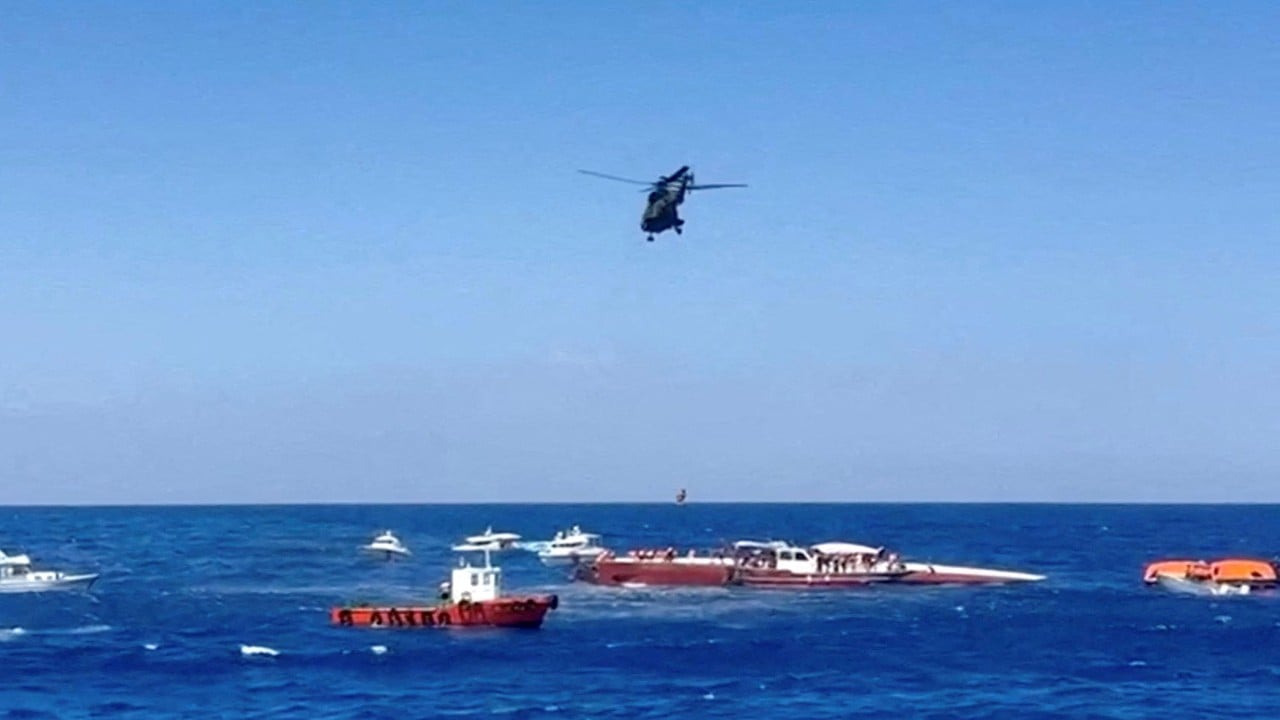
At least eight people are dead and nearly two dozen remain missing after a high-capacity catamaran ferry carrying roughly 270 passengers and crew capsized and sank just four nautical miles off the coast of northern Cyprus. The vessel, traveling from the port of Kyrenia to Taşucu in Turkey, went down with terrifying speed. While international headlines focus on the immediate rescue tallies provided by officials like Northern Cyprus Prime Minister Ünal Üstel, the structural, regulatory, and operational vulnerabilities that allowed a modern passenger ferry to sink in calm waters just minutes out of port point to a deeper, systemic crisis in Eastern Mediterranean maritime transit.
Maritime disasters rarely happen because of a single catastrophic failure. They are almost always the final link in a long chain of overlooked oversights, regulatory blind spots, and commercial pressures. To understand how a catamaran-style passenger ferry can go down in record time, we have to look past the initial shock and examine the frailties of regional shipping oversight. For another view, check out: this related article.
The Anatomy of a Rapid Sinking
The vessel departed Kyrenia at approximately midday, bound for the southern Turkish province of Mersin. Roughly fifteen minutes into the journey, while still within sight of the northern Cypriot coastline, the ship began taking on water. According to preliminary accounts from maritime authorities and anonymous officials close to the investigation, the captain attempted a desperate turn back toward shore.
That maneuver proved fatal. As the hull took on water, free-surface effect likely compromised the vessel's stability. When water sloshes inside an enclosed hull or vehicle deck without proper compartmentalization, it shifts with the roll of the ship, rapidly compounding the list. Within minutes, the catamaran rolled over, leaving passengers scrambling onto the exposed orange hull before the ship plunged entirely to the seabed, now resting at a depth exceeding five hundred meters. Further insight on this trend has been shared by Al Jazeera.
Catamarans are prized for their speed and deck space, making them workhorses for short-sea international routes like the Kyrenia-Taşucu corridor. Yet their multi-hull design demands rigorous adherence to weight distribution and watertight integrity. If watertight doors were unsecured, or if drainage systems failed to cope with the initial ingress, a manageable leak transforms into a terminal catastrophe within minutes.
The Regulatory Vacuum of the Eastern Mediterranean
Northern Cyprus occupies a unique and precarious geopolitical space. Recognized only by Turkey, the self-proclaimed Turkish Republic of Northern Cyprus operates outside mainstream international maritime bodies like the International Maritime Organization (IMO) in an official capacity.
This diplomatic isolation creates a regulatory gray zone. While local authorities do their best to enforce safety standards, the territory's unrecognized status means that rigorous, independent international safety audits, flag-state inspections, and port-state controls are frequently bypassed or handled through convoluted bilateral channels with Ankara. Oversight can become fragmented. When commercial operators face intense economic pressure to maintain high-frequency rotations across the narrow sea corridor, corners can be cut on maintenance schedules, crew training for emergency evacuation, and cargo weight verification.
Passenger manifests are another glaring vulnerability on these regional routes. In the immediate aftermath of the sinking, confusion reigned over the exact number of souls on board. Initial estimates hovered around 260 to 270 people. When a passenger count remains fluid hours after a disaster, it signals lax boarding controls. On busy tourist and commuter runs, informal ticketing and rushed vehicle-loading procedures routinely undermine the precision required for passenger safety. If manifest tracking is loose, rescue coordinators are left guessing how many people are actually trapped in the water or beneath the surface.
The Human Cost and the Accountability Gap
As rescue vessels, coast guard helicopters, and naval units from both northern Cyprus and Turkey scour the search zone, local leaders have declared three days of national mourning. The captain and several crew members have already been detained as authorities launch a comprehensive criminal and technical investigation into the cause of the disaster.
Yet, focusing solely on the crew misses the broader picture. Blaming individual seamen is the oldest trick in the book for maritime corporations and regulatory bodies eager to deflect systemic scrutiny. Human error is rarely born in a vacuum; it is usually cultivated by corporate cultures that prioritize turnaround times over safety margins, and by regulatory frameworks lacking the teeth to enforce absolute compliance.
Passengers stepping onto a regional ferry expect commercial aviation-level safety standards, but maritime transport often operates under a nineteenth-century mindset where luck is treated as a substitute for redundancy. Until regional authorities subject every operator—regardless of political status—to uncompromising, transparent safety audits, and until passenger manifests are treated as binding legal documents rather than loose estimates, the waters of the Eastern Mediterranean will remain perilous for the thousands who cross them every single day.