Algeria has officially severed diplomatic relations with the United Arab Emirates, citing a persistent pattern of hostile behavior and foreign interference that Algiers claims crossed every tolerable threshold. This decisive diplomatic break marks a dramatic intensification of tensions in North Africa, transforming simmering regional friction into an open confrontation between two heavily armed, fiercely ambitious states. The Algerian Foreign Ministry stated clearly that all diplomatic channels had been exhausted after repeated warnings to Abu Dhabi went unheeded, leaving the government with no alternative but to expel the Emirati ambassador on a strict 48-hour deadline.
For years, foreign policy observers watched a slow-motion train wreck unfold behind closed doors. Algiers grew increasingly furious over what it views as a deliberate Emirati campaign to destabilize its strategic perimeter. From the shifting sands of the Sahel to the contested status of Western Sahara, the structural divergence between Algerian state orthodoxy and Emirati projection of power became too wide to bridge.
The Sahelian Fault Line and Security Paranoia
To understand why Algiers took the nuclear option in diplomacy, one must look south. The vast, fractured expanse of the Sahel has turned into a theater of intense proxy competition. Following a string of military coups across Mali, Niger, and neighboring states, traditional Algerian security architectures began to fray.
Algiers views its southern border as an existential red line. Security officials inside the Algerian military establishment watched with mounting alarm as the United Arab Emirates expanded its diplomatic, financial, and logistical footprint across the same countries. Where Algeria sought stable buffer zones through traditional mediation and state-to-state diplomacy, Abu Dhabi pursued agile, transactional partnerships with emerging juntas and local power brokers.
Worse still, Algerian intelligence services grew convinced that Emirati covert networks were backing domestic security threats. Accusations swirling through Algerian state channels pointed directly to clandestine backing for the Movement for the Autonomy of Kabylie (MAK), a separatist organization designated as a terrorist group by Algiers. For a nation built on the bloody mythology of a centralized, hard-won anti-colonial independence struggle, foreign sponsorship of internal separatism is the ultimate casus belli.
The Western Sahara Crucible and Regional Alignments
The geopolitical map of North Africa is defined by zero-sum calculations. Nowhere is this dynamic more pronounced than in the decades-long dispute over Western Sahara.
Algeria has long provided political, logistical, and diplomatic backing to the Polisario Front, which demands self-determination for the territory. On the other side of the ledger, the United Arab Emirates threw its full diplomatic weight behind Morocco, even opening a consulate in the disputed region to solidify Rabat’s sovereignty claims. This alignment dovetailed with broader geopolitical realignments, including Morocco's normalization of ties with Israel under the Abraham Accords—a diplomatic breakthrough that Algiers views as a direct strategic encirclement.
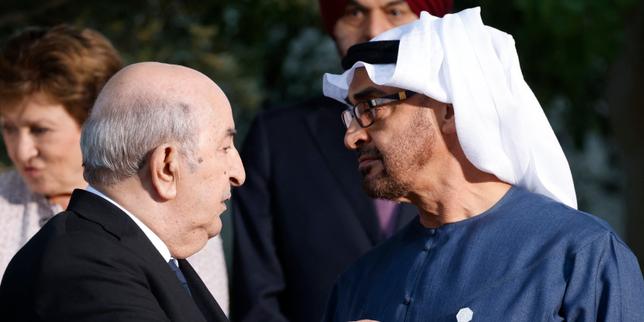
President Abdelmadjid Tebboune signaled the coming storm months prior, publicly contrasting Algeria’s warm, fraternal relations with Saudi Arabia, Qatar, Kuwait, and Oman against a single unnamed Gulf state accused of spreading chaos. When Tebboune bluntly remarked in televised addresses that wherever that specific state set foot, blood tended to follow, he dropped any remaining diplomatic pretense. The cancellation of a 2013 bilateral air services agreement earlier in the year served as the economic opening salvo of a break that everyone knew was coming.
The Economic Fallout and Corporate Collateral
Diplomacy rarely breaks in a vacuum without corporate balance sheets taking a hit. Economic ties between Algiers and Abu Dhabi had already cooled significantly as Algerian regulators began auditing and restricting foreign commercial entities with ties to Emirati capital.
Major joint ventures face sudden administrative paralysis. Energy cooperation talks have frozen, and infrastructure investments promoted during past periods of regional warmth are being systematically dismantled. Emirati firms accustomed to fluid, high-level access in developing markets now face retaliatory litigation and potential international arbitration disputes.
Yet, Algeria appears willing to absorb the short-term economic friction to reassert sovereign control over its domestic economy. State planners are betting that national security imperatives heavily outweigh foreign direct investment from a Gulf partner viewed as a strategic adversary.
The Broader Middle Eastern and North African Realignment
This rupture carries profound implications for the broader Arab world. Algeria has effectively doubled down on its historical foreign policy doctrine, prioritizing state sovereignty, non-alignment with Western-backed regional security frameworks, and staunch support for traditional anti-colonial positions.
By cutting ties with Abu Dhabi, Algiers follows the precedent it set in August 2021, when it severed diplomatic relations with Morocco. Algeria now stands isolated from its western and eastern-aligned neighbors, carving out an increasingly solitary path through a Mediterranean basin rattled by competing ambitions.
Abu Dhabi faces a stark reality check regarding the limits of checkbook diplomacy and agile projection in regions with deeply entrenched, nationalist security states. The calculation that financial reach could permanently reshape North African alignments ran aground against Algiers' historical paranoia and military-backed defense of its borders.
The ambassadors are gone. The airspace is closed. The diplomatic bridges are burned down to the pilings, leaving two regional powerhouses bracing for a protracted cold war across the Mediterranean and the Sahelian plains