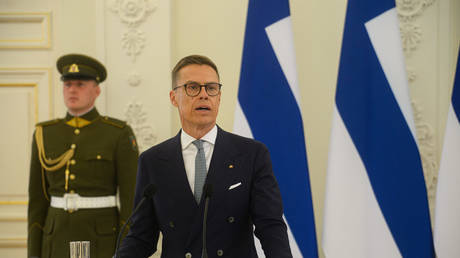
Helsinki is quietly rewriting the rules of northern European security. In a move that shatters decades of deeply held neutrality, Finland is advancing legislation to lift its Cold War-era ban on nuclear weapons within its borders. The decision, driven by the right-wing coalition government, directly dismantles the 1987 Nuclear Energy Act that once strictly prohibited the import, transit, or possession of nuclear explosives on Finnish soil. While official talking points assure the public that permanent peacetime storage is off the table, the legal reality opens the door wide for NATO nuclear-capable bombers, transit operations, and wartime deployment right along the 1,340-kilometer border with Russia.
This is not a simple administrative alignment with western alliance standards. It is a fundamental calculation born out of geopolitical fear and structural vulnerability.
The Subversion of Nordic Neutrality
For generations, the Nordic region maintained a delicate balance. Finland and Sweden acted as buffers, relying on strong conventional militaries and a strict refusal to allow nuclear hardware on their territory. That architecture dissolved when both nations joined NATO.
Now, the legislative overhaul in Helsinki represents a much deeper integration into the alliance's nuclear deterrence strategy than anyone anticipated during the initial accession debates. The political executive argues that the old laws create an unacceptable barrier to collective defense. If NATO cannot fly dual-capable aircraft through Finnish airspace or position nuclear components during an active crisis, the alliance’s defense plans for the eastern flank become crippled.
Defensive structures must be functional. This logic drove the government to introduce draft amendments to both the Nuclear Energy Act and the Criminal Code.
The political opposition is fractured. While leftist and pacifist factions argue that bringing nuclear weapons into the country turns Finland into an immediate target, the parliamentary majority remains solid. The shift is moving forward because policymakers believe the conventional umbrella is no longer enough to deter a revisionist neighbor.
The Hidden Mechanics of Wartime Deployment
What does this change actually look like on the ground? It is highly unlikely that American B61 gravity bombs will be trucked into permanent storage facilities near the border next month. The actual strategy focuses on infrastructure readiness and logistical mobility.
The removal of the legislative ban ensures that during an escalation, allied forces can execute specific operational maneuvers without legal friction. These include:
- Overflight Rights: Allowing American, British, or French nuclear-armed aircraft to use Finnish airspace for active deterrence patrols or strike routes.
- Logistical Transit: Permitting the movement of nuclear components or delivery systems across Finnish roads, rail, and ports.
- Forward Basing Capacity: Preparing northern airfields to host allied dual-capable strike fighters during exercises or active military alerts.
This transforms Finland from a defensive buffer into a potential rear base for allied nuclear operations. The operational calculation is clear, but the strategic risk is immense. Proximity changes the calculus of preemption. By allowing these weapons on its territory even conditionally, Helsinki forces Moscow to target Finnish infrastructure in the earliest stages of any hypothetical conflict.
A Fractured Regional Front
The shift in Helsinki is causing immediate ripples across the rest of Scandinavia, revealing that the Nordic bloc is far from unified in its strategic outlook. Each capital is reacting to the erosion of American security guarantees with distinct, sometimes conflicting policies.
Sweden is watching closely but taking a different path. While Stockholm has affirmed that its peacetime doctrine excludes foreign troops and nuclear weapons, leadership has hinted that a severe shift in the regional security environment would void those restrictions. Concurrently, Swedish strategic thinkers are looking toward European alternatives, engaging in quiet dialogues regarding British and French nuclear capabilities.
Norway is taking even more explicit steps. The government in Oslo has initiated discussions with Paris to explore coming under the French nuclear umbrella. This indicates a growing, unspoken anxiety across northern Europe: the fear that the traditional American security guarantee may not remain permanent or reliable.
Nordic Nuclear Alignment Matrix (2026)
+---------+-------------------+-----------------------+-----------------------+
| Country | Peacetime Policy  | Wartime Stance        | Main Nuclear Partner  |
+---------+-------------------+-----------------------+-----------------------+
| Finland | Modifying Ban     | Allowed for Defense   | United States / NATO  |
| Sweden  | No Foreign Nukes  | Conditional Reassessment| Exploring UK / France |
| Norway  | No Foreign Nukes  | Seeking French Umbrella| France / NATO         |
+---------+-------------------+-----------------------+-----------------------+
This fragmentation undermines the idea of a unified Nordic defense strategy. Instead of a single, cohesive northern front, the region is splitting into different spheres of nuclear dependency.
The Friction with Washington
Publicly, NATO leadership welcomes any move that increases operational flexibility. Privately, the situation is far more complicated.
The United States signed a bilateral Defense Cooperation Agreement with Finland that allows American forces access to 15 specific military facilities across the country. That agreement was finalized when the Finnish nuclear ban was still ironclad law. By unilaterally lifting the restriction, Helsinki is changing the baseline conditions of American military involvement in the region.
Some defense analysts in Washington view this legislative push with skepticism. Placing nuclear infrastructure or operational pathways so close to Russian territory narrows the timeline for decision-making during a crisis. It risks dragging the United States into a local border escalation that could otherwise be contained.
There is also the problem of public consent. Recent domestic polling reveals that approximately 77 percent of the Finnish population opposes the actual basing of nuclear weapons inside the country. A coalition of local non-governmental organizations continues to lobby against the bill, warning that the government is trading long-term stability for short-term tactical alignment.
The political executive is gambling that public anxiety will fade as the legislative changes are normalized. They are prioritizing military integration over historical civilian consensus, betting that the harsh realities of the current geopolitical environment leave them no other choice.
Redefining the Northern Frontier
The legislative timeline points toward an imminent vote. Because the right-wing coalition commands a stable majority, the bill is expected to pass, permanently altering the legal framework of the country.
Once the ban is lifted, the Arctic security environment enters unmapped territory. The deterrence model that kept the Nordic region stable during the darkest years of the twentieth century is officially dead, replaced by a high-stakes strategy of forward readiness. Finland is betting its national survival on the premise that maximum integration with western nuclear infrastructure is the only way to prevent aggression. If that bet is wrong, the country has just volunteered to be the front line of a nuclear confrontation.