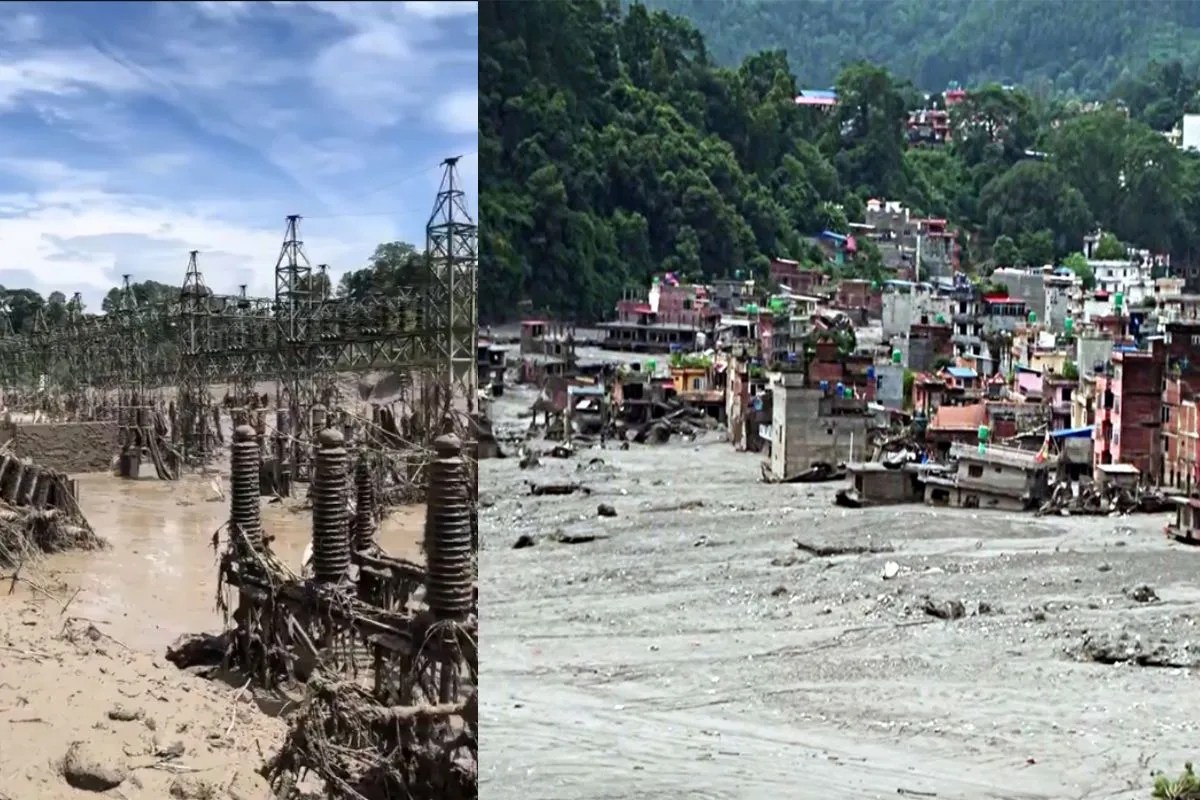
When a catastrophic wall of water and debris tore down the Bhotekoshi and Trishuli river corridors in Nepal following an upstream glacial collapse, it did not just sweep away roads and villages. It targeted the crown jewel of the nation's energy ambition. More than nine hundred workers and technical staff across eleven major hydropower project sites vanished into the system, swallowed by heavy silt, mud, and blocked subterranean networks. While surface reporting often simplifies such disasters into neat casualty statistics, the reality unfolding inside the tunnels of projects like Upper Trishuli-1 and Rasuwagadhi reveals an engineering and humanitarian nightmare that authorities are struggling to manage.
The disaster exposes a dangerous vulnerability in how mountainous developing nations scale critical green energy infrastructure. Hydropower is supposed to power the future. Yet, when built along volatile Himalayan river valleys, these massive engineering marvels often become deadly traps for the very workforce keeping them operational.
Anatomy of a Subterranean Catastrophe
Heavy flash floods do not merely flood a surface facility; they act as hydraulic battering rams. When the deluge hit the border region, millions of tonnes of rock, sediment, and glacial debris rushed downward at terrifying speeds. Power substations were completely submerged, and the entry portals of underground construction and operational tunnels were choked shut within minutes.
Inside these subterranean networks, the danger multiplied exponentially. Workers caught deep inside the shafts faced immediate darkness as power grids failed. Massive volumes of slurry rushed through the intake structures, sealing off escape routes.
Survival in these conditions depends entirely on the presence of dry air pockets or elevated internal chambers. Engineers note that certain sections of facilities like the Rasuwagadhi plant feature concrete-lined administrative or maintenance rooms above the baseline water level. These pockets offer a narrow window of hope. Days after the initial flood wave, rescue coordinators expressed cautious optimism that small groups of workers might still be holding out inside sealed underground pockets, rationing whatever air and moisture remain.
The Blind Spots of Rapid Himalayan Development
The scale of the missing persons tally points to systemic oversight regarding workforce tracking in remote, high-altitude construction zones. Major projects rely heavily on contractual labor, multi-national engineering firms, and subcontractors from neighboring countries.
Accurate daily headcounts at remote project sites frequently break down during shift changes or sudden emergencies. Furthermore, underground construction sites often house unlisted or unregistered laborers working on expansion phases. When disaster strikes a remote gorge with zero cellular connectivity, confirming who was on-site becomes an agonizing guessing game for disaster management authorities.
International response teams, including specialized tunnel rescue units from India and China, have faced immense logistical hurdles. Heavy excavation machinery must be airlifted in sections via military helicopters just to clear the compacted mud blocking tunnel mouths. Every hour spent clearing tons of boulders reduces the statistical probability of finding survivors who managed to beat the initial flood but now face oxygen depletion.
The physical isolation of these river corridors means that disaster response is inherently reactive rather than preventative. Early warning systems along the upper reaches of the Himalayas remain sparse, leaving projects vulnerable to sudden glacial lake outburst floods. Without real-time sensor networks tracking upstream water volumes and seismic shifts near the border, workers inside subterranean powerhouses have virtually no time to evacuate before the torrent hits.
As rescue teams continue drilling through concrete barriers and deploying thermal imaging drones down dark shafts, the immediate focus remains on locating survivors. Yet, the wider implications for the region's energy sector are profound. The disaster forces a grim re-evaluation of how deep underground infrastructure is designed, how worker tracking is enforced, and whether the rush to harness Himalayan rivers is outpacing basic safety realities