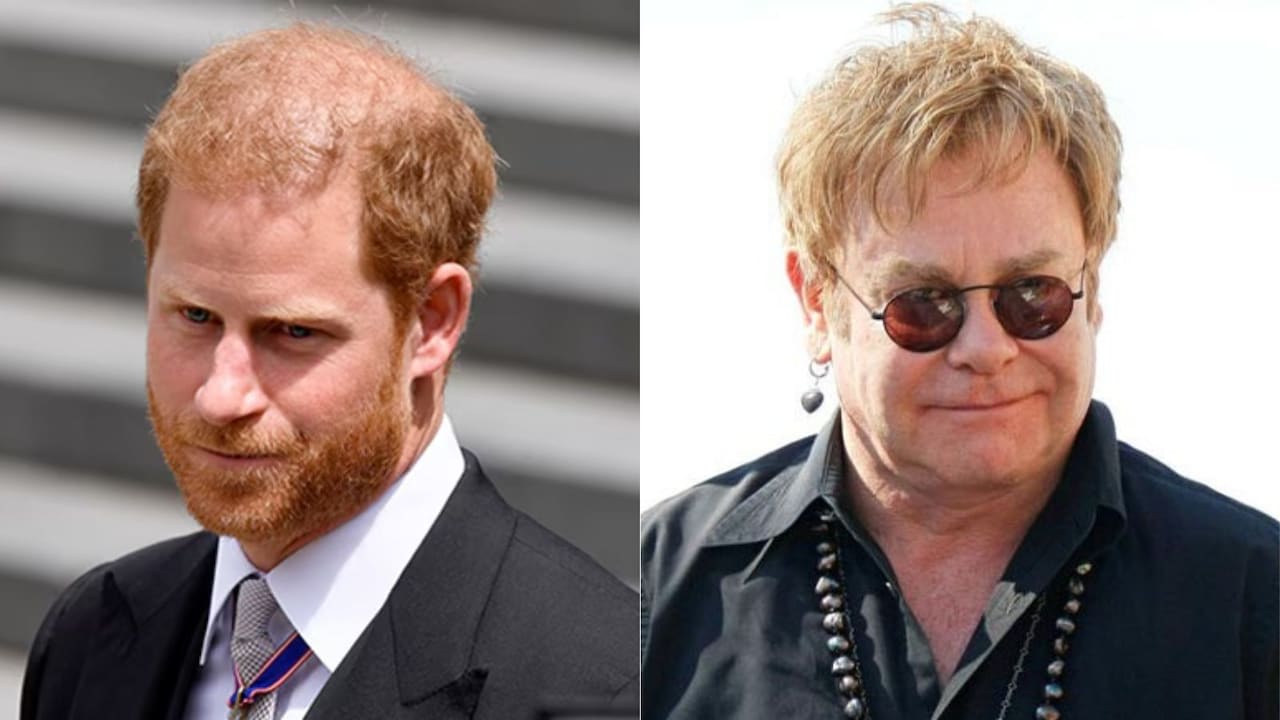
Prince Harry and six high-profile figures, including singer Elton John, have been ordered by a London court to pay an initial 9.5 million pounds (approximately Rs 124 crore) to Associated Newspapers Limited following their failed privacy lawsuit. This staggering interim bill represents only the opening installment of a financial reckoning that could ultimately eclipse 34 million pounds in total legal expenses. Justice Matthew Nicklin ruled that the claimants must cover the Daily Mail publisher's defense expenses on an indemnity basis, penalizing them for pursuing speculative allegations without adequate evidentiary support.
Litigation of this magnitude exposes the harsh mathematics of modern British civil courts. When public figures take on entrenched media conglomerates, the financial exposure extends far beyond personal pride or public narrative control. Understanding how this particular legal crusade collapsed requires looking past the celebrity headlines and examining the strict evidentiary demands of the High Court. For a deeper dive into this area, we recommend: this related article.
The Anatomy of a High Court Defeat
The core of the dispute centered on allegations that Associated Newspapers engaged in unlawful information gathering, including phone hacking and bugging, between 1993 and 2011. Proving decades-old journalistic malpractice requires more than circumstantial suspicion. During the protracted trial, the presiding judge found that the claimants failed to produce concrete proof linking specific articles to illegal sourcing.
When a legal team constructs a case based on inference rather than direct documentation, they run a distinct risk. Justice Nicklin pointed out that the claimants maintained serious accusations of criminality against named journalists long after the evidentiary foundation had eroded. That persistence transformed a standard civil disagreement into what the court termed conduct unreasonable to a high degree. To get more context on the matter, extensive coverage is available at NPR.
Insurance policies bought at the outset of the litigation provide a stark lesson in risk management. The group secured coverage up to roughly 16 million pounds, assuming standard cost parameters. Because the court applied indemnity costs—a punitive measure shifting the burden entirely to the losing side without typical proportionality tests—that insurance cushion threatens to evaporate completely.
The Trap of Speculative Litigation
In civil disputes involving institutional defendants, plaintiffs often rely on the hope that discovery will unearth smoking guns. Veteran litigators know this strategy carries immense hazard. If the documents do not materialize, the court views the initial claims not as bold pursuit of truth, but as reckless exposure of opposing reputations.
Associated Newspapers mounted a defense that cost upwards of 34 million pounds. When a judge labels that expenditure eye-watering yet still grants full recovery rights due to unreasonable claimant conduct, it signals a major shift in how English courts view anti-media lawsuits. The ruling validates the publisher's stance that their reporting relied on legitimate sources, while leaving Prince Harry and his co-claimants—including Elizabeth Hurley, Sadie Frost, and Doreen Lawrence—facing a severe financial audit.
This outcome contrasts sharply with Harry's previous legal victories against Mirror Group Newspapers and publishers of the Sun. Those earlier triumphs proved that systemic unlawful practices did occur within certain tabloid stables. However, legal precedent is not a universal shield. Each publisher operates distinct internal structures, and convincing a judge requires granular, article-by-article proof rather than broad indictments of an entire industry.
The Financial Fallout and Future Appeals
The immediate demand requires settlement by late August, setting off frantic calculations among the claimants' legal teams. Costs specialists will likely spend months debating whether the final bill can be trimmed, but the indemnity order strips away many of the traditional protections that losing parties rely on to cap their liability.
For Prince Harry, this setback arrives just as broader questions surround his family's long-term residential plans and public profile. Fighting multi-front legal battles against the British press was meant to establish accountability and reshape media ethics. Instead, the strategy has produced a multi-million-pound debt and an emboldened media adversary ready to collect every penny authorized by the bench.