When alleged internal messages from Microsoft employees surfaced online questioning why the company was not cutting H-1B visa holders during restructuring—and expressing anger over paused Green Card sponsorships—it exposed a raw fault line running straight through Silicon Valley. For years, Big Tech companies sold their international workforce on a simple bargain. Work grueling hours, accept below-market cash compensation in exchange for long-term equity, and the corporation will handle the labyrinthine federal immigration process. Now, as tech giants trim headcount and freeze permanent residency filings, that unspoken contract has fractured, pitting domestic workers against visa holders in internal channels and leaving thousands of foreign engineers trapped in legal limbo.
The leaked discussions, which spread rapidly across anonymous workplace forums and social media, reflect two distinct anxieties colliding inside the Redmond campus. On one side are employees frustrated by severance packages and layoffs who question why local staff face termination while the company continues to sponsor foreign labor. On the other side are H-1B workers facing a catastrophic immigration bottleneck after major tech employers quietly paused PERM labor certifications—the mandatory first step in employer-sponsored Green Card applications.
To understand why these internal messages carry such venom, you have to look at the mechanics of corporate immigration policy and the brutal arithmetic of modern tech layoffs.
The Mechanics of the PERM Freeze
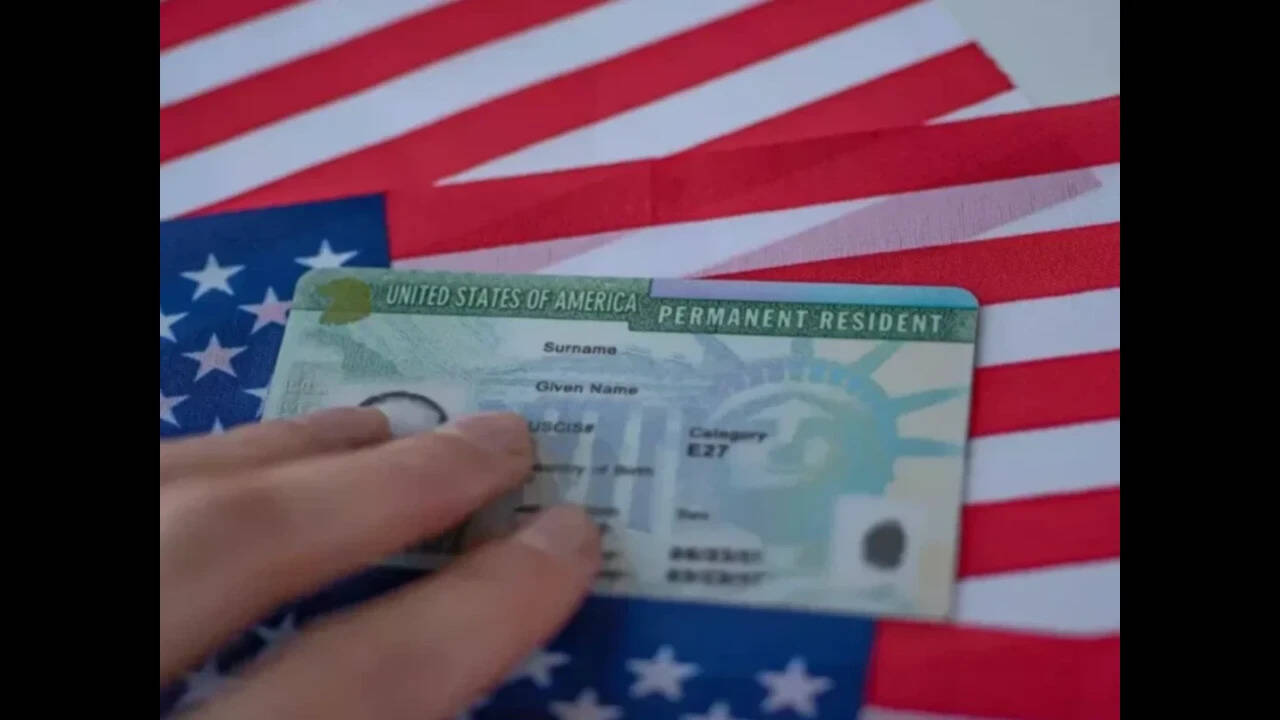
Most outsiders assume that when a tech giant hires a foreign engineer, the path to permanent residency is automatic. It is not. Under United States immigration law, sponsoring an employee for an employment-based Green Card (specifically EB-2 or EB-3 categories) requires the employer to prove to the Department of Labor that no qualified American workers are available for the role.
This process is called Program Electronic Review Management, or PERM.
To obtain a PERM certification, a company must conduct a mandatory recruitment campaign. They have to post job advertisements, review resumes from domestic applicants, and conduct interviews to verify that no U.S. citizen or permanent resident meets the minimum qualifications for the specific position.
Here is the catch. You cannot legally claim a shortage of domestic talent for a job category if you just laid off hundreds of American workers in that exact same role.
Federal regulations strictly penalize companies that attempt to file PERM applications within six months of conducting layoffs in similar job classifications. If a corporation cuts software engineers in Seattle in January, its immigration lawyers will immediately halt new Green Card filings for software engineers across the entire organization. Doing otherwise invites federal audits, mass denials, and severe compliance penalties.
When Microsoft—alongside peers like Google and Amazon—executed waves of workforce reductions, the quiet casualty was the corporate immigration pipeline. The companies did not necessarily announce a formal end to Green Card sponsorship. Instead, they instituted rolling pauses on PERM filings.
For an H-1B worker, a PERM pause is not a minor administrative delay. It is a ticking clock.
An H-1B visa is strictly capped at six years. The only way a worker can extend their H-1B status beyond that six-year limit is if their employer has filed a PERM application or an I-140 immigrant petition at least 365 days before their visa expires. If a company freezes PERM filings for a year or two due to ongoing layoffs, workers in their fourth or fifth year on an H-1B suddenly run out of runway. When their six years expire, they are legally required to pack their bags and leave the United States, regardless of how many years they have spent building core infrastructure for the company.
Why Domestic Workers Are Questioning Severance and Retention
The alleged leaked messages from Microsoft highlight the flip side of this pressure cooker. When layoffs hit, employees who lose their jobs—or fear they are next—look at the balance sheet and ask blunt questions. Why offer voluntary exit packages or cut domestic staff when the company holds thousands of H-1B petitions?
The frustration stems from a fundamental misunderstanding of how corporate labor economics and immigration law interact.
First, companies do not view H-1B workers as interchangeable placeholders that can be swapped out at will. By the time a senior engineer reaches year four or five at a company like Microsoft, they hold deep institutional knowledge of proprietary systems—Azure architecture, kernel codebases, or enterprise security protocols. Firing them to protect a less-tenured domestic worker destroys operational continuity.
Second, the notion that H-1B workers are cheap labor is largely outdated at tier-one tech firms. Federal law requires employers to pay H-1B holders the prevailing wage—the average wage paid to similarly employed workers in the specific geographic area. At Microsoft, base salaries for H-1B engineers are audited by the Department of Labor and match domestic pay bands. In fact, once you factor in legal fees—which routinely run between $10,000 and $15,000 per visa and Green Card cycle—an international hire often costs the company more upfront than a domestic one.
Yet the resentment persists, fueled by a lack of transparency from executive leadership.
When management speaks in sanitized corporate jargon about "realigning priorities" and "macroeconomic headwinds," employees fill the information vacuum with suspicion. Domestic workers see colleagues taking exit packages while visa holders remain on teams. Meanwhile, visa holders see their Green Card timelines evaporating while executives celebrate record cloud revenues and artificial intelligence investments.
The Golden Handcuffs Turn Into Iron Shackles
For decades, the H-1B system functioned as the ultimate retention tool for Big Tech. Economists and labor analysts often referred to it as a modern form of golden handcuffs.
If you are a domestic engineer at Microsoft and your manager freezes your promotion or pauses your bonus, you update your resume and walk across Lake Washington to Amazon or Meta. Your leverage is your mobility.
If you are an H-1B worker waiting on a Green Card—especially if you were born in India or China, where per-country Green Card caps create backlogs stretching decades—you have zero mobility. Changing employers requires your new company to restart the entire PERM and I-140 Green Card process from scratch. While you can retain your original "priority date" (your place in the waiting line), the administrative reset costs thousands of dollars and adds years of uncertainty.
During the tech boom from 2012 to 2021, employers used this friction to their advantage. Attrition rates among H-1B workers were notoriously lower than those of their domestic counterparts. Companies could count on steady, uninterrupted output from teams anchored by visa holders who literally could not afford to quit.
The current Green Card row exposes what happens when that dynamic breaks down.
By pausing PERM applications while keeping H-1B workers on the payroll, tech companies inadvertently stripped away the one reward that justified the lack of mobility. Workers accepted the handcuffs because there was a permanent residency card waiting at the end of the tunnel. Without active Green Card sponsorship, the handcuffs simply become shackles.
Consider a hypothetical scenario illustrating this trap. Imagine a principal engineer born in Mumbai who joined a major cloud provider in 2021. He works 60-hour weeks, leads a critical migration project, and receives top performance reviews. In 2023, the company conducts a 5 percent layoff in his division. Because of federal labor market test rules, HR pauses his PERM filing. In 2024, another targeted restructuring occurs, extending the pause. By 2026, his six-year H-1B clock is nearly exhausted. He cannot easily switch companies because other tech giants are also pausing PERM filings due to their own layoffs. He is trapped in a dead-end immigration status at a company that refuses to file his paperwork, yet he cannot leave without risking deportation.
This is not an isolated edge case. It is the daily reality for thousands of engineers across Seattle, the Bay Area, and Austin.
The Corporate Calculus Behind Voluntary Exits and Silent Cuts
To understand why Microsoft and its peers handle these situations with such guarded secrecy, you have to look at how modern tech restructuring operates.
Mass layoffs are toxic for stock prices and brand reputation. They trigger WARN Act notifications—mandatory public filings that alert state governments and the press when a company cuts a large block of jobs. To avoid the bad press of a massive layoff headline, corporations increasingly rely on silent attrition, performance-based terminations, and targeted voluntary exit packages.
This strategy creates bizarre distortions inside engineering teams.
When a company offers voluntary exit packages or conducts rolling "performance" cuts, H-1B workers rarely take the buyouts. Taking a voluntary exit package as a domestic worker means collecting six months of severance, catching your breath, and interviewing at competitors. Taking a voluntary exit package on an H-1B visa triggers a brutal 60-day grace period.
Under U.S. Citizenship and Immigration Services (USCIS) rules, if an H-1B worker loses their job, they have exactly 60 calendar days to find a new employer willing to file a visa transfer petition, change to another valid visa status, or leave the country. In a tight hiring market where background checks and interview loops alone take six weeks, 60 days is a death sentence for a career in the United States.
Consequently, when restructuring hits, domestic workers are far more likely to accept exit packages or leave voluntarily, while H-1B workers cling to their desks out of sheer survival instinct. To an outside observer—or a frustrated colleague venting in a leaked chat—it looks like the company is selectively sparing visa holders while pushing out local staff. In reality, the immigration code itself dictates who can afford to walk away and who is forced to stay.
What the Backlash Reveals About Tech Culture
The leaked messages are ugly, and corporate PR teams work overtime to scrub them from public view. They undermine the carefully curated image of tech companies as meritocratic, inclusive environments where borders do not matter.
Yet ignoring the anger inside these messages is a mistake. They point to three structural failures that the tech industry has refused to confront.
The Failure of Workforce Planning
Tech giants gorged on talent during the pandemic, hiring tens of thousands of engineers at inflated valuations without long-term sustainability plans. When interest rates rose and Wall Street demanded efficiency, management treated human capital like cloud server capacity—spinning it down as quickly as they spun it up. While domestic workers absorbed financial shocks, international workers absorbed existential ones. Management never built a buffer into their immigration compliance pipelines to protect employees from cyclical restructuring.
The Broken U.S. Immigration Statute
Corporations are operating inside a legislative framework designed in 1990. The Immigration Act of 1990 set the annual cap on H-1B visas at 65,000 (plus 20,000 for advanced U.S. degree holders) and locked in the rigid 7 percent per-country cap on employment-based Green Cards. Congress has failed to modernize these numbers for over three decades. Tech companies lobbied heavily to keep the H-1B pipeline open so they could import talent, yet they expended far less political capital fixing the Green Card backlog that traps those same workers once they arrive.
The Illusion of Corporate Loyalty
For years, tech culture encouraged employees to bring their "whole selves" to work, framing the company as a mission-driven community rather than a transactional employer. The Green Card freeze shattered that illusion permanently. When legal departments halted PERM filings to protect the corporation from Department of Labor audits, they proved beyond a shadow of a doubt that corporate compliance will always supersede employee welfare.
The Long-Term Fallout for Silicon Valley
The immediate outrage over alleged leaked chats will eventually fade from the news cycle, replaced by the next quarterly earnings report or AI product launch. The underlying damage, however, is permanent.
Trust between international engineers and Big Tech employers has eroded to a historic low. Word travels fast through university alumni networks in Hyderabad, Beijing, Toronto, and Waterloo. Top-tier engineering graduates who once viewed a Microsoft or Google job offer in the United States as the pinnacle of a tech career are actively recalculating the risk.
If taking a job in Redmond means spending six years in immigration limbo, enduring rolling PERM freezes, and facing sudden deportation during a routine corporate restructuring, the value proposition collapses. Increasingly, top international talent is choosing London, Zurich, Singapore, or domestic tech hubs in Bangalore over the volatility of the U.S. visa system.
At the same time, internal cohesion inside American tech firms has taken a hit. Once employees begin viewing their colleagues through the lens of visa status—resenting who gets severance, who gets retained, and who gets sponsored—psychological safety inside engineering teams evaporates. Collaboration suffers when half the room is terrified of losing their legal right to live in the country and the other half feels expendable.
Tech executives love to talk about disruption, agility, and building the future. Until they stop treating their workforce's legal residency as an expendable variable on a compliance spreadsheet, the quiet revolt inside their own messaging channels will only grow louder.