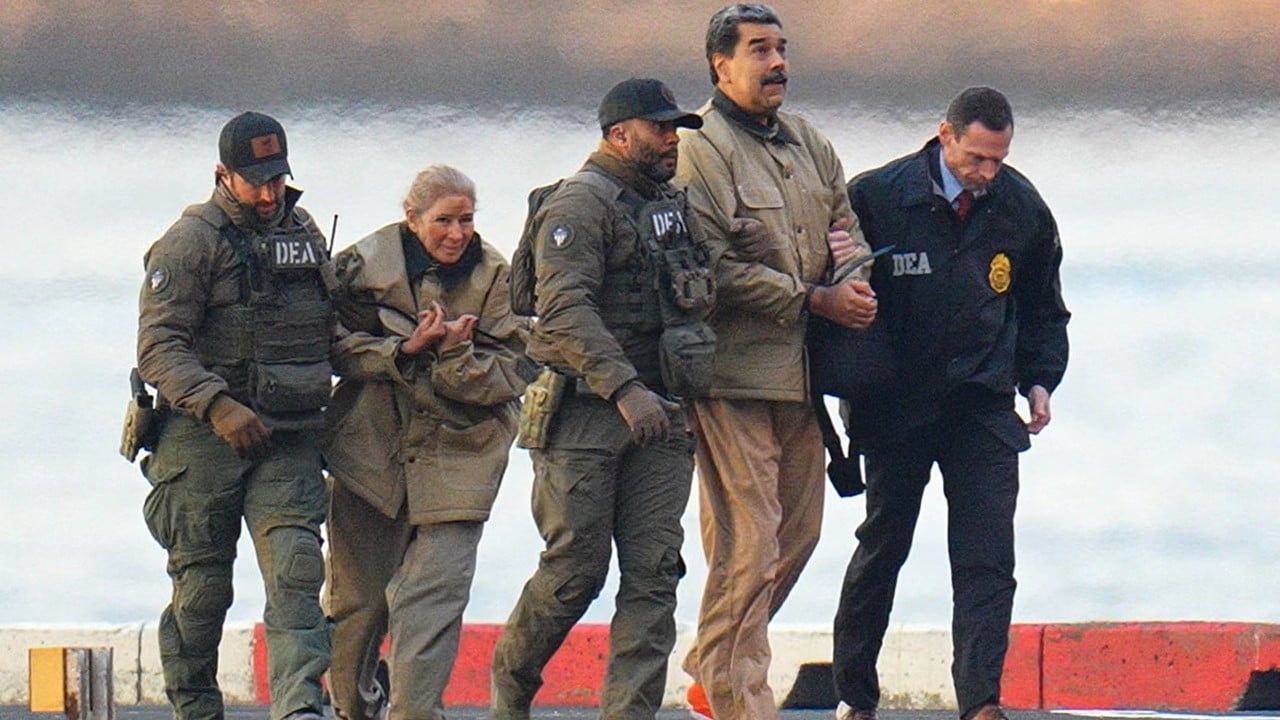
Federal prosecutors in Manhattan have expanded their criminal case against ousted Venezuelan leader Nicolás Maduro, adding severe torture charges that directly incorporate the abuse of American citizens held inside the country's clandestine detention facilities. Filed in the U.S. District Court for the Southern District of New York, the superseding indictment transforms what was initially framed primarily as a narco-terrorism and drug trafficking prosecution into a sweeping human rights reckoning.
The legal maneuver fundamentally shifts the scope of accountability for the former regime. For months following his apprehension, legal analysts debated whether Washington's initial charges—focusing heavily on decades-old cocaine trafficking conspiracies—would sufficiently capture the broader scope of domestic state violence. By introducing specific counts of torture and conspiracy involving both Maduro and his wife, Cilia Flores, the Department of Justice has signaled an intent to prosecute the architecture of state repression itself.
The newly unsealed court documents detail a systematic machinery of terror operated through the Directorate General of Military Counterintelligence, commonly known as the DGCIM. According to the indictment, Maduro did not merely preside over a fractured state; prosecutors allege he actively monitored, directed, and occasionally mocked the interrogation methods used against political dissidents and detained U.S. nationals.
The charges cite harrowing accounts of American prisoners subjected to electric shocks, severe beatings, prolonged isolation, and psychological torment. For victims who spent months or years in the subterranean cells of Caracas before being released in prisoner swaps, the federal indictment provides a rare, albeit delayed, institutional validation of their ordeals. It elevates their personal testimonies from civil litigation to the center stage of an international criminal trial.
Legal experts tracking the proceedings note that adding these charges carries distinct strategic implications for the prosecution. While narcotics and narco-terrorism charges rely heavily on tracing financial transactions, cartel networks, and informant testimonies, human rights violations require tying high-level political figures directly to physical acts on the ground. The indictment attempts to bridge this gap by outlining a command structure where top-level directives were passed down through intermediaries, specifying how much pressure should be applied to uncooperative detainees.
Defense attorneys have moved quickly to push back against the expanded scope. Counsel for Maduro and Flores have argued that the new charges represent an artificial fabrication of jurisdiction, implemented after the fact to reinforce a case they contend is politically motivated. They have also pressed claims of head-of-state immunity, a traditional shield that federal prosecutors have aggressively worked to dismantle by categorizing Maduro's tenure as an illegitimate criminal enterprise rather than a sovereign government.
The trial, now scheduled for the middle of 2027 in a Manhattan federal courtroom, stands as an extraordinary milestone in modern international jurisprudence. Rarely do sitting or ousted heads of state face direct prosecution in a U.S. court for the physical torture of foreign nationals within their own borders. As pre-trial motions unfold, the proceedings will test the limits of extraterritorial jurisdiction and determine whether the mechanisms of federal criminal law can successfully pierce the armor of authoritarian power.