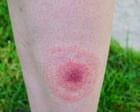
The headlines look like a standard seasonal warning. Newly published data from the UK Health Security Agency (UKHSA) reveals that laboratory-confirmed cases of Lyme disease in England surged by 22% in a single year, climbing from 959 cases to 1,168. Public health officials are quick to call this a predictable fluctuation, pointing out that the figures align closely with previous years and tracking variations in weather or public awareness.
But the official numbers are masking a far more volatile reality. The true scale of the UK’s tick-borne illness crisis is hidden behind a broken diagnostic system, a lack of mandatory reporting, and a rapidly changing ecological landscape that is pushing infected vectors into suburban back gardens. We are not just dealing with a minor statistical bump. We are witnessing the quiet expansion of a complex, debilitating pathogen that the British healthcare apparatus is fundamentally unequipped to measure, let alone contain.
The Phantom Epidemic
The 1,168 cases cited by the UKHSA represent only the tip of a very deep clinical iceberg. In the UK, Lyme disease is not a statutorily notifiable disease for medical practitioners. If a GP diagnoses a patient based on clinical symptoms and treats them immediately, that case never enters the official national database.
Patient advocacy groups, including Lyme Disease UK, have long warned that the official laboratory metrics represent a fraction of the actual disease burden. When a patient presents with the classic erythema migrans—the distinctive bullseye rash—National Institute for Health and Care Excellence (NICE) guidelines dictate that the doctor should initiate antibiotic treatment immediately without waiting for a blood test. Because approximately 70% of patients develop this rash, a massive cohort of successfully treated patients vanishes from public health tracking entirely.
Independent epidemiological studies using primary care databases suggest the real number of annual infections in the UK is likely between 3,000 and 8,000. By relying strictly on laboratory confirmation to dictate the public narrative, health agencies understate the true societal footprint of the disease. This statistical blindness directly influences funding, research allocation, and localized public health warnings.
Why the Ticks are Winning
To understand the surge, one must look at the shifting boundaries of the British countryside. The narrative that Lyme disease is an exclusive hazard for hikers in the Scottish Highlands or the deep woods of the South West is dangerously outdated.
Ticks require high humidity to survive. Warmer, wetter winters driven by changing climate patterns have extended the window of tick activity, keeping the arachnids active during months when they previously went dormant. At the same time, changes in land management and wildlife populations have created a perfect storm for vector proliferation.
- The Host Multiplier: Small mammals like mice and voles serve as the primary reservoirs for the Borrelia burgdorferi bacteria. When these populations thrive due to milder winters, the infection pool expands.
- Suburban Encroachment: As housing developments push further into rural fringes, the boundaries between wild habitats and domestic gardens blur.
- The Pandemic Pet Boom: A sharp, sustained increase in dog ownership since 2020 has brought a massive urban population into direct contact with questing ticks in local parks and green spaces.
The geographical distribution is widening. While the South West, South East, and London still account for the majority of confirmed cases, infected ticks are increasingly identified in urban green spaces and domestic gardens. A manicured lawn adjacent to a woodland patch can harbor just as much risk as a remote forest trail.
The Diagnostic Deadlock
If the ecological factors are concerning, the medical framework for identifying the disease is outright alarming. The standard NHS diagnostic pathway relies on a two-tier antibody testing system. It is a process fraught with biological limitations that frequently lead to missed windows of early intervention.
The human body takes weeks to develop detectable levels of antibodies against Borrelia burgdorferi. If a patient is tested within the first month of a bite, the test will almost certainly return a false negative. Conversely, antibodies can persist in the bloodstream for years after an infection has been successfully cleared, complicating diagnoses for individuals who present with new, unrelated neurological or joint issues.
[Initial Tick Bite]
       │
       ▼
[0-4 Weeks: Window of Diagnostic Failure] ──► (Antibodies not yet detectable; blood tests return false negatives)
       │
       ▼
[4+ Weeks: Standard Two-Tier Testing]     ──► (ELISA screening followed by Western Blot confirmation)
For those who do not develop the characteristic bullseye rash—or whose rash is atypical or missed entirely—the journey to diagnosis becomes a bureaucratic maze. Patients are often shunted between rheumatologists, neurologists, and chronic fatigue clinics, losing precious months during which the bacteria can disseminate into the central nervous system and joints.
The Shadow of New Pathogens
The focus on Lyme disease obscures an even more aggressive threat migrating into British ecosystems. The same UKHSA surveillance report flagged two unrelated probable cases of locally acquired tick-borne encephalitis (TBE) complex. This brings the total number of UK-acquired TBE cases to six since the virus was first detected on British soil in 2019.
Unlike Lyme disease, which is bacterial and takes hours of tick attachment to transmit, TBE is a viral infection that can be transmitted within minutes of a bite. While the majority of TBE infections are asymptomatic or mild, the virus can attack the central nervous system, causing meningitis or encephalitis.
The virus has been identified in distinct pockets across the country, including the New Forest, Thetford Forest, Dartmoor, and parts of Yorkshire. Its presence signals a permanent shift in the biological risk profile of the British outdoors. A preventative vaccine for TBE exists and is utilized across endemic regions in Europe, but it remains restricted to high-risk occupational workers in the UK, such as forestry staff and agricultural laborers.
The Vaccine Pipeline Dilemma
The pharmaceutical sector has taken notice of the growing global market for tick-borne illness interventions. Clinical trials are currently underway for new preventative measures, notably the Phase 3 trials for a Lyme disease vaccine candidate developed by Pfizer and Valneva.
The path to market is not straightforward. Recent trial data indicated that while the vaccine demonstrated an efficacy rate exceeding 70%, fewer overall cases occurred among participants than statistically modeled, complicating the robustness of the data package intended for regulatory bodies. Even if authorized, the deployment strategy inside the UK remains a highly contested topic.
Given the UKHSA’s current stance that Lyme disease is a low-incidence, localized issue, the Joint Committee on Vaccination and Immunisation (JCVI) is highly unlikely to recommend a mass rollout. Instead, any future vaccine would likely be relegated to a private, out-of-pocket purchase or restricted to specific high-risk cohorts. This ensures that the financial and physical burden of the disease will continue to fall squarely on individuals who live and work in expanding risk zones.
The 22% increase in laboratory diagnoses is not a statistical anomaly to be brushed aside by bureaucratic platitudes. It is an explicit warning that the relationship between British citizens, the landscapes they inhabit, and the vectors within them has fundamentally shifted. Relying on a passive, reactive diagnostic network while the ecological boundaries of these diseases expand ensures that the true scale of this public health crisis will remain buried in the undergrowth.