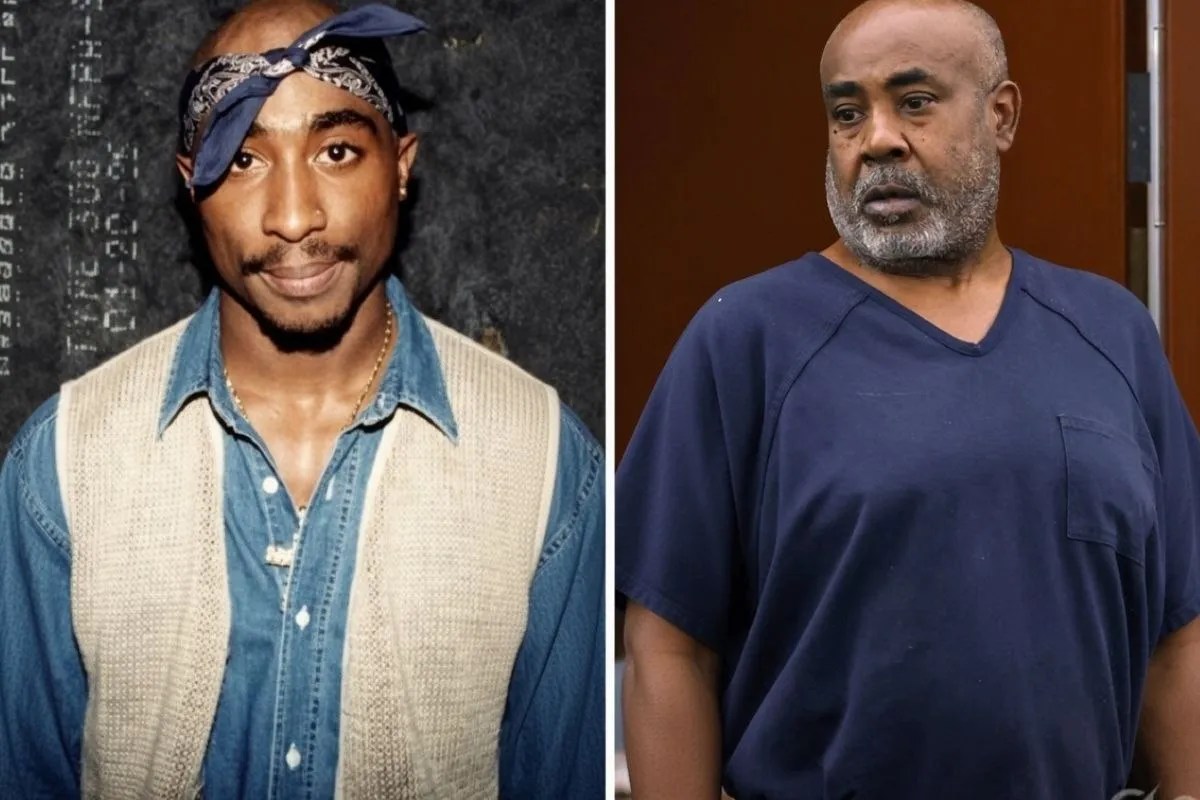
Thirty years after a white Cadillac idled at a Las Vegas stoplight and bullets tore through the flesh of hip-hop royalty, a Clark County jury delivered a verdict that many thought would never come. Duane “Keefe D” Davis was found guilty of first-degree murder with a deadly weapon for orchestrating the September 1996 killing of Tupac Shakur. The trial lasted weeks, but the prosecution's foundation was built over decades through police interviews, tell-all books, and podcast appearances. Davis essentially convicted himself.
The legal journey to this conviction defies conventional criminal procedure. For nearly three decades, the murder of Shakur remained an open wound in American culture, an iconic tragedy whispered about in housing projects, boardrooms, and prison yards. Law enforcement knew who was in the car. They knew about the casino brawl involving Shakur, Marion "Suge" Knight, and Orlando Anderson earlier that evening at the MGM Grand. Yet, prosecutors lacked the hard physical evidence required to secure an indictment. Murder weapons vanish. Eyewitnesses die or recant. Omertà codes hold firm in street cultures when the state relies solely on traditional informants.
Everything shifted when Davis decided to monetize his notoriety.
The Anatomy of a Self-Inflicted Indictment
Hubris is a predictable prosecutor's ally. Believing he was safely shielded by time, shifting legal jurisdictions, and informal immunity agreements supposedly struck with law enforcement agencies in earlier years, Davis began talking. He spoke to documentary filmmakers, sat down with task forces under misguided protection impressions, co-authored a memoir titled Compton Street Legend, and bantered on digital media platforms. He admitted to acquiring a .40 Glock, handing it to the back seat, and riding in the vehicle from which the fatal shots were fired.
Defense attorneys argued during the trial that these statements were hyperbole manufactured for financial gain and cinematic exaggeration. They pointed to the absence of independent forensic material tying Davis directly to the physical deployment of the weapon that night. It was a rational defense strategy built on standard evidentiary gaps. But under Nevada law, direct physical execution is unnecessary to establish culpability for murder if the defendant actively planned, facilitated, or provided the instrument of death to further a premeditated assault.
Chief Deputy District Attorney Binu Palal did not need to prove Davis pulled the trigger. He only needed to convince jurors that Davis orchestrated a retaliatory hit after his nephew, Orlando Anderson, was beaten down in the casino lobby. The jury deliberated for less than three hours before returning the guilty verdict, unmoved by the defense's argument that a man would fabricate orchestrating a historic murder purely to sell paperbacks and podcast ads.
The Broader Reality of Delayed Justice
This case exposes a wider pattern in cold-case resolutions involving cultural icons. Institutional inertia often protects perpetrators until time softens their caution. When older gang figures transition into the digital content era, their desire for legacy and financial payout frequently overrides the survival instincts that kept them silent in their youth. Davis thought he was writing his own myth. Instead, he drafted the state's closing argument.
The conviction closes a legal chapter on an era defined by the fatal friction between Death Row Records and Bad Boy Records. Yet, it arrives with a heavy asterisk. Orlando Anderson, the alleged gunman and Davis's nephew, was shot and killed in an unrelated incident in Compton in 1998. Other occupants of the vehicle are gone. Davis stands alone as the sole legal casualty of a conspiracy that altered modern music history.
As the court prepares for sentencing, the focus shifts away from the glamour of the 1990s West Coast rap golden age and toward the stark mechanics of accountability. Justice arrived thirty years late, fueled not by breakthrough forensic science or heroic detective work, but by a aging defendant who could not stop talking about his own crime.

