The policy shift arrived with little fanfare, yet it detonated an immediate firestorm across legal and political circles. Under the administration's framework, government lawyers would be deployed to represent unaccompanied migrant children in immigration proceedings. On its surface, the concept sounds like a measure designed to streamline an overburdened docket and bring institutional order to chaos. Strip away the bureaucratic veneer, however, and a much sharper conflict emerges regarding who truly speaks for the most vulnerable defendants in the American courtroom.
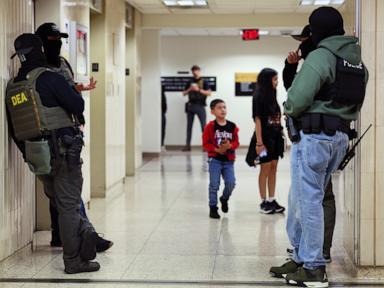
For decades, the architecture of the United States immigration system has treated unaccompanied minors through an adversarial lens. Children barely old enough to tie their own shoes routinely sit before immigration judges entirely alone, or facing aggressive Department of Homeland Security prosecutors across the aisle. Providing representation changes the mechanics of the hearing room, but assigning government-salaried attorneys to the task introduces an unavoidable structural tension. When an attorney's paycheck originates from the same executive apparatus managing immigration enforcement, questions of independent counsel and zealous advocacy move front and center.
The Structural Mechanics of Representation
To understand the weight of this initiative, one must look closely at how immigration court functions for minors. Unlike criminal court, where the Sixth Amendment guarantees the right to counsel at public expense, immigration proceedings are civil in nature. That legal distinction has left hundreds of thousands of children to navigate complex administrative law without a lawyer.
Nonprofit legal aid groups have historically scrambled to fill this void, operating on tight budgets and overwhelmed by the sheer volume of new arrivals. These independent advocates operate with a singular mandate: protect the child's legal interests against removal, regardless of political shifts or enforcement quotas.
Injecting government-salaried attorneys into this dynamic alters the equation. Proponents argue that institutional representation brings standardization and ensures that every child has a voice, reducing the number of administrative defaults where unrepresented minors miss hearings or fail to articulate complex asylum claims. Skeptics, including veteran immigration litigators, point to the inherent conflict of interest. An attorney embedded within a federal structure cannot easily challenge the systemic flaws of that very same structure without running headlong into institutional friction.
Historical Precedent and Institutional Realities
The debate over state-provided counsel in civil administrative settings is not entirely new. Across various state-level child welfare systems, public defenders or government-funded guardians ad litem represent juveniles facing dependency or neglect proceedings. Yet those models generally emphasize the child's best interests as determined by independent judicial oversight, whereas immigration proceedings remain tightly coupled with national enforcement priorities.
When the state assumes the role of both prosecutor and defense, the traditional adversarial safeguard frays at the edges. An attorney answering to a federal agency must navigate internal directives, shifting policy memos, and budgetary constraints dictated by political leadership. If an administration decides to prioritize rapid removals or restrict specific categories of asylum eligibility, the operational pressure on government-employed child advocates becomes palpable.
Experienced courtroom observers note that the quality of legal defense in immigration court often dictates the final outcome. A child represented by a dedicated, independent advocate stands a vastly different statistical chance of securing relief compared to one facing the judge unassisted. Whether a government-salaried attorney can match the fierce, uncompromised independence of a community-based legal aid lawyer remains the central anxiety driving the opposition.
Financial Realities and the Resource Gap
Beyond the ethical dimensions lies a stubborn fiscal reality. The federal government possesses the financial muscle to scale legal representation in a way that the private nonprofit sector never could. Private legal charities rely on philanthropic donations, grants, and limited government contracts, leaving them perpetually outgunned by the massive administrative machinery of the Department of Justice and the Department of Homeland Security.
Yet scaling up through a federal agency creates a monolithic pipeline. Instead of distributing funds to community organizations rooted in the local immigrant neighborhoods where these children eventually live, a centralized government law office keeps the operation under federal control. This approach streamlines deployment, but it also centralizes power. It effectively cuts out the community-based networks that have spent decades building trust with traumatized minors and their sponsors.
Furthermore, the sheer volume of pending cases in the immigration backlog makes any universal representation model an uphill battle. Millions of cases languish on dockets nationwide. Even an influx of government attorneys represents a fraction of the workforce required to provide truly individualized, rigorous counsel to every unaccompanied minor entering the system.
The Broader Ramifications for Due Process
As these programs take root, the definition of due process within immigration tribunals undergoes a quiet mutation. When the state provides the lawyer, the judge, and the prosecutor, the appearance of neutrality is severely tested. The courtroom ceases to be an arena where independent forces test the strength of the government's case against an individual. Instead, it risks becoming an administrative assembly line where outcomes are managed rather than contested.
For the children caught in the middle, the abstract debates over separation of powers and institutional independence translate into immediate, life-altering stakes. A poorly managed defense or a compromised legal strategy can result in deportation back to conditions of extreme violence or instability.
The administration's gambit attempts to solve a visible humanitarian and logistical embarrassment with a heavy institutional footprint. Whether that footprint offers genuine protection or simply provides a veneer of regular order to an inherently harsh system is a question that will play out in courtrooms across the nation for years to come. The tension between administrative efficiency and uncompromised advocacy defines the modern immigration landscape, and no amount of structural reorganization can wish that fundamental contradiction away.