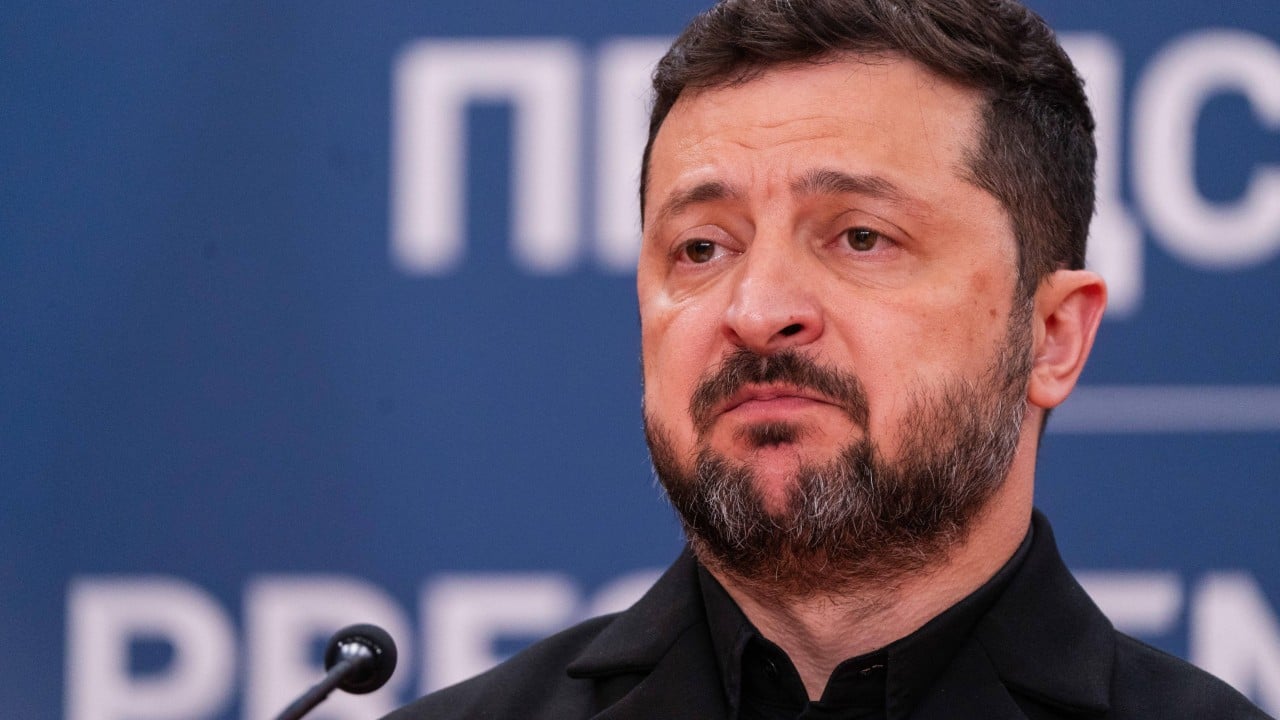
The political architecture built around Ukrainian President Volodymyr Zelenskyy is experiencing its most severe fracture since Russian forces crossed the border. Anti-corruption investigators recently targeted senior figures inside the presidential office, raiding properties and exposing complex money laundering schemes designed to cover high-level bail payments. This internal shockwave follows closely on the heels of a public broadside from Mykhailo Fedorov, the country's recently ousted defense minister, who demanded an immediate return to national elections. As the war stretches into its fifth grinding year, Kyiv faces a multi-front crisis involving military friction, domestic graft allegations, and an open debate over wartime democracy.
Anti-corruption bodies, including the National Anti-Corruption Bureau of Ukraine (NABU) and the Specialized Anti-Corruption Prosecutor's Office (SAPO), executed a coordinated series of raids targeting a network involving current lawmakers and high-ranking presidential aides. The investigation centers on an alleged scheme to cycle millions through state-backed financial institutions to secure the release of former officials. Among the high-profile casualties of this widening dragnet is Iryna Mudra, a deputy head of the presidential administration whose home was searched before her swift dismissal via presidential decree.
The erosion of the inner circle has exposed deep vulnerabilities in Kyiv's administrative structure. Critics argue that concentrating power within a tight-knit executive office creates systemic risks, particularly when wartime powers suspend the usual checks and balances. The departure of former chief of staff Andriy Yermak amid separate graft probes last year established an unsettling precedent, proving that proximity to executive leadership does not insulate officials from entrenched patronage networks. Western partners, who have funneled billions in military and financial aid into the country, watch these developments with growing apprehension, knowing that transparency remains a strict precondition for eventual European integration.
Compounding these legal troubles is an open political rebellion from within. Mykhailo Fedorov, an influential reformer who helped architect the 2019 presidential campaign, launched a direct challenge to the administration after being forced out of his cabinet post. In a sharply worded video address, Fedorov argued that unchecked corruption directly undermines the nation's capacity to defend itself. More controversially, he called for a pragmatic legal framework to restore normal electoral cycles despite the ongoing martial law.
Zelenskyy has consistently maintained that organizing a national vote under active bombardment and rocket fire remains logistically impossible and legally barred by martial law. Yet Fedorov’s public intervention strikes a nerve among a fatigued populace. Street protests erupted in Kyiv following the defense shakeup, highlighting public exhaustion with opaque administrative decisions. Opponents of the current timeline argue that delaying elections indefinitely risks sliding from necessary wartime centralization into unchecked executive authority. Meanwhile, external actors like Moscow seize upon the democratic deficit to question the administration's mandate, turning the logistics of voting into an ideological weapon.
Balancing national survival with democratic continuity presents an unprecedented administrative puzzle. If the government suppresses internal dissent too aggressively, it risks alienating the civic reformers who form the backbone of its societal resilience. If it moves too slowly on corruption, it forfeits the moral clarity required to sustain international assistance. The removal of tainted officials signals a willingness to purge bad actors, but recurring scandals suggest the problem is structural rather than isolated.
The weeks ahead will test whether the state can purge its internal vulnerabilities without collapsing under the weight of political infighting. The battlefield in the east demands total unity, but the offices in Kyiv are consumed by a high-stakes struggle over governance, accountability, and the future of Ukrainian democracy.