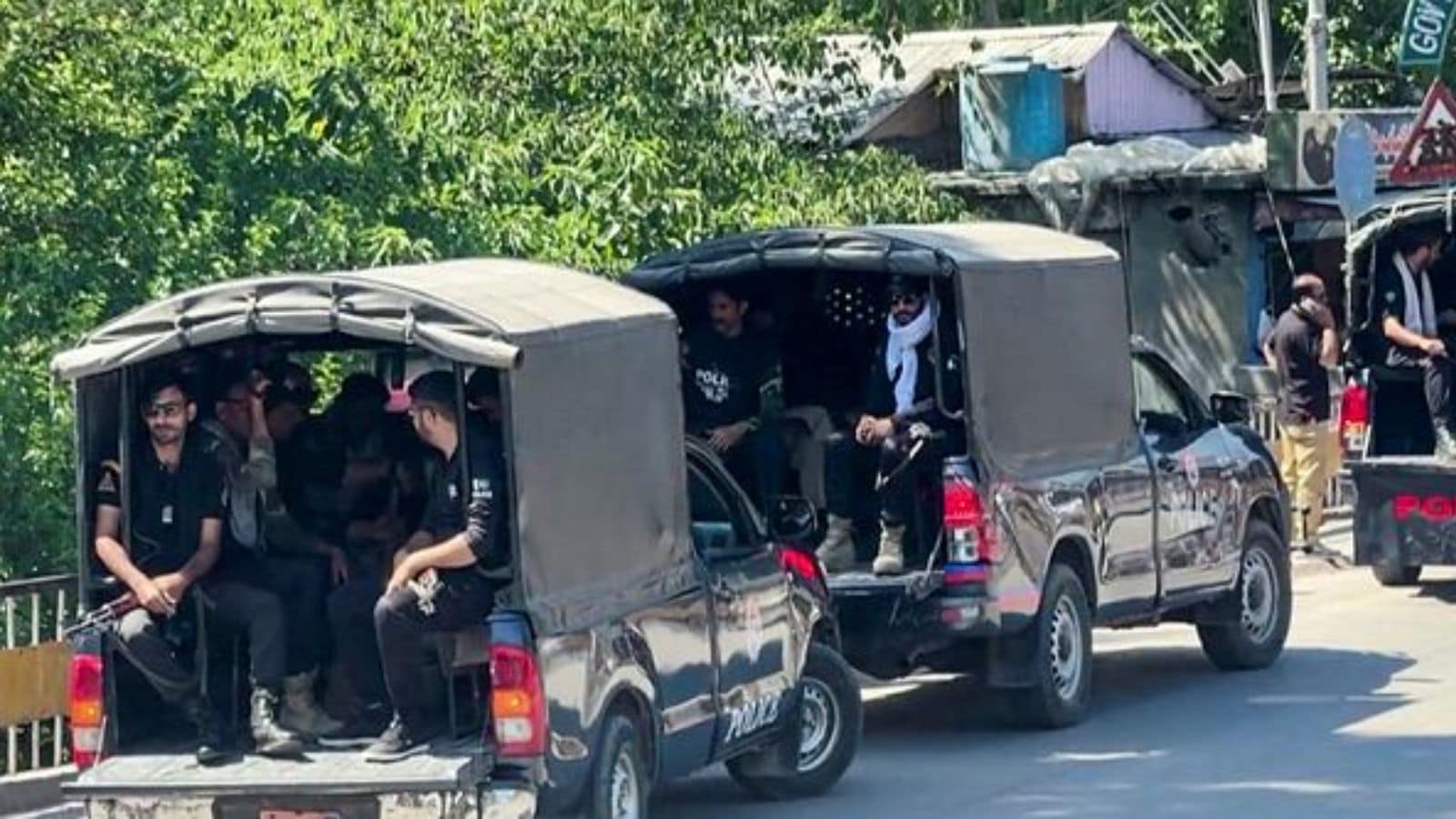
The narrative out of Islamabad has long been one of scripted tranquility, a carefully curated display of a contented borderland. That illusion dissolved entirely in the mountain passes of Rawalakot and Muzaffarabad this week as paramilitary forces opened fire on crowds of civilian demonstrators, leaving dozens dead and a strategic frontier in complete chaos. The immediate spark was a draconian anti-terror decree targeting a domestic civil rights alliance, but the underlying fuse has been burning for decades. India immediately seized on the bloodshed, launching a diplomatic offensive to condemn what it terms systemic police brutality, while Pakistan scrambled to clamp down on communications, cutting mobile data and sealing entire districts from public view.
What the world is witnessing is not a routine border skirmish or a flash-in-the-pan riot over food subsidies. It is the violent unraveling of a governance model that has treated Pakistan-administered Kashmir as a geopolitical buffer zone while systematically disenfranchising its population.
The Breaking Point in Rawalakot
The current cycle of violence entered a fatal orbit when the regional administration declared the Joint Awami Action Committee an illegal entity under severe anti-terrorism legislation. Founded in late 2023, the committee is not a militant cell; it is an umbrella coalition composed of local traders, student unions, lawyers, and transport workers. By criminalizing the most credible grassroots political platform in the territory just days before a planned regional strike, the state effectively shut down all avenues for peaceful dissent.
The state apparatus miscalculated the depth of local fury. Within hours of the ban, a local merchant was shot dead during an altercation with police, transforming a political standoff into a street-level rebellion. The crisis peaked when paramilitary Rangers confronted grieving families and activists gathered outside a hospital mortuary in Rawalakot. Witnesses described a chaotic scene where tear gas gave way to live ammunition. While official figures from Islamabad claim a lower double-digit death toll, local organizers and medical sources inside the valley report that at least 27 civilians have been killed, with over 200 injured across multiple towns.
The response from the central government followed a familiar, decades-old counter-insurgency playbook. Mobile internet services vanished across the region. Public assemblies were banned under emergency declarations. Foreign tourists were abruptly ordered to vacate the territory. By throwing a blanket of digital isolation over the mountains, the state hoped to contain the political fallout, but the economic and psychological scars of the crackdown had already spread to the key hubs of Mirpur, Bhimber, and Kotli.
The Hidden Architecture of Discontent
To understand why the region is erupting now, one must look past the immediate headlines of high inflation and look directly at the structural mechanisms used to control the local legislature. For generations, Islamabad has managed the Muzaffarabad assembly through a highly manipulated electoral engineering system. At the heart of the current 38-point demand charter issued by protestors is a call to abolish the 12 legislative seats explicitly reserved for refugees from Indian-administered Kashmir.
These reserved seats do not represent the actual population living within the territory. Instead, they are voted on by diaspora populations scattered across mainland Pakistan. Historically, whichever major political party holds power in Islamabad sweeps these 12 seats, effectively creating a permanent, captive voting bloc inside the regional parliament. This mechanism guarantees that regardless of how the residents of the valley actually vote, the central government can always install a compliant regional prime minister.
"The reserved seats are nothing more than a constitutional backdoor," notes a veteran political analyst based in the region, speaking on condition of anonymity. "They ensure that local governance remains subservient to the strategic dictates of the capital, leaving the actual inhabitants without a genuine voice in their own administration."
This structural disenfranchisement is compounding deep economic resentment. The region produces a massive surplus of hydroelectric power through mega-dams built across its river systems, yet the local population faces chronic power outages and skyrocketing utility bills. The electricity generated locally is routed directly into the national grid of mainland Pakistan, only to be sold back to the residents of the valley at inflated, heavily taxed tariffs. When coupled with the crushing inflation brought on by national austerity measures, the daily cost of living has simply outpaced household earnings.
The Geopolitical Exploitation
The internal crisis has instantly become ammunition for the broader informational warfare between New Delhi and Islamabad. The Indian Ministry of External Affairs issued a sharp rebuke, labeling the actions of the Pakistani security forces as severe police brutality and demanding international accountability for human rights violations. New Delhi's calculated outrage serves a dual purpose, deflecting attention from its own historical challenges in the region while systematically exposing the gaps in its neighbor's domestic narrative.
Pakistan, caught in a fiscal vice as it tries to satisfy international lending institutions, finds itself entirely unequipped to manage the optics of this domestic rebellion. The country's military leadership has spent years projecting an image of absolute stability along the Line of Control. Images of local youth intercepting security vehicles and pulling down state symbols tear that narrative apart.
This is the third major wave of unrest to hit the territory within a two-year window, following major protests in mid-2024 and late 2025. Each time, the government has deployed an identical cycle of temporary financial packages, heavy-handed policing, and internet blackouts. The short-term subsidies announced in the past have done nothing to alter the fundamental imbalance of power. With regional elections scheduled for late July, the state's reliance on raw force to maintain order suggests that the traditional methods of political management have run their course, leaving an angry, young population with very little left to lose.



:max_bytes(150000):strip_icc():focal(665x0:667x2)/gettyimages-50733149-2000-8b129a2475974982a915418ce92a73d8.jpg)