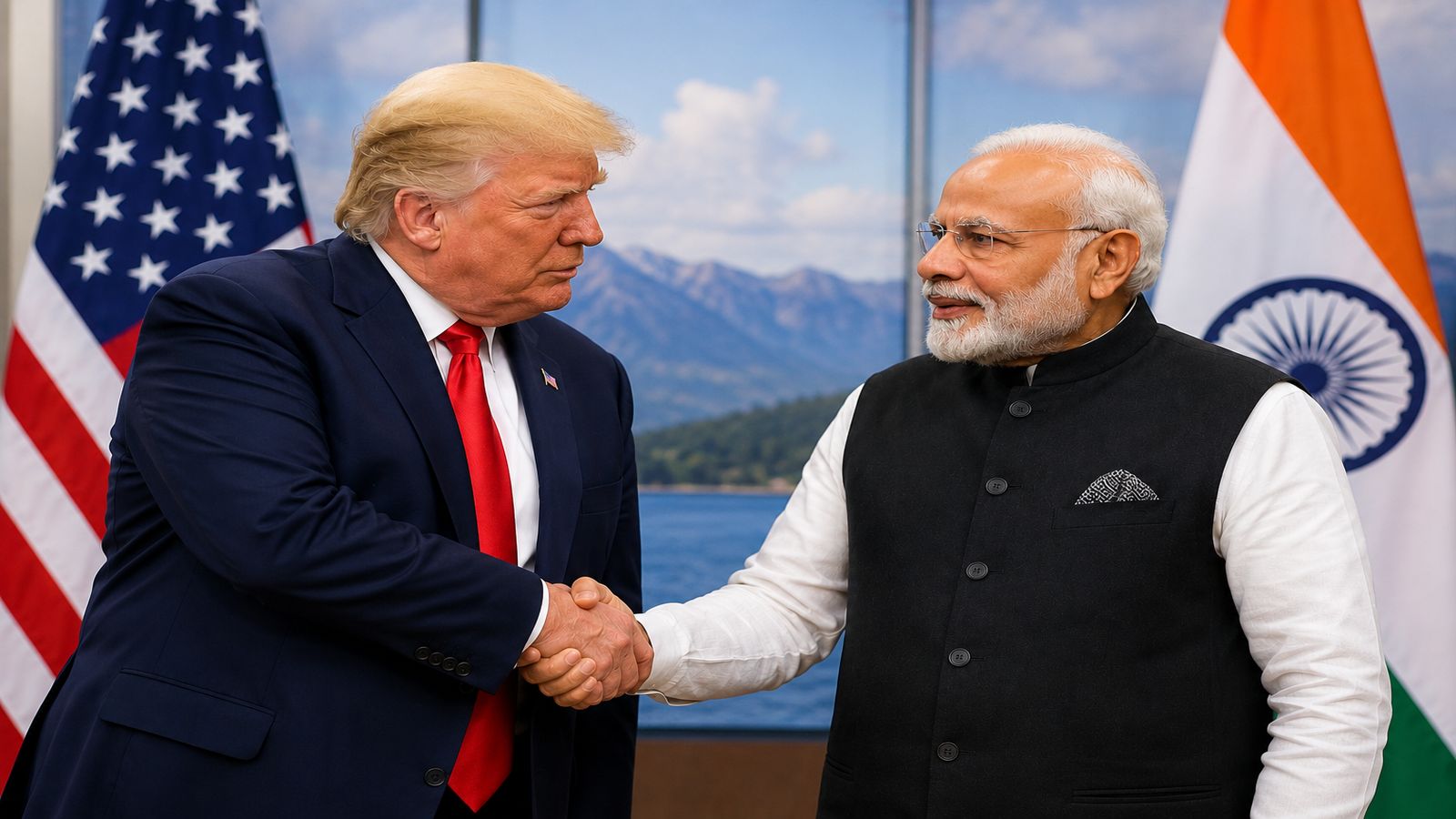
India is aggressively pushing back against a Washington-led forced labor investigation into its critical export industries, warning that proposed American tariffs will backfire on US companies and consumers. New Delhi’s resistance targets a United States Department of Labor probe threatening punitive duties on Indian goods ranging from shrimp to textiles. While Washington frames the investigation as a human rights imperative, India views it as economic protectionism disguised as moral outrage. The standoff threatens to disrupt billions of dollars in bilateral trade, proving that supply chain decoupling is far more painful in practice than it sounds in political speeches.
The friction centers on the US Tariff Act of 1930, specifically Section 307, which bans the import of goods produced through forced or indentured labor. In recent months, US federal agencies have ramped up scrutiny on major Indian export sectors. Investigators allege systemic labor abuses, long working hours, and debt bondage in shrimp processing plants, textile mills, and granite quarries.
New Delhi is not taking the accusations lying down.
The Indian Ministry of Commerce and Industry has fired back with a detailed defense, arguing that the US investigation relies on flawed methodologies, biased NGO reports, and isolated incidents rather than systemic proof. Indian officials are pointing out a glaring contradiction. Washington wants India to serve as a primary geopolitical counterweight to China, yet American trade policies are actively penalizing Indian manufacturers.
The Financial Trap for American Importers
If Washington moves forward with import bans or punitive tariffs, American businesses will foot the bill.
Consider the shrimp industry. India is the largest exporter of frozen shrimp to the United States, commanding roughly 40 percent of the market share. US retail giants, restaurant chains, and food distributors depend entirely on this steady, low-cost supply. There is no immediate alternative. Shifting procurement to other nations like Ecuador or Vietnam takes years of capital investment, contract negotiations, and regulatory approvals.
A sudden ban on Indian seafood would trigger immediate shortages. Prices at American grocery stores would spike. The same vulnerability applies to the home textiles sector, where Indian cotton mills supply a massive portion of the sheets, towels, and apparel sold by major US retailers.
American companies are already operating on razor-thin margins due to persistent domestic inflation. Forcing them to rewrite their sourcing playbooks overnight will not punish Indian factory owners; it will penalize American consumers at the checkout counter.
Geopolitical Friction in the Indo-Pacific
The timing of this labor dispute exposes a deep disconnect within American foreign policy.
For the past decade, Washington has aggressively courted New Delhi. The goals are clear. The US wants to secure the Indo-Pacific region, build resilient supply chains, and reduce global reliance on Chinese manufacturing. Initiatives like the Indo-Pacific Economic Framework were designed to bind these economies together.
Yet, the Department of Labor and the US Trade Representative are operating on a separate track. By targeting India’s core export sectors, US trade regulators are undermining the strategic alliance their diplomatic counterparts are trying to build. Indian policymakers view these labor investigations as a breach of trust. They argue that if the US treats its closest strategic partners with the same regulatory hostility it directs at adversaries, the concept of "friend-shoring" is dead.
The Problem with Distant Auditing
The core of the dispute lies in how forced labor is defined and investigated from ten thousand miles away.
US investigators frequently rely on third-party auditors and local non-governmental organizations to assess factory conditions. This process is deeply flawed. Many local organizations operate with specific political or funding agendas, incentives that can lead to exaggerated findings. Furthermore, western definitions of forced labor often fail to account for the economic realities of developing nations.
For instance, the traditional Indian "sumangali" scheme in the textile sector involves young women working under multi-year contracts to save for a wedding dowry. To a Western auditor looking at a checklist, long-term contracts tied to delayed lump-sum payouts look identical to debt bondage. To the local community, it is often seen as a structured path toward financial independence and social mobility.
This does not mean Indian supply chains are pristine. Labor exploitation, underpayment, and unsafe conditions exist in informal sectors across the country. The Indian government has domestic laws to address these issues, including the Bonded Labour System Act. However, New Delhi maintains that these are domestic regulatory challenges to be solved through state enforcement, not international trade tribunals.
Regulators Ignoring the Informal Reality
Western trade policy assumes that manufacturing happens in a vacuum. It assumes every factory is a self-contained unit with clear HR departments, digital timecards, and easily traceable supply lines.
The reality in India is highly fragmented. Major exporters rely on layers of sub-contractors, home-based workers, and informal workshops to fulfill large orders. A primary facility in Gujarat or Tamil Nadu might adhere to strict international standards, but part of its embroidery or component assembly might be outsourced to a village workshop three counties away.
When US authorities issue a blanket Import Alert based on violations found at a tertiary subcontractor, they paralyze the entire export chain. This heavy-handed approach does not fix the underlying labor issue. Instead, it forces primary exporters to cut ties with informal workers entirely, pushing vulnerable laborers further into poverty and underground economies where abuse is even harder to track.
The Real Winners of the Dispute
If the US-India trade relationship fractures over these labor probes, the geopolitical fallout will benefit America's primary economic rival.
China possesses the infrastructure, automated capacity, and state-backed logistics to fill any sudden vacuum in global retail supply chains. While US policy seeks to isolate Beijing, aggressive regulatory actions against alternative manufacturing hubs like India inadvertently drive businesses right back into the hands of Chinese suppliers.
American buyers face a grim choice. They can accept higher costs and supply shortages by abandoning India, or they can return to Chinese suppliers and risk the political wrath of Washington. It is a strategic checkmate brought about by uncoordinated US domestic policy.
New Delhi is currently preparing a formal challenge through the World Trade Organization if the US proceeds with unilateral sanctions. Indian trade trade officials are also threatening reciprocal scrutiny on American imports, hinting at potential investigations into labor practices within US agricultural sectors that rely heavily on undocumented migrant workers.
Washington must decide whether the symbolic victory of unilateral labor sanctions is worth the tangible collapse of its most critical strategic alliance in Asia. The economic data suggests it is a price the American consumer cannot afford to pay.