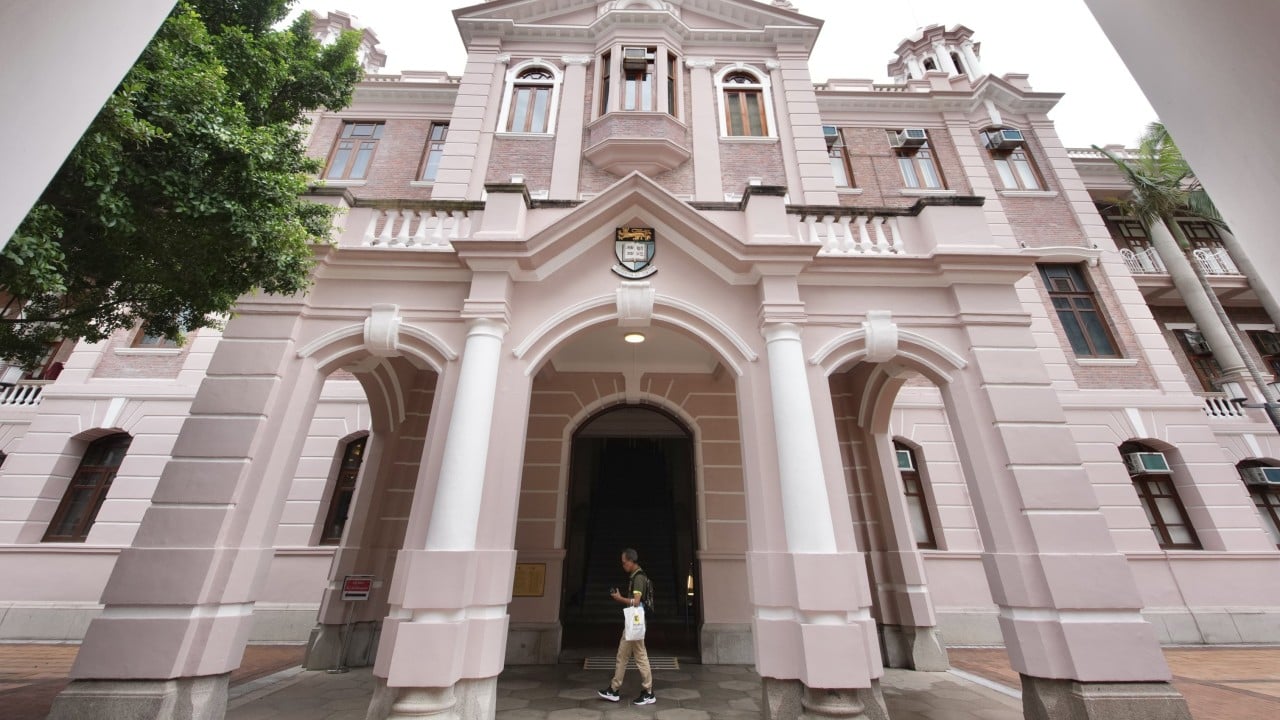
Hong Kong higher education is celebrating a historic optical illusion. The latest global league tables paint a picture of absolute dominance, with the University of Hong Kong holding eleventh place globally, the Chinese University of Hong Kong breaking into the top twenty at eighteenth, and a handful of other local institutions surging upward. On paper, the city has become the highest density hub of elite higher education on earth.
The real story inside the faculty lounges and lecture halls is far more grim. This spectacular rise in global rankings is masking a structural decay in the core purpose of these institutions, driven by a hyper-fixation on metric manipulation that actively penalizes teaching quality, alienates local students, and bleeds public funds into gaming international league tables.
Hong Kong universities have mastered the mechanics of ranking algorithms, but in doing so, they are actively abandoning their civic and educational mission.
The Mechanics of the Metric Game
Global university rankings are not objective measures of educational excellence. They are complex mathematical formulas heavily weighted toward specific, quantifiable inputs, primarily internationalization ratios and research citation counts.
By understanding these formulas, university administrators discovered they could engineer a higher ranking without necessarily improving the undergraduate experience.
The strategy relies on a few predictable levers.
- The Citation Factory: Rankings reward the sheer volume of citations per faculty member. This incentivizes universities to hire highly cited, mid-career global researchers who bring their citation portfolios with them.
- The International Ratio Play: Algorithms award massive points for a high percentage of international staff and students.
- The Reputation Campaign: Heavy spending on international marketing, academic summits, and reciprocal voting partnerships among global peers inflates the subjective "academic reputation" survey scores.
This metric-driven approach creates a massive divergence between institutional prestige and local utility. A university can rise twenty spots in a single year by aggressively recruiting international postgraduate researchers who never step into an undergraduate classroom, while simultaneously cutting budgets for foundational local language programs or student counseling.
The Hidden Toll on Undergraduate Education
The most immediate casualty of this ranking obsession is the quality of actual teaching. In the current ecosystem, a professor who spends extra hours mentoring struggling undergraduate students or redesigning a curriculum is making a poor career choice.
Tenure and promotion committees in Hong Kong are explicitly bound to metric outputs. Peer-reviewed publications in specific high-impact journals matter; teaching performance is treated as a secondary box to be checked.
This systemic bias creates a reality where top-tier global talent brought in at immense expense views teaching local undergraduates as an administrative burden that distracts from research output.
Introductory classes are increasingly offloaded to temporary adjunct lecturers or graduate teaching assistants. The classroom experience deteriorates, yet the university climbs the global tables because those same researchers are publishing papers that accumulate international citations.
Furthermore, the pressure to maintain a high "international student" ratio has led to a profound shift in campus demographics. The local government doubled the non-local student enrollment ceiling for publicly funded universities from twenty percent to forty percent.
While advertised as a strategy to turn Hong Kong into a global talent hub, the practical result is intense competition for resources, housing, and attention, leaving local high school graduates feeling like secondary priorities in their own taxpayer-funded institutions.
Diverting Public Wealth to International Recruitment
The financial cost of maintaining this illusion is astronomical. The University Grants Committee pours billions of taxpayer dollars into these institutions annually.
A significant portion of this capital is now explicitly deployed to chase ranking indicators. This manifests in bidding wars for "highly cited researchers" who command multi-million dollar salaries, extensive lab spaces, and minimal teaching loads.
[Typical Bidding War Allocation]
├── Elite Researcher Salary & Allowances (Top Tier Global Rates)
├── Dedicated Research Assistants (3-5 Postgraduate Positions)
├── Proprietary Lab Equipment & Infrastructure
└── Minimal Teaching Obligation (Often Zero Undergraduate Classes)
This capital allocation represents a direct transfer of public wealth away from local educational infrastructure. When a university prioritizes spending millions to lure a global academic star whose primary contribution is adding their institutional affiliation to ten papers a year, it passes up the opportunity to fund financial aid for underprivileged local students, expand overstretched mental health services, or update deteriorating campus facilities.
The obsession also distorts the direction of academic research itself. Local issues—such as Hong Kong's acute housing crisis, its rapidly aging population, or its unique economic position within the region—are inherently less attractive to global journals than abstract, Western-centric academic debates.
Scholars who focus on impactful, localized research find themselves marginalized because their work does not generate the international citation volume required to move the university up the QS or Times Higher Education ladders.
The Vulnerability of a Built Reputation
The ultimate irony of Hong Kong's ranking obsession is its profound instability. A reputation built entirely on gaming an algorithmic formula is highly vulnerable to changes in that formula.
If a major ranking organization decides to alter the weighting of its internationalization criteria or adjust how citation networks are calculated, Hong Kong’s elite status could vanish overnight without a single internal change occurring at the universities themselves.
More importantly, the single-minded pursuit of these metrics has created an environment of systemic stress. Faculty burnout is rampant, driven by relentless pressure to publish or face non-renewal of contracts.
The focus on metric optimization has replaced the traditional concept of a university as a sanctuary for deep, long-term intellectual inquiry with a corporate model focused on short-term quarterly KPIs.
True educational leadership requires a willingness to step off the metric treadmill. It demands that administrators value the hard, often unquantifiable work of shaping young minds, serving the local community, and producing research that solves real-world local problems over the superficial validation of an international corporate index.
Until Hong Kong’s educational policymakers realign funding and promotion structures with the actual needs of the city and its students, those soaring global rankings will remain nothing more than an expensive distraction from a deepening institutional crisis.