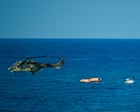
Hope is wearing thin along the stone docks of Kyrenia. When the passenger ferry Filo Jet capsized and sank off the northern coast of Cyprus, it left behind a disaster zone of grief, unanswered questions, and a frantic underwater search. Out of 267 people onboard, at least eight lost their lives, while around 20 remain unaccounted for.
Now, heavy machinery and advanced marine technology are taking over where surface-level rescue boats left off. Turkey has deployed the specialized deep-sea search vessel TCG Isin to plumb the depths of the eastern Mediterranean.
The Grim Reality of Deep Sea Recovery
The numbers tell a heartbreaking story. Out of the original manifest, 241 passengers and crew members made it back to shore alive. That leaves roughly 20 souls still missing, trapped either in the sunken wreckage or lost to the open currents.
The ferry rests on the seabed at a depth of 514 meters. At that extreme pressure and depth, human divers are useless. Officials have turned to sophisticated hardware. The TCG Isin brings deep-water sonar and remote-operated vehicles capable of operating 3,000 meters below the surface.
Local authorities, including Turkish Cypriot leader Tufan Erhürman, have pledged round-the-clock operations. But officials admit privately that the window for finding anyone alive has slammed shut. The mission has shifted from a rescue operation to a recovery and investigation effort.
What Went Wrong on the Filo Jet
Survivors are painting a chaotic picture of the vessel's final minutes. The 26-year-old double-hulled ferry departed Kyrenia heading for Taşucu on the Turkish mainland. Shortly after leaving port, passengers heard violent mechanical noises from below deck.
The ship began to shake violently, lifting out of the water before slamming back down. Water rushed in through a fractured bow. Panic set in instantly. Passengers scrambled for life jackets that were either locked away or entirely missing in the crush.
Survivors described harrowing scenes of loved ones slipping from their grasp as the ship flipped and plunged. Crew members initially told passengers not to panic, claiming it was only a minor water leak. By the time reality set in, the ship was already rolling onto its side.
Arrests and Rising Legal Fallout
Anger is matching the grief in northern Cyprus. The captain and seven crew members were swiftly detained by police, with reports suggesting some crew members attempted to save themselves early. Prosecutors are looking at gross negligence, focusing heavily on the structural seaworthiness of the aging vessel.
Investigators view the recovery of the ferry's voyage data recorder—the black box—as vital to clearing up the timeline. That black box sits right next to the hull at that crushing 514-meter depth. The TCG Isin is tasked with locating and bringing up that critical data recorder alongside the remaining victims.
As three days of national mourning take effect in northern Cyprus, families continue to wait by the harbor. They want answers for how a routine sea crossing turned into the worst maritime disaster the territory has seen in decades. The deep-sea search continues beneath the waves, driven by the absolute necessity of closure for the families left behind.