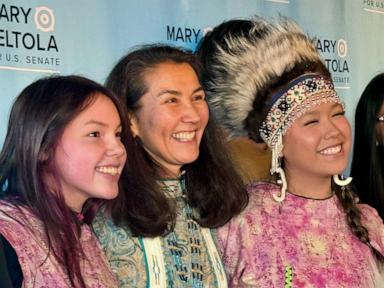
In Alaska’s 2026 U.S. Senate race, both Republican incumbent Dan Sullivan and Democratic challenger Mary Peltola are aggressively courting Alaska Native voters because this bloc holds the mathematical power to decide the election. Representing roughly 20 percent of the state's population, Indigenous communities across rural hubs and urban centers often swing tight statewide contests—especially under Alaska's ranked-choice voting system. To win, Sullivan is banking on federal infrastructure dollars and resource development jobs, while Peltola relies on historic representation as the first Alaska Native woman in Congress, coupled with fierce advocacy for subsistence fishing rights and federal tribal sovereignty.
Most political observers outside the 49th state treat rural Alaska as a monolithic voting bloc. They assume that because Mary Peltola is Yup’ik and grew up along the Kuskokwim River, she automatically locks up every village from Barrow to Ketchikan. That assumption is lazy. It ignores decades of pragmatic, transactional politics in the Bush, where survival depends on federal appropriations, fuel costs, and salmon runs rather than partisan loyalty.
The Myth of the Monolithic Bush Vote
Rural Alaska does not vote along strict ideological lines. Voters in the Yukon-Kuskokwim Delta, the North Slope, and Southeast Alaska operate with distinct economic priorities that frequently collide with national party platforms.
Consider the divide over resource extraction. On the North Slope, Iñupiat communities rely heavily on oil and gas tax revenues to fund local schools, emergency services, and municipal infrastructure. When the Biden administration restricted drilling in the National Petroleum Reserve-Alaska, local leaders pushed back hard. Dan Sullivan seized on that friction immediately. He has spent years positioning himself as the primary defender of Arctic oil development, arguing that federal environmental mandates directly threaten the economic survival of northern villages.
Yet travel south to the Bering Sea or the Yukon River, and the conversation shifts entirely to commercial trawling and crashing salmon populations. Here, the primary threat is not federal drilling bans, but climate-driven ocean warming and industrial bycatch. Peltola built her political brand on "Fish, Family, and Freedom," framing salmon conservation as an existential human rights issue for subsistence communities.
This regional split forces both candidates into delicate balancing acts. Peltola famously broke with national Democrats to support the Willow oil project, earning praise from North Slope leaders while frustrating urban environmentalists in Anchorage and Juneau. Conversely, Sullivan has worked to secure hundreds of millions of dollars for rural water, sanitation, and broadband projects through bipartisan infrastructure bills—even while campaigning against the broader fiscal policies of the Democratic majority that passed them.
How Ranked-Choice Voting Changes the Math
Alaska’s open primary and ranked-choice general election system fundamentally altered how candidates campaign in rural districts. Before voters adopted Ballot Measure 2 in 2020, party primaries rewarded ideological purity. Candidates could win nominations by appealing exclusively to base voters in Anchorage and the Matanuska-Susitna Valley while largely ignoring off-road communities.
That strategy no longer works. Under the current system, the top four vote-getters advance to the general election regardless of party affiliation, and voters rank their choices in order of preference.
- First-choice consolidation: A candidate needs a rock-solid base to survive the initial rounds of tabulation. Peltola’s core strength lies in commanding overwhelming first-place majorities in rural, predominantly Native house districts.
- Second-choice survival: When minor candidates are eliminated, their second-place votes transfer to the remaining contenders. Sullivan cannot afford to be completely shut out of rural ballots; even securing 25 to 30 percent of the vote—or capturing second-choice rankings from moderate and independent voters—can neutralize Peltola’s rural margin when combined with his strongholds in the Mat-Su Valley and Fairbanks.
- Turnout mechanics: Ranked-choice voting only matters if ballots are actually cast and properly filled out. Rural turnout historically lags behind urban centers due to weather delays, limited postal service, and understaffed polling locations.
The logistical reality of voting in off-road Alaska remains a quiet crisis. In dozens of villages accessible only by bush plane or snowmachine, a single winter storm can ground mail flights for a week, delaying absentee ballots past statutory deadlines. Campaigns no longer just buy television ads in Anchorage; they hire local village coordinators to ensure ballot boxes are staffed and voters understand how to mark ranked preferences without invalidating their sheets.
Federal Dollars Versus Cultural Sovereignty
When Dan Sullivan visits hubs like Bethel, Kotzebue, or Nome, he brings receipts. As a senior member of the Senate Commerce and Armed Services committees, Sullivan has delivered tangible federal investments that directly lower the staggering cost of living in the Bush.
He regularly highlights funding for the Denali Commission, Coast Guard icebreakers, and grants aimed at connecting remote villages to high-speed internet and piped water systems. Roughly 30 rural communities in Alaska still lack running water and flush toilets, relying instead on "honey buckets." For families hauling water in subzero temperatures, a senator who secures direct federal construction grants commands genuine respect, regardless of the "R" next to his name.
Sullivan also leans heavily on his record of backing Alaska Native Claims Settlement Act (ANCSA) corporations. These regional and village corporations are the largest private employers in rural Alaska, managing millions of acres of land and billions of dollars in global contracts. Sullivan’s consistent support for small business contracting preferences and resource permitting aligns closely with the corporate boards that drive rural economic development.
Peltola approaches the exact same voters from a fundamentally different angle, emphasizing tribal sovereignty and lived experience. While ANCSA corporations manage land and capital, federally recognized tribal governments manage social services, healthcare, and cultural preservation. For decades, tension has existed between corporate interests and tribal councils over land management and jurisdiction.
Peltola speaks the language of the villages without needing a briefing book. When she testifies in Washington about the collapse of King and Chum salmon runs on the Yukon and Kuskokwim rivers, she is not reading talking points prepared by staffers—she is describing her own family’s empty smokehouse. That authenticity carries immense weight in communities that have spent generations watching politicians fly in for photo ops every two years before disappearing back to Washington.
The Subsistence Battlefield
Nothing mobilizes Alaska Native voters faster than threats to subsistence hunting and fishing. In rural Alaska, subsistence is not a recreational hobby; it is the primary food source and the bedrock of cultural identity.
For years, a bitter jurisdictional tug-of-war has played out between the state of Alaska and the federal government over who controls fish and game management on federal lands and waters. Under the Alaska National Interest Lands Conservation Act (ANILCA), rural residents are granted a subsistence priority on federal lands during times of shortage. State law, however, prohibits preferential treatment based on geography, leading to endless litigation over salmon management on the Kuskokwim River.
Peltola has aggressively pushed federal agencies to assert stronger authority over river management, directly challenging the state’s Department of Fish and Game. She argues that commercial pollock trawlers in the Bering Sea are scooping up massive amounts of salmon as bycatch while rural families are barred from dropping a single net to feed their elders.
Sullivan walks a much narrower tightrope on fish politics. He represents a massive commercial fishing industry based in Kodiak, Dutch Harbor, and Seattle—sectors that donate heavily to federal campaigns and employ thousands of workers. While Sullivan has co-sponsored legislation to improve bycatch monitoring and fund salmon research, he faces constant criticism from rural activists who argue he is too slow to rein in industrial trawl fleets.
The Structural Hurdles Both Campaigns Face
Neither candidate holds an insurmountable advantage in the fight for Indigenous support, and both face glaring vulnerabilities that opponents are actively exploiting.
For Mary Peltola, the challenge is incumbency fatigue by association. Even though she maintains an independent voting record on energy and gun rights, national Republicans relentlessly tie her to the broader Democratic agenda in Washington. In culturally conservative villages—where church attendance is high, traditional family structures are prized, and firearm ownership is universal—attack ads linking Peltola to progressive social policies or federal gun restrictions leave a mark. Furthermore, critics point out that despite her high-profile advocacy, salmon runs have yet to recover, leaving some frustrated voters wondering whether a single voice in Congress can reverse ecological collapse.
For Dan Sullivan, the vulnerability is cultural distance and partisan alignment. Despite marrying into a prominent Alaska Native family—his wife, Julie Fate Sullivan, is Athabascan—Sullivan remains an outsider from Ohio who built his career in corporate law and Republican state politics. When he votes against legislation like the John Lewis Voting Rights Advancement Act, or aligns with Senate leadership on judicial nominees skeptical of federal Indian law, critics accuse him of prioritizing party loyalty over tribal rights.
The Urban Native Factor
A critical blind spot in traditional political coverage is the massive shift of Alaska Native residents from rural villages to urban centers. Nearly half of Alaska’s Indigenous population now lives in Anchorage, Fairbanks, Juneau, or the Mat-Su Valley.
Urban Native voters do not share the exact same daily pressures as their relatives in the Bush. They are less concerned with barge fuel surcharges and more focused on affordable housing, public safety, urban healthcare access through the Alaska Native Medical Center, and homelessness—a crisis that disproportionately affects Indigenous residents in Anchorage.
Turnout among urban Native voters has historically been even lower than in rural villages. Community organizations like Native Peoples Action and the Alaska Federation of Natives spend millions of dollars on nonpartisan voter registration drives specifically targeting these urban neighborhoods. Whichever campaign builds the strongest ground game in Anchorage’s Mountain View, Spenard, and Fairview neighborhoods will capture thousands of votes that never show up in traditional rural polling.
What Actually Moves Votes in the Final Stretch
As November approaches, money floods into Alaska at levels per capita that rival major battleground states. Super PACs aligned with Senate leadership saturate local radio stations, Facebook feeds, and regional newspapers with contrasting narratives.
Yet seasoned campaign operatives in Anchorage know that glossy mailers rarely flip a village. In rural Alaska, politics remains intensely personal. Endorsements from respected local elders, regional tribal consortiums, and Native corporation leaders carry far more weight than television commercials.
The decisive factor will come down to trust and physical presence. Voters in the Bush keep meticulous track of who shows up when there isn't an election on the calendar. Sullivan has spent twelve years building relationships with village councils and delivering federal infrastructure checks, banking on the calculation that economic pragmatism will outweigh partisan skepticism. Peltola is betting that shared identity, fierce protection of subsistence rights, and a promise to keep Alaska Native voices directly at the negotiating table in the U.S. Senate will unite rural villages and urban Native neighborhoods alike. In a state where statewide elections are routinely decided by a few thousand ballots, the candidate who wins the argument in the Bush won't just earn a mandate—they will decide the balance of power in Washington.