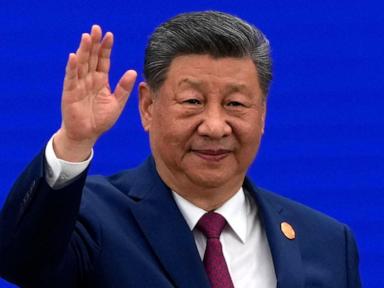
The global race for artificial intelligence is fracturing into two incompatible worlds, and the divide has just become official. On July 17, 2026, Chinese President Xi Jinping stood before an international audience at the World Artificial Intelligence Conference in Shanghai to pitch a grand vision of a "symphony of global cooperation". He pledged thousands of training slots for developing countries and offered up state-backed meteorological tracking systems to the Global South.
But beneath the high-minded rhetoric about preventing historical injustice lies a hard geopolitical reality. Western export blocks on semiconductors have forced Beijing to build an entire computing ecosystem from scratch. Xi’s address was not just an invitation to collaborate. It was an aggressive diplomatic maneuver designed to build a wall against American technological dominance.
The primary battleground is no longer just inside the research labs of Silicon Valley or the chip foundries of Taiwan. It has moved to the regulatory bodies and infrastructure networks of the developing world. Washington and Beijing are actively locking down spheres of influence, forcing third-party nations to choose between American proprietary technology and Chinese open-source architectures. The result is a splintered digital reality that could make the Cold War look simple.
The Strategy Behind the Shanghai Alliance
Beijing is rapidly executing a highly calculated diplomatic counter-offensive. A day before Xi took the stage, twenty-nine nations—including Russia, Pakistan, and Kazakhstan—signed a charter to establish the World Artificial Intelligence Cooperation Organization (WAICO) in Shanghai.
This new entity is a direct counterweight to Pax Silica, a alliance launched by Washington to secure AI supply chains alongside allies like Japan, the United Kingdom, Australia, and India. While Pax Silica acts as a high-end club for nations with advanced semiconductor capabilities, WAICO positions itself as the champion of the underserved.
THE FORKING GLOBAL AI ECOSYSTEM
┌──────────────────────────────────────┐     ┌──────────────────────────────────────┐
│        THE WASHINGTON BLOC           │     │          THE BEIJING BLOC            │
├──────────────────────────────────────┤     ├──────────────────────────────────────┤
│ • Alliance: Pax Silica               │     │ • Alliance: WAICO                    │
│ • Strategy: Closed-source, high-cost │     │ • Strategy: Open-source, affordable   │
│ • Foundation: Nvidia, proprietary OS │     │ • Foundation: Huawei Ascend, Biren   │
│ • Base: US, EU, G7 Partners          │     │ • Base: Global South, BRICS, ASEAN   │
└──────────────────────────────────────┘     └──────────────────────────────────────┘
The underlying strategy is simple. If the West will not allow China to purchase the advanced chips needed to build frontier models, China will export its existing, highly efficient models to the rest of the world. Models like DeepSeek are open-source and run at a fraction of the hardware cost required by Western counterparts. For a developing country in Southeast Asia, Africa, or Latin America, the choice is stark. They can buy into a costly, restrictive American framework, or accept free or low-cost Chinese systems complete with training and infrastructure support.
Engineering Around the Sanctions
The Western narrative long held that export controls would freeze Chinese domestic tech development in place. That assumption was wrong. Tech giant Huawei used the Shanghai conference to debut its Atlas 950 SuperPoD, a massive computing cluster designed to train large-scale neural networks without a single piece of American silicon.
Instead of relying on restricted components, Chinese engineers have pivoted to advanced domestic architectures like the Ascend processor line and supernode clusters from domestic firms like Biren. They link thousands of less-advanced processors via high-speed, proprietary interconnects. The system functions as a single machine. It is larger, hotter, and consumes more electricity than a cluster built with the latest Western chips, but it works.
More importantly, it is insulated from foreign policy shifts in Washington. The Chinese startup Moonshot launched its Kimi K3 model at the same event, proving that the domestic pipeline from hardware to software is fully operational.
The Fragmentation Risk
This dual-track evolution introduces severe technical friction to the global economy.
- Standards Divergence: Software developed for the Western ecosystem will not run naturally on Chinese architectures. Businesses operating internationally will face steep integration costs.
- Data Silos: Cross-border data flows are tightening as Beijing mandates compliance with its strict internal security laws while exporting these data frameworks abroad.
- Algorithmic Polarization: Systems trained on Western values and those trained under Beijing’s core oversight metrics will produce fundamentally different interpretations of historical, political, and social facts.
Consider a hypothetical logistics company operating across both Europe and Central Asia. Under the current trajectory, its automated supply chain routing in Poland would rely on a Western cloud foundation, while its operations in Kazakhstan would run on a WAICO-compliant Chinese node. The systems cannot talk to each other without extensive middleware translation layers. Efficiency drops, costs rise, and systemic vulnerabilities multiply.
The Diplomacy of Inclusivity
Xi’s speech repeatedly targeted what he called the "overstretching" of national security definitions by the United States. By framing American export controls as a mechanism of economic suppression, Beijing positions itself as the defender of global technological equity. The promise of 5,000 training slots over the next five years is a classic soft-power play. It trains a generation of engineers across the Global South to build exclusively within the Chinese technical ecosystem.
Washington relies on corporate market penetration to spread its technological influence. Beijing treats tech deployment as an extension of statecraft. The mid-May bilateral talks between Chinese and American leadership in Beijing showed that both sides recognize the danger of accidental escalations in automated systems. Yet, the institutional momentum toward division is too strong to stop.
The dream of a unified, global internet is dead. The dream of a unified global AI infrastructure is dying alongside it. As tech ecosystems continue to harden along geopolitical fault lines, multinational enterprises must accept that neutral ground no longer exists. You are either building on one side of the digital wall, or the other.


