Words matter in international diplomacy. When a major Western publication labels a contested border zone with a phrase that implies sovereign legitimacy, state ministries take notice within minutes.
The Indian government has launched a sharp public rebuke against The New York Times, dismantling the newspaper's use of the phrase "Pakistani Kashmir" in a headline covering local unrest and elections in Pakistan-occupied Kashmir. New Delhi's diplomatic machinery moved swiftly. The Indian Embassy in the United States publicly corrected the publication on social media, stating that the terminology is deeply misleading and factually incorrect.
There is no Pakistani Kashmir. There is only Pakistan-occupied Kashmir.
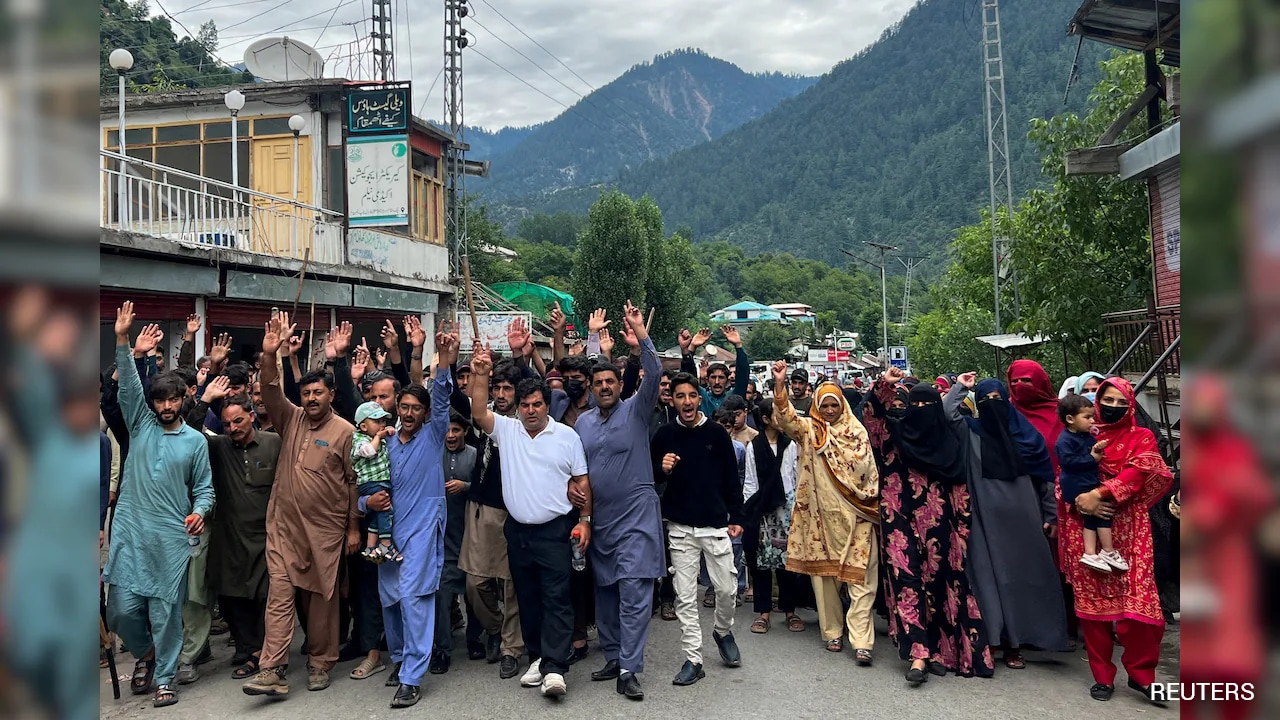
That distinction forms the core of an immovable red line for Indian foreign policy. The dispute erupted after the American daily published coverage detailing violent clashes in the Mirpur district. Security forces had confronted members of the Joint Awami Action Committee, a civil rights organization protesting police overreach and heavy taxation. Amid reports of fatalities and widespread demonstrations, the framing of the geographic header triggered an immediate sovereignty alarm in New Delhi.
To understand why a simple headline choice generates such fierce pushback, one must look past current news cycles and examine the architecture of global narrative control. Geographic nomenclature is rarely neutral. In modern statecraft, vocabulary functions as an instrument of normalization. When international media outlets adopt shorthand terms coined by an occupying administration, they inadvertently legitimize an illegal status quo.
New Delhi maintains that the entirety of the former princely state of Jammu and Kashmir, including the territories currently administered by Islamabad, remains an integral and inalienable part of the Indian Union. By referring to the region as "Pakistani Kashmir," foreign publications risk signaling a permanent partition that India has rejected since 1947.
This friction highlights a wider battleground over how Western newsrooms map foreign territories. Foreign desks in New York, London, or Paris often rely on functional administrative shorthand to save space or simplify complex geopolitical realities for domestic readers.
Convenience breeds distortion. Calling a territory by the name of its occupier normalizes annexation. It erases decades of United Nations resolutions, bilateral agreements like the Simla Pact, and the persistent human rights violations suffered by local populations under military rule.
The unrest covered in the original report itself underscores the fragility of Islamabad's grip on the region. Weeks of protests by the Joint Awami Action Committee exposed deep-seated local anger over inflated electricity bills, high wheat prices, and governance deficits. Citizens of the region frequently voice frustration over economic exploitation and a lack of fundamental democratic liberties.
Human rights monitors have repeatedly flagged the heavy-handed tactics employed by security forces in the area. Yet, when international media frames these internal convulsions through a lens that implicitly validates Pakistani sovereignty, the focus shifts away from systemic administrative failure and onto a normalized domestic narrative.
India's swift intervention serves a dual purpose. It signals to international media houses that editorial shortcuts regarding sovereign borders will face immediate public challenge. Simultaneously, it reinforces a domestic political consensus that refuses to allow any softening of the country's official territorial maps on the global stage.
As geopolitical tensions continue to shift across South Asia, the war of words over maps and terminology will only intensify. Newsrooms operating thousands of miles away from the Line of Control must realize that a single adjective carries the weight of history, law, and ongoing territorial conflict.
The map remains contested. The vocabulary used to describe it will remain a fiercely guarded frontier.