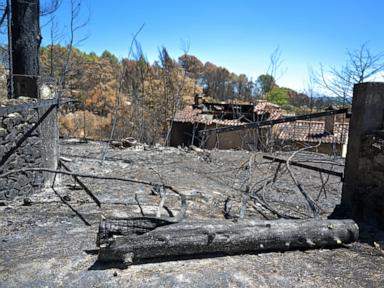
France just recorded its hottest summer since national measurements began over a century ago, confirming what veterans of the meteorological beat have tracked for decades. Ecological Transition Minister Monique Barbut formalized the grim milestone, noting that the seasonal average across June, August, and July shattered historical ceilings dating back to 1900. Yet, treating this announcement as a sudden shock misreads the trajectory. This outcome represents a calculated accumulation of unaddressed policy gaps, delayed infrastructure transformations, and an institutional refusal to treat systemic climate volatility as an immediate operational emergency.
The Mirage of Emergency Preparedness
For years, official bureaucratic responses to thermal anomalies relied on emergency decrees and temporary restrictions rather than structural overhauls. When air temperatures across French metropolitan departments breach critical thresholds, municipal governments shift into reactive triage. Public pools stay open late. Temporary hydration stations pop up in major metropolitan cores.
These measures offer immediate visual proof of government action, but they treat the symptom while leaving the core vulnerability untouched. Urban centers constructed centuries ago with dense masonry, narrow streets, and minimal green cover trap thermal energy efficiently. Asphalt and concrete absorb heat during peak daylight hours and radiate it slowly throughout the night, preventing physiological recovery for residents.
Old buildings lack adequate insulation or ventilation pathways. Retrofitting these structures demands capital investment and regulatory consistency that municipal councils routinely postpone due to short-term political costs. The result is a built environment fundamentally hostile to human habitation during prolonged high-pressure atmospheric domes.
Water Rights and the Agricultural Collision
The thermal spikes arrived alongside an acute drought that drained municipal reservoirs and crippled agricultural output across key farming regions. Soil moisture deficits reached historic lows, forcing regional prefects to impose severe water usage restrictions on industrial and agricultural operations.
This creates an intractable structural conflict. Farmers require irrigation to salvage harvests during prolonged dry spells, yet pumping groundwater lowers water tables further, destabilizing rural ecosystems and drying up municipal supplies.
Take the hypothetical scenario of a medium-sized agricultural cooperative in the Rhône Valley. Faced with strict water caps, growers must choose between watching high-value crops wither on the vine or defying regional ordinances to secure their seasonal income. When penalties for non-compliance pale in comparison to the financial ruin of a lost harvest, regulatory enforcement collapses under economic gravity. National food security frameworks fail to account for chronic water scarcity, treating liquid availability as an infinite baseline rather than a finite, depleting resource.
The Economic Toll of Institutional Inertia
Markets respond sluggishly to environmental baseline shifts because insurance models and financial instruments lag behind atmospheric reality. Property values in southern regions remain inflated despite rising wildfire risks and structural subsidence caused by shrinking clay soils.
Energy grids face parallel stresses. Nuclear reactors—which provide the backbone of French power generation—rely on river water for cooling systems. When river temperatures rise or flow rates drop, operators must throttle generation capacity precisely when domestic air conditioning demand surges.
Ignoring these structural bottlenecks guarantees recurring economic shocks. Fixing them requires rewriting building codes, overhauling agricultural subsidies, and forcing heavy industries to internalize the true cost of resource depletion. Until policy shifts from seasonal crisis management to long-term physical hardening, each record-shattering summer will simply reset the baseline for the next inevitable failure.
Watch the coverage on Europe's extreme heatwave
This video provides visual context on the historic weather patterns and emergency red alerts triggered across Western Europe.