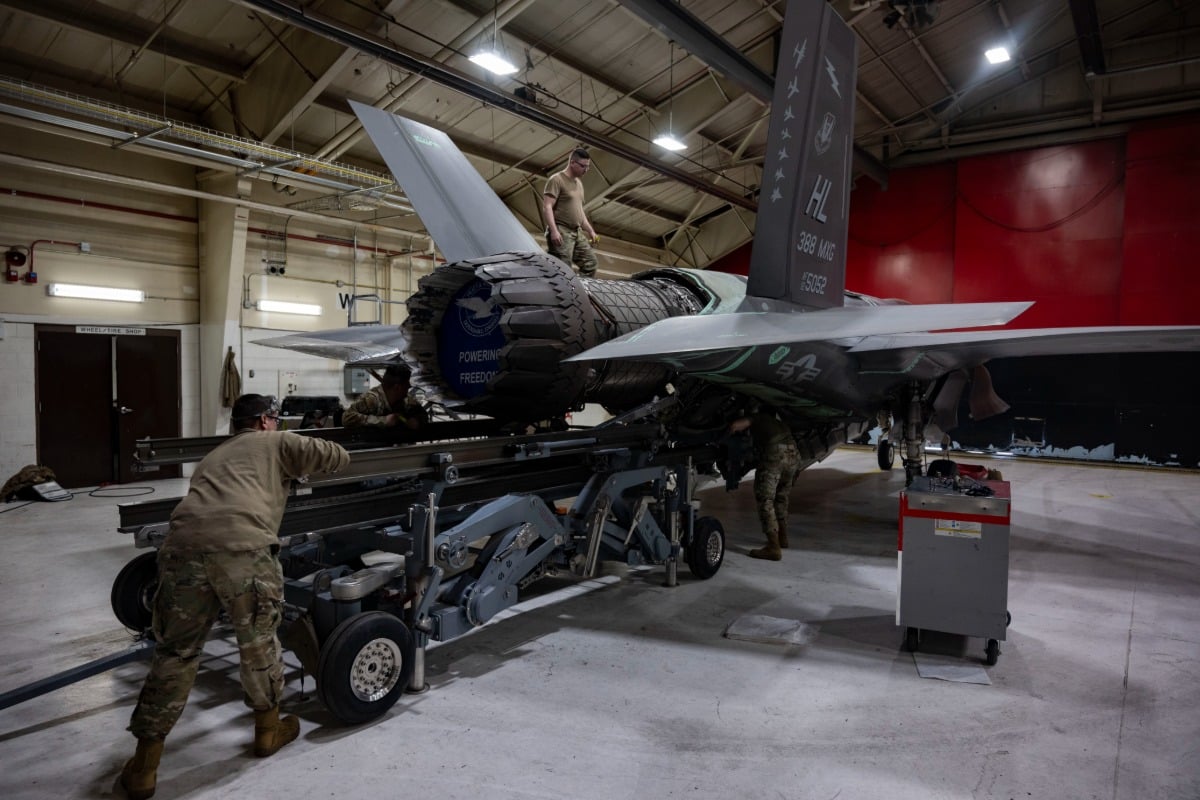
The billion-dollar ink on Pentagon procurement documents dries quickly, but the thermal reality inside a fighter jet turbine refuses to negotiate. Pratt & Whitney secured multi-billion-dollar modifications—including a massive $6.6 billion definitized contract covering production lots 18 and 19—to cement its grip on the F-35 Lightning II propulsion system. Yet, these financial injections mask a deeper, hardware-level bottleneck that financial headlines routinely gloss over. The F135 engine is being asked to do a job it was never physically budgeted to handle in terms of thermal management.
Strip away the corporate press releases from RTX and the Pentagon’s celebratory procurement announcements, and a fragile ecosystem emerges. The core issue plaguing the F-35 enterprise is not simply a matter of assembly line cadence or baseline manufacturing defects. It is an energy equation gone wrong.
The Thermodynamic Trap
To understand why multi-billion-dollar contract awards keep flowing to East Hartford, one must look at what happened when the military demanded advanced Block 4 electronic capabilities.
Every single radar sweep, every quantum of electronic warfare data processed, and every active-array sensor mode generates heat. In a legacy airframe, that heat is dissipated into the surrounding atmosphere or managed via dedicated environmental control systems. In the tightly packed fuselage of the Lockheed Martin F-35, the primary dumping ground for avionics heat is the fuel system.
The fuel acts as a heat sink. The F135 engine burns that fuel while simultaneously circulating it to cool the jet's scorching electronics.
There is a hard physical limit to this thermodynamic arrangement. When the avionics demand more power—which the Block 4 upgrade path aggressively requires—they pump more heat into the fuel than the system can comfortably shed.
The engine effectively runs too hot, too often. Thermal fatigue accelerates component wear across the turbine blades, drastically shortening the time-span between costly depot-level overhauls.
Why the Core Upgrade Is a Bandage
Enter the Engine Core Upgrade, commonly known as the ECU. Backed by substantial risk-reduction funding and multi-year design awards, the ECU is pitched as the definitive fix.
It aims to restore engine life and squeeze more cooling capacity out of the existing architecture. For the taxpayer, the projected lifecycle savings are touted in the tens of billions of dollars compared to designing an entirely new adaptive cycle engine from scratch.
From an economic perspective, sticking with Pratt & Whitney makes cold, hard sense. Opening a clean-sheet competition for a brand-new propulsion system would have fractured an already strained defense industrial base.
Yet, engineering compromises rarely come free. The ECU is an evolutionary modification, not a revolutionary leap.
By tweaking the compressor stages, redesigning the turbine, and modifying internal bleed-air flows, engineers can claw back the thermal margin required for Block 4.
They are operating inside strict geometric constraints. The physical envelope of the F-35's three variants—especially the Short Take-Off and Vertical Landing F-35B—means the engine cannot grow wider or longer. Every millimeter of growth requires expensive recertification of the airframe structural bulkheads.
Therefore, the ECU is forced to solve a radical power deficit using geometry frozen decades ago.
The Supply Chain Illusion
Financial reporting surrounding these recent defense awards emphasizes production velocity. Company executives point to a 20% increase in manufacturing output over prior baselines, bolstered by capital investments into state-of-the-art facilities like the forging complex in Columbus, Georgia.
Building more engines faster does not solve the underlying operational strain if those engines are deployed into an environment where thermal management remains razor-thin.
Consider a hypothetical scenario mirroring current operational tempos: A squadron of F-35Cs operating off a carrier deck in high ambient temperatures faces persistent high-power radar demands.
The maintenance crew pulls telemetry data post-flight and notices turbine gas temperatures creeping closer to hard safety limits far sooner than projected models predicted.
The engines are structurally sound when they leave the factory floor in Connecticut, but the operational duty cycle imposed by modern electronic warfare accelerates degradation at a rate that manufacturing volume alone cannot outrun.
Sub-tier suppliers feel this tension acutely. The transition toward advanced manufacturing techniques, such as exploring large-scale metal additive manufacturing for structural engine casings with partners like GKN Aerospace, aims to shave lead times.
These production efficiencies streamline the delivery of spare modules to global depots. They do not, however, alter the laws of thermodynamics.
The Strategic Dilemma
The Department of Defense has essentially locked itself into a single-source propulsion path for the foreseeable future. The cancellation of the adaptive engine transition program for the conventional variant left the F135 as the sole vehicle for the life of the aircraft.
When a multi-billion-dollar contract modification is announced, the public sees a stamp of industrial confidence.
The reality on the ground on flight lines from the Indo-Pacific to Europe is an ongoing management exercise. Logistics officers must balance high operational readiness goals against the finite thermal endurance of a turbine pushed to its absolute threshold.
Every flight hour logged with full avionics suites active brings the hardware closer to the edge of its redesign parameters.
The billions being funneled into Pratt & Whitney buy time, stability, and fleet commonality. They keep production lines hot and supply chains anchored across forty-plus states.
They do not eliminate the fundamental friction between a fighter jet's insatiable hunger for electrical power and the stubborn physics of a closed-loop thermal system.
Until the ECU successfully transitions from design reviews into operational squadrons and proves its durability under sustained combat loads, the enterprise remains caught in a high-stakes balancing act where every performance gain is purchased at the direct expense of thermal margin.