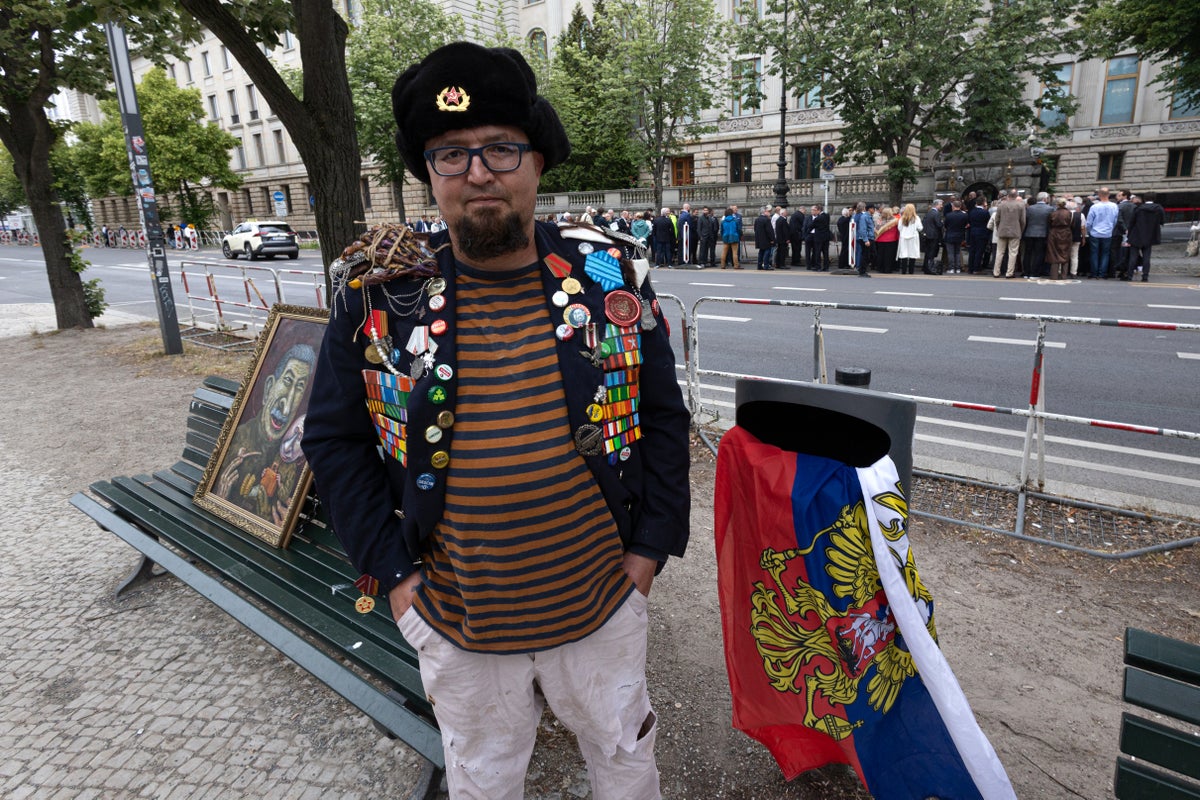
The execution of Russian dissident artist Robert Kuzovkov on a quiet street in eastern Poland is the clearest sign yet that European borders no longer offer sanctuary to those fleeing the Kremlin. Kuzovkov, known by his pseudonym Semyon Skrepetsky, was gunned down outside his residence in Biala Podlaska, receiving five close-range bullet wounds to his head, chest, and back. Polish Prime Minister Donald Tusk has formally classified the hit as possessing all the hallmarks of a political assassination, warning that direct Russian involvement would elevate the act to state terrorism. This brazen daytime murder exposes a terrifying truth. Sovereignty is failing to stop a shadow network of trans-national hit squads operating inside NATO territory.
The details of the Monday morning attack reveal meticulous reconnaissance. At approximately 9:45 a.m., an unidentified gunman walked directly up to Kuzovkov. The first two shots incapacitated him. The subsequent three were deliberate finishers. This was not a street mugging or a random act of violence. It was a professional contract killing carried out just days after Kuzovkov traveled to Berlin to stage a public, high-profile protest outside the Russian Embassy, where he dumped the Russian flag into a trash receptacle on Russia Day.
Polish law enforcement quickly detained two Belarusian nationals near the local consulate following reports that a suspect attempted to scale the security fence. Both were later released due to a lack of direct forensic links, leaving investigators to chase a phantom shooter who has likely already slipped across a porous border. Western intelligence agencies are now forced to confront a disturbing reality. The defensive umbrella shielding political exiles in Europe has developed catastrophic blind spots.
The Mechanized Anatomy of the Shadow War
To understand why European security services are consistently a step behind, one must analyze the operational shift in how modern assassinations are outsourced. The days of easily identifiable Russian intelligence officers carrying exotic poisons like Polonium-210 or Novichok through major airports are largely gone. Instead, the Kremlin and its regional proxies have turned to criminal cut-outs, local gangs, and desperate proxy nationals.
By employing non-professional or semi-professional syndicates recruited through encrypted networks, foreign intelligence agencies achieve total plausible deniability. The logistics are decentralized. One cell handles surveillance, another procures a clean vehicle, a third sources a weapon from the European black market, and a lone trigger-man is brought in at the final minute.
This fragmentation ruptures the traditional chain of evidence. If a shooter is captured, they genuinely may not know who funded the contract. They only know the digital wallet that deposited their cryptocurrency. In the case of Kuzovkov, his satirical paintings targeting Russian President Vladimir Putin and Chechen leader Ramzan Kadyrov—including a visceral piece depicting Putin cradled like an infant by Josef Stalin—made him an active target for multiple factions within the Russian state apparatus.
Exiled Russian commentators and activists are increasingly pointing fingers toward Grozny rather than Moscow. Kadyrov has an established history of orchestrating brutal retaliatory strikes against critics who mock his regime or insult his honor, often using dedicated hitmen who operate independently of standard Russian military intelligence structures.
The Flawed Illusion of Western Protection
A disturbing detail emerged from Warsaw in the hours following the shooting. Kuzovkov had been explicitly offered state protection by Polish authorities. He turned it down.
This refusal highlights a profound cultural and operational disconnect between Western security agencies and the dissidents they try to shelter. For many exiles who spent decades avoiding the panoptic surveillance of post-Soviet security apparatuses, accepting round-the-clock monitoring by foreign police feels like entering a different kind of cage. There is also a pervasive, fatalistic skepticism about whether local police can actually stop a dedicated assassin.
Consider the modern history of European failures to protect political refugees:
- Spain, 2024: Maxim Kuzminov, a Russian helicopter pilot who defected to Ukraine, was riddled with bullets in a parking garage in Villajoyosa. The killers ran over his body with a car before escaping.
- Germany, 2019: Zelimkhan Khangoshvili, a former Chechen rebel commander, was shot dead in broad daylight in a Berlin park by an operative traveling on a fake passport.
- Lithuania, 2024: Leonid Volkov, a close aide to the late opposition leader Alexei Navalny, was savagely beaten with a hammer outside his home in Vilnius.
Western nations offer asylum, yet they struggle to provide the resource-heavy, 24-hour tactical protection required to secure those lives. Biala Podlaska sits a mere 25 miles from the Belarusian border. It is a region heavily impacted by hybrid warfare operations, irregular migration crises, and cross-border smuggling. Dropping a high-profile dissident into a border town without an ironclad security detail is an invitation to tragedy.
The Geopolitical Cost of Internal Hesitation
Prime Minister Tusk’s statement that a proven Russian connection would amount to state terrorism is a rhetorically heavy posture that masks a deeper diplomatic paralysis. If Poland proves the Kremlin ordered a hit on its soil, what is the actual mechanism for retaliation? Poland is a vital NATO member. Yet, a targeted assassination of a non-citizen exile does not trigger Article 5 collective defense clauses.
This structural gray zone is precisely what foreign intelligence networks exploit. They understand that Western democracies are hamstrung by the rule of law. Investigations take months. Evidence must satisfy rigorous court standards. By the time a formal report is issued, the geopolitical news cycle has moved on, and the perpetrators are protected behind the walls of the Kremlin or elite military compounds in Chechnya.
The lack of immediate, asymmetrical consequences creates a vacuum of deterrence. Expelling a few diplomats or leveling another round of economic sanctions does not alter the risk-reward calculus for a foreign regime intent on silencing domestic dissent abroad. Every unavenged assassination on European soil serves as an effective proof of concept for authoritarian states. It signals that their reach is absolute, their vengeance is patient, and Western sovereign borders are little more than lines on a map.
The immediate challenge now falls on European counterintelligence commands to overhaul their approach to migrant safety. Security can no longer be an optional luxury offered only to high-ranking defectors or multi-millionaire oligarchs. If Europe wishes to remain the global capital of free expression and political asylum, it must treat the defense of its resident dissidents as an existential national security priority. Until Warsaw, Berlin, and Paris treat these domestic hits as direct military incursions rather than localized criminal investigations, the bodies will continue to pile up in provincial border towns.