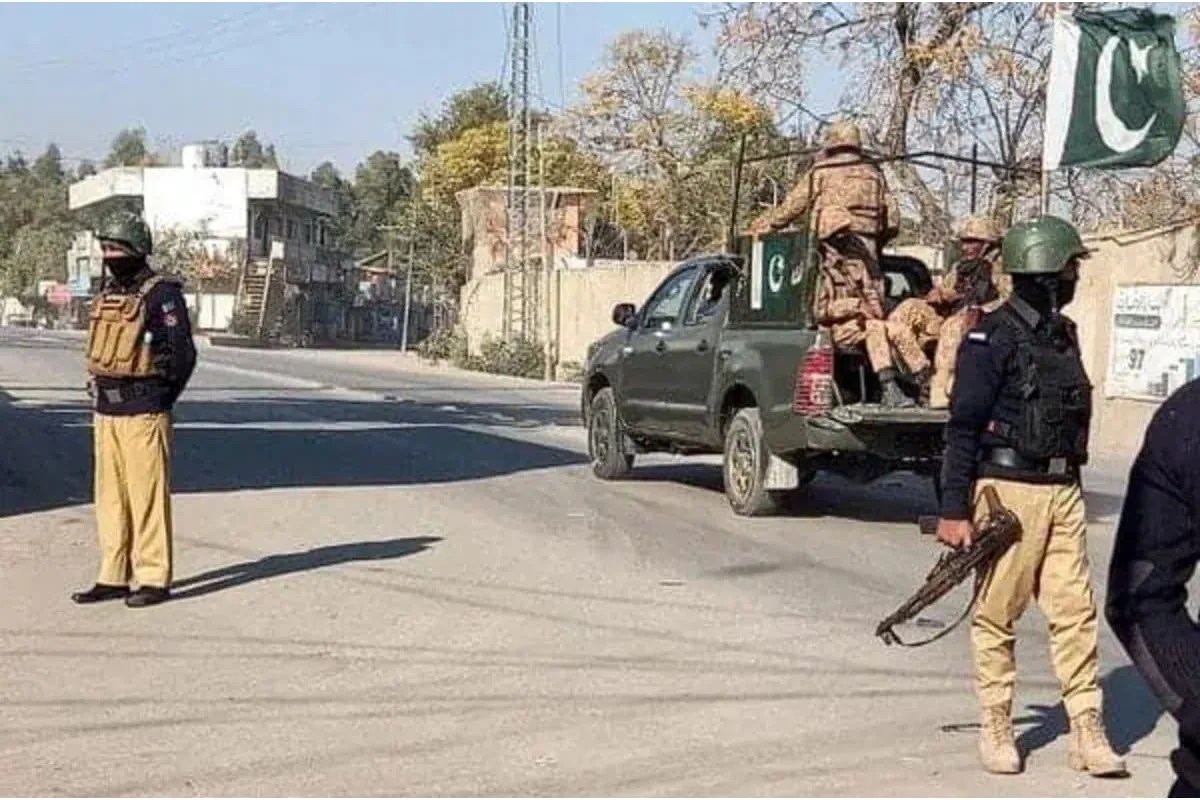
The dry hills of Pakistan’s northwestern and southwestern frontiers routinely echo with the dull thud of artillery and the sharp crack of automatic gunfire. Security forces operating in regions like Khyber Pakhtunkhwa and Balochistan report frequent engagements resulting in militant casualties, such as routine operations where small tactical units eliminate groups of armed fighters. Yet, focusing strictly on short-term casualty figures obscures a far more complicated reality. Each localized firefight represents a small symptom of a systemic breakdown that decades of military strategy have failed to cauterize.
An analysis of state-led counter-terrorism communications reveals a familiar operational cadence. Intelligence-based raids yield small groups of dead combatants, seized improvised explosive devices, and weathered Kalashnikov rifles. While military public relations wings frame these tactical engagements as definitive strikes against anti-state networks, the structural roots of the insurgency continue to expand outward. The state finds itself locked in a perpetual cycle of treating tactical inflammation while ignoring the chronic systemic infection underneath.
The Geography of Persistent Insurgency
To understand why localized security sweeps fail to secure lasting stability, one must examine the topography and political economy of the borderlands. Khyber Pakhtunkhwa and Balochistan share porous borders with neighbors experiencing their own internal convulsions. These frontiers are not merely geographic lines; they function as transnational economic corridors for contraband, weapons, and ideological recruitment.
When security forces corner and eliminate local insurgent cells, the institutional vacuum rarely stays empty for long. The underlying grievances—ranging from economic marginalization and resource extraction disputes to heavy-handed military measures—remain unaddressed. Consequently, local youth find themselves easily recruited into fragmented militant factions. The attrition rate among fighters is high, but the replacement pipeline remains remarkably efficient.
Furthermore, militant organizations have adapted their operational doctrines. Rather than holding static territorial enclaves, groups belonging to networks like the Tehrik-i-Taliban Pakistan and various regional separatist factions have shifted toward asymmetric warfare. They employ localized ambushes, remote-detonated improvised explosive devices, and coordinated small-arm strikes against infrastructure. This approach minimizes their exposure while maximizing the cost of occupation for government forces.
The Economic Toll on State Resources
The financial burden of sustaining continuous high-tempo internal military operations places immense strain on an already fragile national economy. Pakistan allocates a substantial portion of its national budget toward security and defense maintenance. Every extended cordon-and-search operation requires logistics, fuel, hardware maintenance, and compensation for casualties sustained by regular troops and paramilitary branches like the Frontier Corps.
This security-first expenditure crowds out investment in public infrastructure, education, and health services in the very provinces most vulnerable to radicalization. A region starved of legitimate economic opportunity naturally breeds informal, violent economies. When young men face a choice between subsistence poverty and joining an insurgent payroll, state counter-terrorism narratives struggle to compete. The financial drain thus becomes self-perpetuating: more violence necessitates more spending, which starves civilian development, which in turn fuels further unrest.
Intelligence Gaps and Technological Asymmetry
Modern counter-insurgency relies heavily on persistent surveillance, electronic intelligence, and rapid-reaction mobility. While military commands boast about intelligence-based operations, the operational reality on the ground highlights severe vulnerabilities. Insurgents have increasingly integrated commercial technology, including modified drones and encrypted communication platforms, to track military movements and coordinate ambushes.
This technological adaptation creates friction for conventional forces trained primarily for large-scale territorial defense rather than counter-guerrilla policing. When an infantry unit enters a rugged tribal district, they operate with limited local intelligence support. Civilian populations caught in the crossfire often distrust both the state apparatus and the insurgent networks, choosing silence over cooperation with authorities. Without reliable, real-time human intelligence from local communities, sweeping operations rely on blunt force rather than surgical precision, frequently alienating the local populace further.
Rethinking the Grand Strategy
Breaking this cycle requires moving past the illusion of military finality. Tactical victories—whether neutralizing three fighters in a remote valley or seventy across a broader provincial sweep—do not translate into strategic resolution. As long as governance remains securitized and political grievances are met primarily with kinetic responses, the borderlands will remain volatile.
True stabilization demands structural political reforms, transparent resource-sharing agreements in resource-rich provinces like Balochistan, and a genuine commitment to integrating marginalized frontier districts into the national fabric. Until policymakers address these fundamental drivers of dissent, reports of minor tactical engagements and neutralized militants will remain repetitive footnotes in a much longer, unresolved conflict.