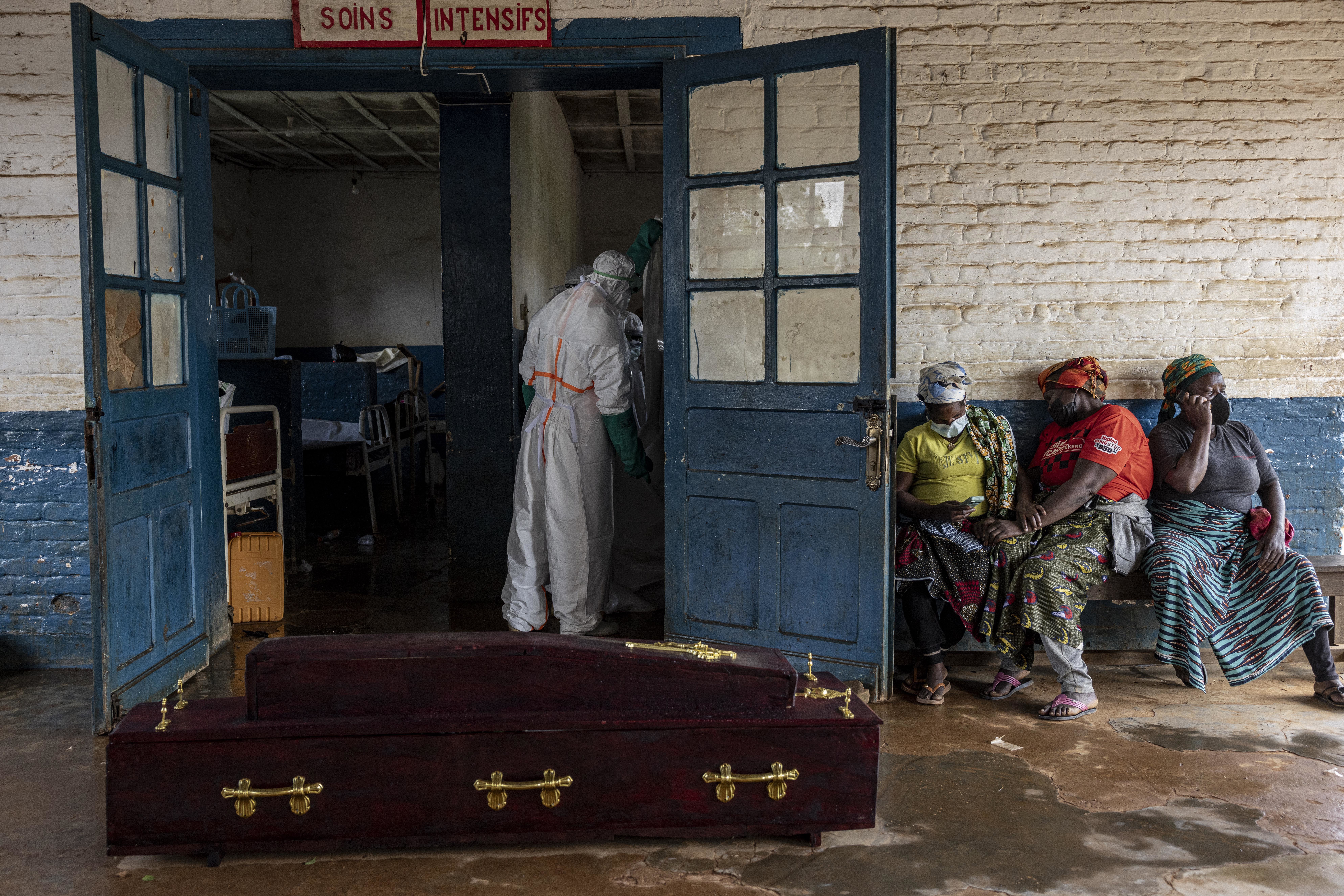
The smoke rising from the Rwampara General Hospital in the eastern Democratic Republic of the Congo this week was entirely predictable. When a furious crowd of local youths stormed the facility, overran security, and set fire to isolation tents and the bodies inside, international observers reacted with predictable shock. But for anyone who has spent decades covering public health crises in Central Africa, the arson was not an isolated act of madness. It was the inevitable explosion of a system designed to fail.
The immediate catalyst was a standoff over a corpse. Relatives wanted to take a deceased young man home for a traditional funeral; health workers, bound by strict World Health Organization mandates regarding highly infectious bodies, refused. But the fire in Rwampara is a symptom of a much deeper, far more terrifying reality. The Democratic Republic of the Congo and neighboring Uganda are currently gripped by an outbreak of the Bundibugyo strain of Ebola, a rare variant for which there is no approved vaccine and no targeted antiviral treatment.
As of late May 2026, the World Health Organization has declared this a Public Health Emergency of International Concern. With more than 600 suspected cases and the death toll climbing past 140, the international response is already falling behind a virus that has breached remote villages to enter major urban centers like Goma and Kampala. This is not just a health emergency. It is a catastrophic collision of biological bad luck, geopolitical neglect, and the active weaponization of local medical mistrust.
The Phantom Strain That Caught the World Napping
For years, global health agencies patted themselves on the back for "taming" Ebola. Breakthroughs like the Ervebo vaccine and monoclonal antibody therapies transformed the terrifying Zaire strain from a near-certain death sentence into a manageable, treatable disease. But those tools are completely useless against the Bundibugyo strain.
This is only the third time in recorded history that Bundibugyo has emerged. Because it historically exhibits a lower mortality rate—roughly 30% to 40% compared to the brutal 90% kill rate of the Zaire strain—pharmaceutical companies and international donors simply chose not to invest in it. There was no market for a Bundibugyo vaccine.
That fiscal indifference has come back to haunt the international community. When the first cases appeared in late April 2026, the response was crippled by an immediate diagnostic failure.
- Flawed Testing: Standard field tests were tuned exclusively for the Zaire strain. Early samples from patients who eventually died of Ebola repeatedly came back negative.
- The Diagnostic Delay: Because the virus circulated undetected for weeks, health officials missed the critical window to trace early contacts and ring-fence the infection.
- The Endemic Smokescreen: The outbreak began in a region already devastated by surging rates of malaria and cholera—spikes driven by recent deep cuts to international sanitation and aid funding.
If Ebola is a needle in a haystack, the international community spent the last year making the haystack of endemic infectious diseases twice as large. A patient showing up to a rural clinic with a fever was routinely sent home with malaria pills, only to bleed out days later in a crowded family compound.
War, Militia Rule, and the Safe Burial Flashpoint
Medical interventions do not happen in a vacuum. In the eastern DRC, public health must navigate a labyrinth of active conflict. The current epicenter sits in provinces fractured by dozens of armed rebel groups, including the M23 militia, which recently claimed its first confirmed case in the major lakeside city of Bukavu.
Managing a highly infectious, untreatable pandemic in territory controlled by a parallel rebel administration is an administrative nightmare. But the true breakdown is happening at the community level, specifically around the protocol of Safe and Dignified Burials.
To a Western bureaucrat, wrapping a body in thick plastic and burying it in a designated trench by personnel wearing white biohazard suits is basic science. To a local community in Ituri province, it looks like a state-sanctioned kidnapping of their dead.
When a person dies of Ebola, their viral load is at its absolute peak. Traditional mourning practices, which involve washing, touching, and kissing the deceased, act as super-spreader events. Yet, when health agencies intervene with military protection to seize a body, they violate deeply held spiritual traditions.
In remote areas, a narrative has taken root: the hospitals and foreign non-governmental organizations are creating the disease themselves, killing patients to harvest organs or secure international funding. When the crowd burned the Rwampara treatment center, they were not trying to spread a virus. In their minds, they were rescuing their brother from a predatory corporate entity.
The Myth of the Contained Outbreak
The current official count sits at fewer than 700 cases, but that number is a fiction. On the ground, the isolation wards are already completely full.
In Bunia, field hospitals are turning away suspected patients because they lack the physical space to isolate them safely. Medical teams are playing a desperate game of musical chairs, calling neighboring health facilities only to be told that every single tent is packed. When an isolation unit turns away an actively vomiting Ebola patient, that patient goes back to their community on the back of a motorbike taxi, exposing dozens more along the way.
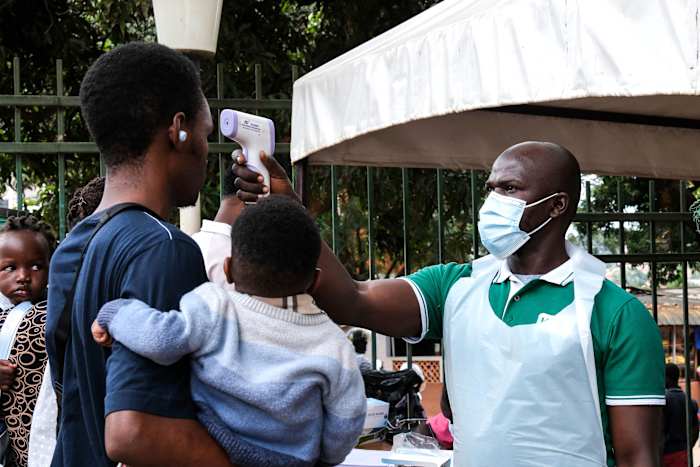
The illusion of containment shattered entirely when an American medical missionary tested positive at Nyankunde Hospital and had to be medically evacuated to Germany, alongside several other Western workers who suffered high-risk exposures. The international response has adjusted in panic, with the U.S. Centers for Disease Control and Prevention enacting mandatory 21-day symptom monitoring for travelers returning from the region. Air France flights have been diverted mid-air over clerical errors regarding passenger travel histories in Central Africa.
But screening travelers at international hubs like Detroit or Paris is an ambulance-at-the-bottom-of-the-cliff strategy. The fire is burning in the forests of Ituri and the crowded markets of Kampala.
The Price of Public Health Austerity
The global health apparatus loves to talk about preparedness, but its funding models are purely reactive. Millions of dollars are now pouring in from the WHO’s contingency funds to buy 3,000 personal protective equipment suits and set up emergency operations centers. It is too little, too late.
The hard truth is that the Rwampara hospital fire, the lack of diagnostic tools, and the empty supply chains are the direct results of a multi-year pullback in global health aid. When Western governments cut budgets for routine disease surveillance in peace times, they guarantee that the next rare strain will explode into an international emergency.
What the DRC needs right now is not abstract philosophy about community engagement or high-level declarations from Geneva. It needs cheap, rugged, point-of-care diagnostic tests that can differentiate between malaria and Bundibugyo Ebola in fifteen minutes at a rural clinic. It needs immediate, massive investments in local healthcare workers who possess the cultural authority to negotiate safe burials without requiring a platoon of armed police.
Until the international community realizes that public health is an ongoing infrastructure investment rather than an occasional charity project, field hospitals will continue to burn, and rare strains will continue to find a way out of the jungle.