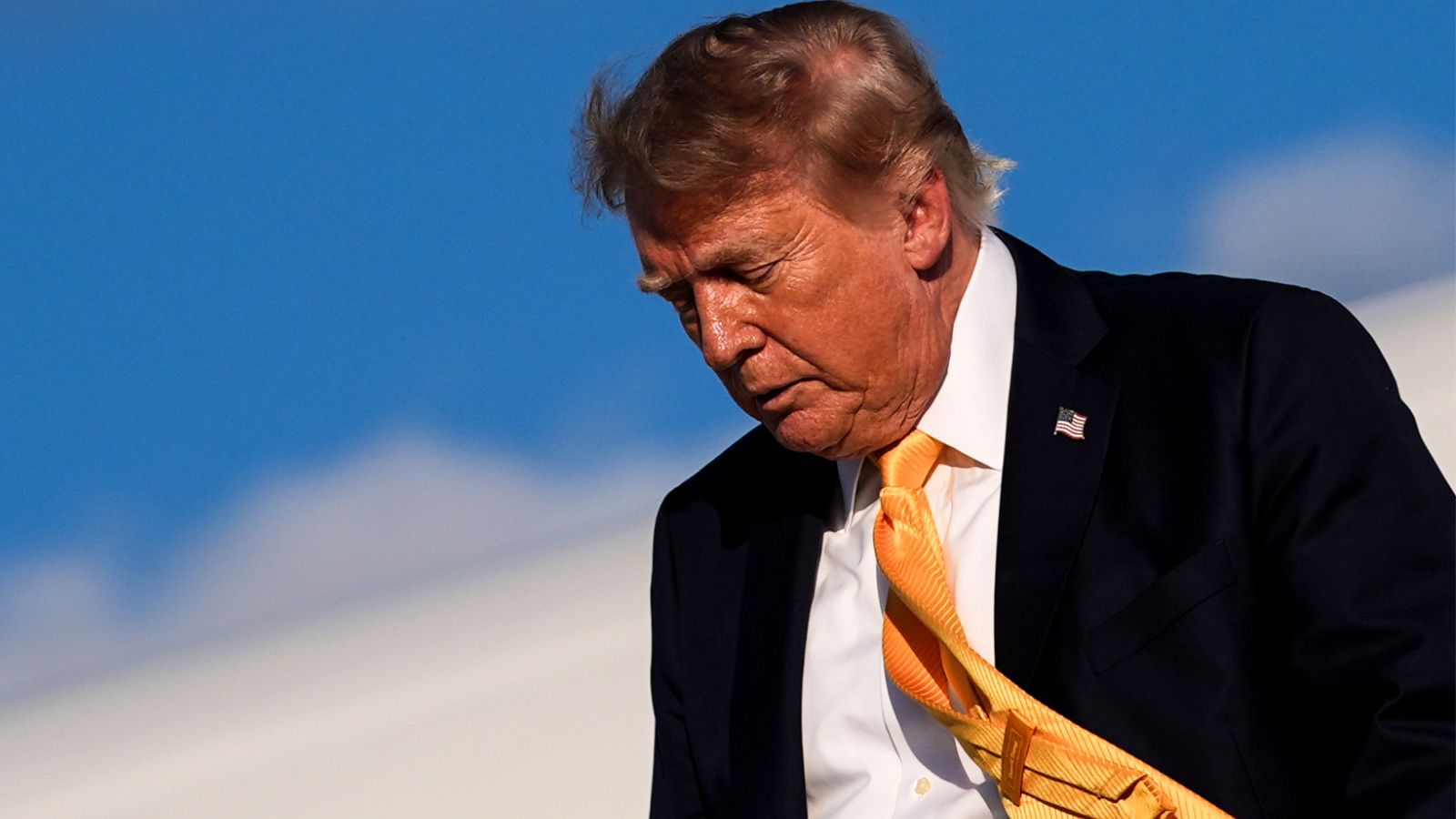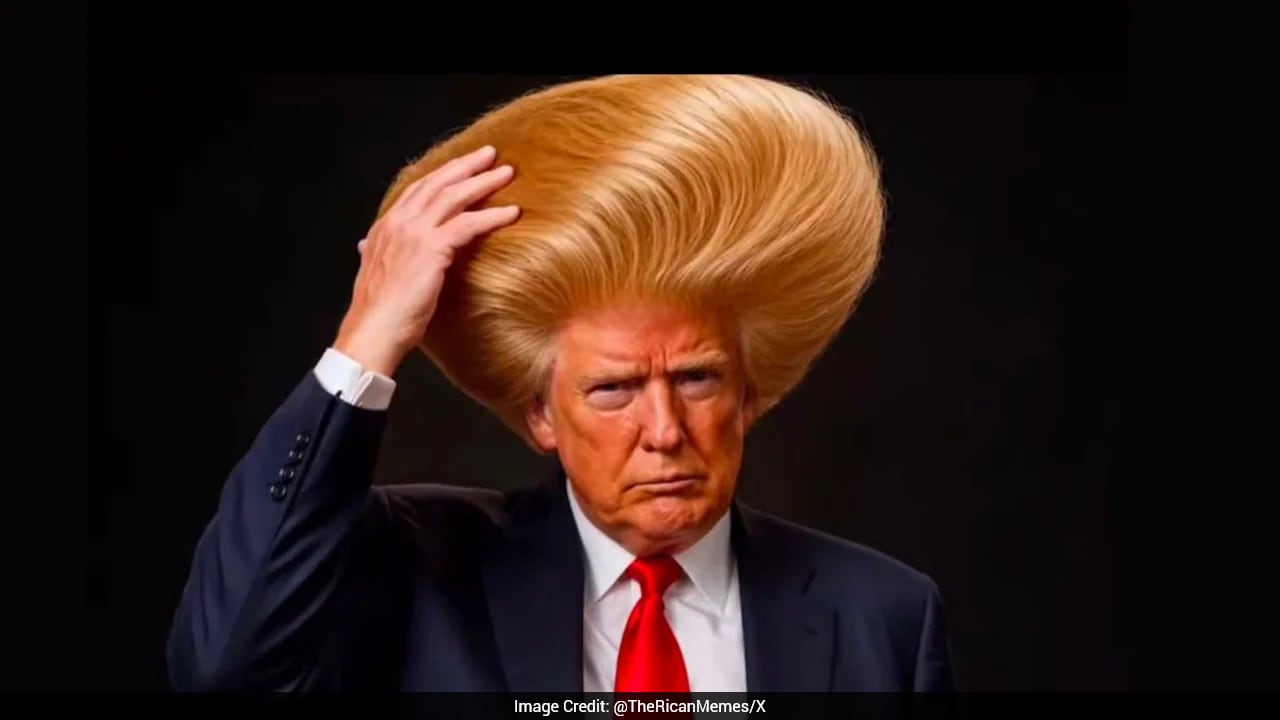
When Donald Trump stepped to the podium at the Red Rock Casino Resort in Las Vegas, the policy proposals on tips and taxes were instantly eclipsed by a much more visceral American obsession. His hair looked impossible. It sat higher, shone brighter, and defied the desert draft with a sudden, gravity-defying density that triggered an immediate digital earthquake. Within minutes, social media feeds flooded with side-by-side comparisons of the presidential mane, juxtaposing footage from a wind-swept appearance just days prior. The internet did what it does best. It weaponized ridicule, turning the sudden volume into a meme-fueled inquest on hairpieces, weaves, and cosmetic history.
Beneath the digital comedy lies a more serious study in political packaging. Donald Trump’s hair is not merely a personal grooming choice. It is a cornerstone of his political architecture.
The Anatomy of an Unyielding Illusion
For decades, the architecture of the Trump coif has been subjected to more forensic analysis than a complex financial ledger. It is a monument to denial, constructed through a meticulous, multi-step engineering process that has evolved over half a century. Observers note the signature sweep—a complex rotation of strands anchored from the side and pulled across the crown.
Yet the Las Vegas iteration broke baseline expectations. The volume was too robust, the texture too uniform, leading mainstream commentators and online sleuths alike to openly question whether a new strategy, or a new hair system entirely, had been deployed.
Trump has long acknowledged the high-stakes nature of his own scalp. During a 2018 political conference, he offered a rare, candid peek behind the curtain, admitting that he tries "like hell to hide that bald spot". It is an exhausting performance. Every public appearance requires managing an unruly variable that refuses to cooperate with humidity, wind, or the relentless march of time. When the engineering fails—such as when a stray gust exposes the mechanics underneath—the vulnerability punctures an aura of unshakeable strength.
History Repeats in Shades of Blonde
The frantic public fascination with political hair rarely stays confined to the present. The Las Vegas discourse quickly resurrected the ghost of decades-old surgical rumors, specifically allegations regarding past cosmetic procedures that surfaced during 1990 divorce depositions. While those claims remain firmly in the realm of unverified lore, the public's appetite for them exposes a deeper truth. We are endlessly captivated by the artificiality of our leaders.
Family parallels only fuel the fire. Mary Trump, the president's estranged niece, pointedly compared the recent styling obsession to behavioral patterns exhibited by her late grandfather, Fred Trump. She noted how mounting anxieties over aging and hair loss can trigger an almost consuming preoccupation with outward presentation. When aging becomes a political liability, cosmetic maintenance transforms into a defensive armor.
The Political Cost of Vanity
Why does a change in hair density command front-row attention while major legislative talking points fade into background noise? Because physical decay is the ultimate equalizer, and politicians spend millions trying to convince the electorate they are immune to it.
In modern politics, vitality equals competence. A sagging neckline or a thinning crown is treated by the opposition as a silent metaphor for declining acuity. By extension, sudden, miraculous volume is marketed as a symbol of unending vigor.
The absurdity of the online response—the cartoon comparisons, the AI-generated transformations, the frantic debates over weaves versus natural growth—serves as a pressure valve for a polarized public. When you cannot agree on the state of the economy or the fate of a nation, you can at least audit the integrity of a public figure's blow-dry.
The Las Vegas hair phenomenon will eventually cycle out of the news cycle, replaced by the next physical micro-expression or wardrobe malfunction. But the underlying anxiety will remain. As long as power is tied to perception, the battle against baldness will stay on the front lines of American politics.