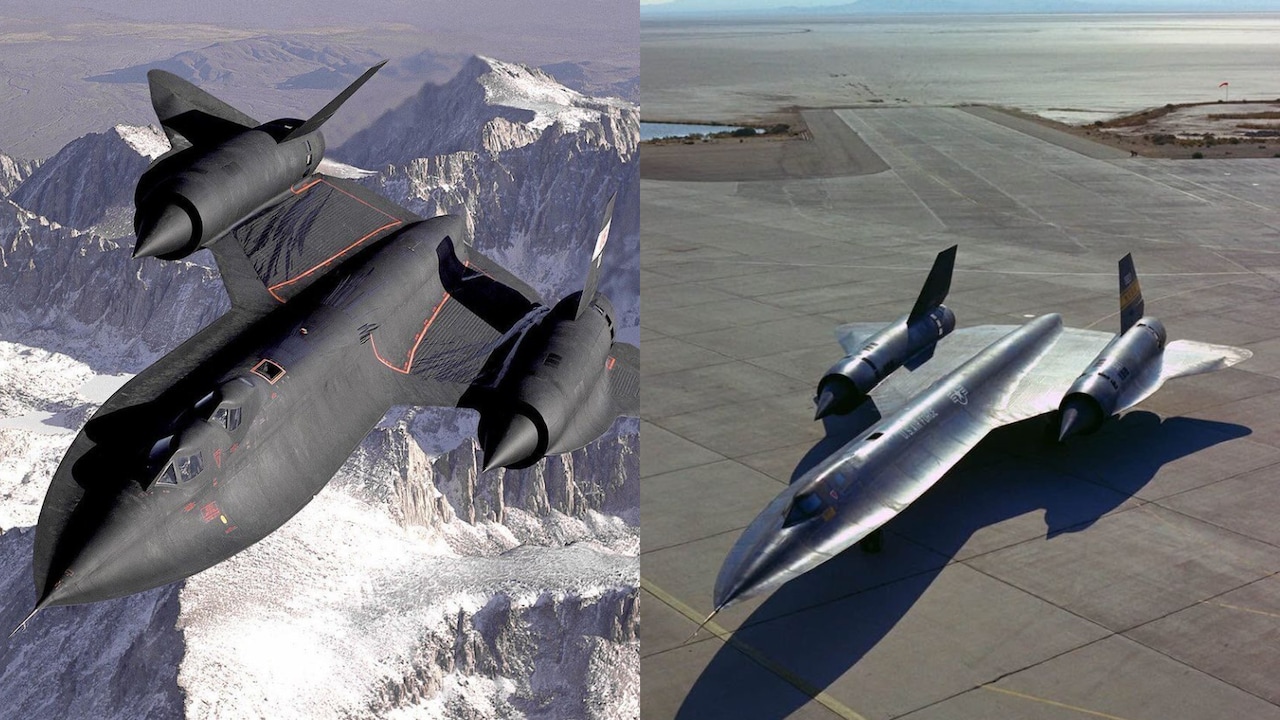
The SR-71 Blackbird is flying again reports are sweeping defense circles following the sudden physical vanishing of NASA tail number 844 from its public display pedestal at Edwards Air Force Base. Satellite imagery confirms the legendary titanium jet was quietly towed into a secure hangar, sparking intense speculation that the United States government intends to resurrect the fastest crewed aircraft ever built. Yet behind the romantic nostalgia of the cold-war titan lies a brutal industrial reality. Bringing an SR-71 back to active flight status is not merely a matter of mechanical overhaul. It is an engineering nightmare constrained by extinct supply chains, vanished specialized tooling, and a lost generation of institutional knowledge.
Tail 844 holds a unique place in aviation history. It was the very final Blackbird to roll off the Lockheed Skunk Works production line and the aircraft that executed the type's last-ever flight on October 9, 1999. For more than two decades, it sat exposed to the Mojave elements on static display. Its recent migration into a controlled hangar environment, coupled with discreet outreach to retired aerospace veterans, suggests that institutional curiosity within NASA has moved past casual academic interest. High-speed propulsion testing and advanced hypersonic research require empirical testbeds that computer models alone cannot satisfy.
The primary barrier to resurrecting the Blackbird is the Pratt & Whitney J58 turbojet engine. Operating as a turbojet at lower speeds and transitioning into a ramjet-like configuration at Mach 3+, the J58 is a metallurgical marvel of an entirely different era. Inspecting airframes that have sat dormant for nearly thirty years reveals degraded seals, contaminated lines, and unserviceable core components. Veteran maintainers who spent decades wrenching on the platform note that even simple tasks required custom ground support equipment, specialized engine removal carts, and proprietary chemical starting fluids like triethylborane (TEB). Much of that infrastructure was scrapped or dispersed decades ago.
The fuel problem is equally daunting. The Blackbird burns JP-7, a specialized high-flashpoint hydrocarbon concoction engineered not to ignite under the blistering thermal friction of sustained Mach 3 flight. JP-7 is no longer mass-produced in the quantities or formulations required to sustain regular sorties. Without an active refinery pipeline for JP-7, any operational return requires either reformulating legacy fuel chemistry or modifying the fuel systems of the aircraft entirely—both of which introduce immense technical risk and financial cost.
Modern defense analysts often misunderstand why the aerospace sector looks backward at retired icons. Satellites and autonomous uncrewed aerial vehicles dominate modern reconnaissance, rendering the strategic intelligence-gathering mission of the SR-71 obsolete. But intelligence collection is not why engineers are looking at tail 844. The value lies in hypersonic aerodynamics, high-altitude materials research, and thermal management data. Modern digital engineering and computer-aided design tools can simulate thermal stress, but empirical flight data gathered at 85,000 feet and three times the speed of sound remains unmatched.
Re-establishing the manufacturing ecosystem for titanium honeycomb structures and high-temperature electrical wiring harnesses would cost hundreds of millions of dollars. When the last batch of spare parts was intentionally destroyed in 2007 to prevent unauthorized reverse engineering, the industrial bridge to the twentieth century was officially burned. If NASA or private aerospace entities attempt to fly tail 844, they are essentially pioneering a bespoke restoration project akin to rebuilding an archaeological artifact while attempting to pilot it at supersonic velocities.
The romantic appeal of the Blackbird ensures that every rumor of its return will capture public imagination. The sight of the matte-black dart slicing through the desert sky represents an era of aerospace ambition that feels almost mythical today. Yet the physical laws governing high-mach flight have not changed, nor have the unforgiving realities of maintaining machinery that defies conventional engineering limits. Whether tail 844 ever tastes the stratosphere again depends less on political willpower and more on whether modern engineering can bridge a thirty-year chasm of lost art.