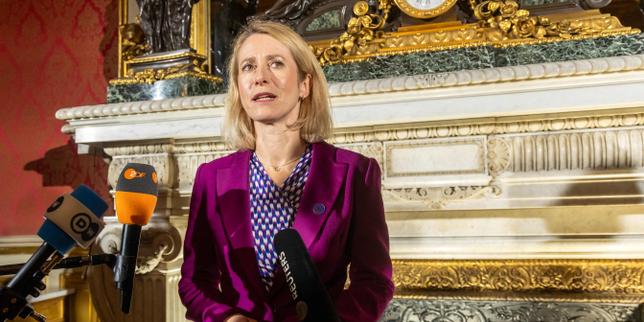
When Kaja Kallas warns European capitals about the traps laid by Moscow during negotiations over the war in Ukraine, she is pointing to a structural asymmetry in how Western democracies and the Kremlin approach peace talks. For the European Union's top diplomat, the danger is not merely that Russia will break a signed agreement—it has done that repeatedly since 2014—but that the negotiation process itself becomes a weapon used to fracture Western unity, freeze territorial gains, and buy time for military reconstitution.
In diplomatic circles across Brussels, Tallinn, and Washington, this pattern has a name. Analysts call it reflexive control. The concept is simple. You feed your adversary specially prepared information—or a seemingly reasonable diplomatic off-ramp—so they voluntarily make a decision that serves your strategic interests.
Moscow does not need to defeat NATO on a battlefield if it can convince European voters that a premature ceasefire equals peace.
The Architecture of a Kremlin Ceasefire
To understand why Kallas, the former Estonian Prime Minister turned EU High Representative for Foreign Affairs and Security Policy, speaks with such urgency, you have to look at the mechanics of Russian diplomatic proposals. Western leaders operate on electoral cycles measured in two-to-four-year increments. Their publics grow weary of inflation, energy shocks, and endless defense budgets. The Kremlin operates on a timeline measured in decades, insulated from domestic dissent by state security and media control.
When Moscow signals openness to talks, the offer almost always contains three poisoned pills.
First comes the territorial freeze. Russia routinely proposes halting hostilities along current lines of contact. On paper, stopping the bloodshed sounds humane. In reality, freezing the front line locks in Russian control over roughly a fifth of Ukrainian sovereign territory, including the land bridge to Crimea and critical industrial hubs in the Donbas. Once the guns go silent, the political will in Western capitals to fund Ukrainian defense collapses overnight. Sanctions begin to erode under corporate lobbying. Meanwhile, Moscow treats the pause not as an end to the conflict, but as an operational intermission to rebuild depleted tank divisions, replenish artillery stockpiles, and integrate occupied populations into the Russian administrative apparatus.
Second is the demand for Ukrainian neutrality. Kremlin negotiators consistently insist that Kyiv must abandon its aspirations to join NATO and accept strict limits on the size and capability of its armed forces. Without binding security guarantees—the kind that only mutual defense treaties or overwhelming domestic deterrence can provide—a neutral Ukraine is an undefended Ukraine. History offers a blunt lesson here. In 1994, Kyiv surrendered the world's third-largest nuclear arsenal under the Budapest Memorandum in exchange for written assurances from Russia, the United States, and the United Kingdom that its borders would be respected. Twenty years later, Russian troops seized Crimea. Ten years after that, full-scale invasion followed. A piece of paper without an enforcement mechanism is an invitation to return.
Third is the exploitation of negotiation fatigue. The moment formal talks begin, Moscow drags out procedural disputes over ceasefire monitoring, prisoner exchanges, and humanitarian corridors. While diplomats argue over comma placement in Geneva or Istanbul, Russian intelligence services amplify peace narratives across European social media, backing populist parties that demand an immediate cutoff of aid to Kyiv. The process becomes an endurance test that democracies are structurally ill-equipped to win.
Why Baltic Leaders Read the Playbook Differently
There is a reason Kallas and her counterparts in Riga, Vilnius, and Warsaw sound an alarm that sometimes grates on ears in Paris, Berlin, or Rome. Geographic proximity breeds clarity. For the Baltic states, Russian imperial revisionism is not an academic seminar topic; it is lived family memory.
During the Cold War, Western diplomats often viewed Soviet negotiations through the lens of rational-actor theory—assuming both sides wanted stability and mutual survival. Baltic policymakers, whose countries spent fifty years under Soviet occupation following the Molotov-Ribbentrop Pact, view Moscow's diplomacy through the lens of maskirovka, the Russian military doctrine of strategic deception.
In the Russian strategic tradition, diplomacy is not the opposite of war. It is an extension of war by non-kinetic means. When Kremlin officials speak of "addressing the root causes of the conflict," Western diplomats hear a request for security dialogue. Baltic analysts hear a demand to roll back NATO's eastern flank to its 1997 borders, stripping central and eastern Europe of alliance protection.
This divergence creates friction inside the European Union. Kallas has spent her tenure trying to bridge the gap between frontline states that view Ukraine's survival as existential and western or southern European states that view the war as a regional crisis competing with domestic economic priorities. Every time Moscow floats a rumor of a backchannel peace deal, that internal EU fault line widens.
The Illusion of the Minsk Precedent
Anyone tempted to dismiss Kallas's warnings as overly rigid need only examine the wreckage of the Minsk agreements. Negotiated in 2014 and 2015 with French and German mediation after Russia's initial invasion of eastern Ukraine, Minsk I and Minsk II were hailed in Western capitals as pragmatic compromises that prevented wider war.
They achieved the exact opposite.
Under the terms of Minsk II, Ukraine was pressured into granting special autonomous status to Russian-backed separatist enclaves in Donetsk and Luhansk before regaining control of its international border with Russia. Had Kyiv fully implemented those political provisions, Moscow would have gained a permanent constitutional veto over Ukraine's foreign policy from the inside, paralyzing its integration with the European Union and NATO.
During the eight years between Minsk II and the full-scale invasion of February 2022, low-intensity trench warfare killed thousands of Ukrainians while Moscow used the diplomatic cover to construct the Nord Stream 2 gas pipeline, deepen European energy dependence, and prepare a massive conventional assault. The lesson for Kyiv and Tallinn was unambiguous. A bad deal does not prevent a future war; it guarantees the next war will be fought under worse conditions.
The Gray Areas Western Strategists Cannot Ignore
Acknowledging Moscow's diplomatic traps does not mean ignoring the brutal realities facing Ukraine and its partners. Pretending that total military victory is effortless or imminent would be just as reckless as walking into a Kremlin ambush.
Ukraine faces acute manpower shortages along a front line stretching over a thousand kilometers. Its energy grid has suffered systematic destruction from Russian missile and drone campaigns, forcing millions to endure rolling blackouts. Meanwhile, Western defense industrial bases, hollowed out by three decades of post-Cold War peace dividends, have struggled to match the sheer volume of artillery shells and air defense interceptors required for high-intensity attrition warfare.
In Washington, shifting political winds continually cast doubt on the long-term reliability of American security assistance. In Europe, fiscal constraints and rising sovereign debt limit how much governments can spend without triggering domestic backlash.
These pressures create an undeniable temptation among some Western policymakers to seek a "good enough" settlement—an arrangement that stops the daily carnage even if it leaves core disputes unresolved. Critics of Kallas's hardline posture argue that refusing to engage in talks hands Moscow a propaganda victory in the Global South, where nations in Africa, Asia, and Latin America blame Western arms shipments for prolonging a conflict that disrupts global grain and fertilizer markets.
That criticism carries weight. Diplomacy cannot be abandoned entirely, nor can Ukraine's allies ignore the economic toll the conflict exacts globally. The question is not whether the war will eventually end at a negotiating table. Almost all wars do. The question is leverage—specifically, who holds the upper hand when those talks begin.
How Democracies Counter Asymmetric Diplomacy
If Western governments want to avoid the traps Kallas describes without appearing allergic to peace, they have to invert Moscow's sequence. Instead of offering concessions to get Russia to the table, allies must build the conditions that force the Kremlin to negotiate out of necessity rather than opportunism.
That starts with industrial deterrence. Peace talks become serious only when Moscow realizes it cannot outlast Western production capacity. Sustained multi-year funding commitments, joint procurement contracts for air defense and long-range strike systems, and the use of immobilized Russian sovereign assets to finance Ukrainian defense send a signal that waiting out Western election cycles will not work.
Second, any credible diplomatic framework requires enforceable security guarantees. Words on paper failed in 1994 and failed again in 2015. Whether through formal NATO membership or a binding coalition of willing nations committed to immediate military intervention if Russia re-invades, Ukraine must have a deterrent that makes a future offensive prohibitively expensive for the Kremlin.
Third, European leaders must maintain sanctions discipline. Russia's war economy relies heavily on oil export revenues and imported Western microelectronics routed through third-party intermediaries in Central Asia and the Caucasus. Tightening enforcement against shadow-fleet oil tankers and secondary sanctions evasion directly degrades the Kremlin's ability to fund both its military and its global influence operations.
Finally, Western capitals need to control the narrative around what peace actually means. A ceasefire that leaves millions of Ukrainians under an occupation marked by forced deportations, filtration camps, and the erasure of national identity is not peace. It is simply the quiet phase of conquest.
Moscow's negotiators understand that democracies love the word "peace" so much they will sometimes accept the appearance of it in place of the reality. Kaja Kallas's warning is a reminder that in dealing with the Kremlin, the most dangerous moment is rarely when the tanks are rolling—it is when the pens come out.