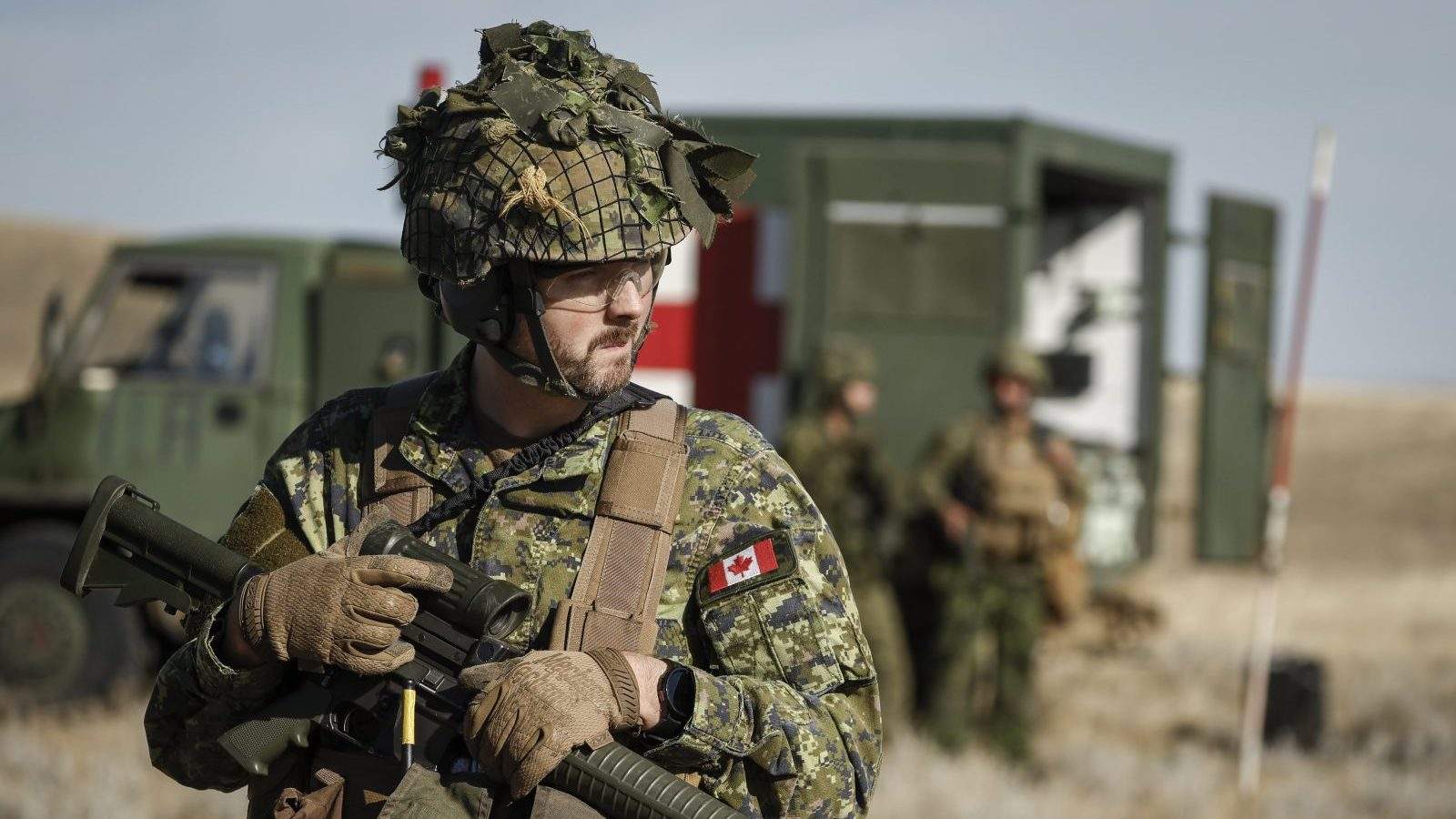
When training incidents occur at major military installations like Canadian Forces Base (CFB) Wainwright, public attention naturally gravitates toward immediate safety protocols, command accountability, and physical recovery. Yet beneath the surface of operational crises lies a quieter, systemic failure that former defense bureaucrats have long warned about: the stark, institutionalized disparity in pay, benefits, and administrative protection between Canada’s Regular Force and its Primary Reserve. When a part-time soldier steps onto a live-fire range or maneuvers in an armored vehicle in Alberta, they carry the exact same physical risk as their full-time counterparts. Their compensation and safety nets, however, operate under an entirely different set of rules.
The numbers tell an uncomfortable story. Historically, Canadian Reserve Force members have earned roughly 85 to 92.8 percent of the base pay of Regular Force personnel holding the exact same rank and performing identical duties. While Ottawa has made incremental adjustments to narrow that gap in recent years, base pay is only the tip of a much larger administrative iceberg. Once allowances, pension structures, medical coverage continuity, and injury compensation mechanisms are factored into the equation, the gap widens into a chasm. For an alternative look, check out: this related article.
The Anatomy of a Two-Tier Military
To understand why a training incident at a facility like CFB Wainwright immediately triggers anxiety among reserve ranks, you have to look at how the Canadian Armed Forces (CAF) is legally and financially constructed. The military relies heavily on its citizen-soldiers to augment full-time brigades during major domestic emergencies—such as wildfires and floods—and during large-scale collective training exercises. Wainwright, situated in east-central Alberta, serves as the premier proving ground for the Canadian Army, hosting massive, complex exercises where Regular and Reserve units integrate seamlessly on the ground.
In the field, the distinction between Class A, Class B, and Class C service disappears. A rifleman is a rifleman. A vehicle crewman faces the same mechanical hazards, weather extremes, and human errors regardless of their component code in a human resources database. Related analysis on this trend has been provided by The Guardian.
Yet the moment an incident occurs—or the moment the exercise concludes—the administrative wall slams back down.
Former senior bureaucrats within the Department of National Defence (DND) have repeatedly pointed out that the reserve compensation framework was designed for a bygone era. It was built around the assumption that reservists are predominantly students or young adults with minimal financial dependents, training one night a week and one weekend a month in local armories. That assumption no longer reflects reality. Today’s reserve force includes mid-career professionals, sole breadwinners, and skilled specialists who routinely take leave from civilian careers to fill critical operational gaps.
Breaking Down the Pay and Benefits Gap
The financial friction isn't just about an hourly rate or a daily per diem. It is embedded in the complex web of classes of service that dictate a reservist’s livelihood:
- Class A Service: Short-term, part-time training and parade nights. Pay is calculated on a daily rate (or half-day rate for periods under six hours). There are no comprehensive long-term health or dental benefits attached to routine Class A status unless an injury is directly and demonstrably linked to duty.
- Class B Service: Full-time temporary employment within Canada, often in instructional, administrative, or exercise-support roles. While Class B contracts exceeding 180 days unlock better medical and dental coverage, contracts are frequently structured just under that threshold—a bureaucratic maneuver long criticized by military ombudsmen and insiders alike.
- Class C Service: Full-time operational service, typically reserved for international deployments or major domestic operations. Only on Class C does a reservist achieve true pay and benefit parity with the Regular Force.
Consider a hypothetical scenario to see how this plays out on the ground. Imagine two corporals operating side by side during a summer training concentration at CFB Wainwright. Both are injured in the same training accident. Corporal A is Regular Force; Corporal B is a Class A reservist on a two-week summer tasking.
Corporal A remains on full salary, receives immediate, uninterrupted care through the Canadian Forces Health Services system, and has a dedicated case manager guiding their transition or recovery. Corporal B, once their short-term tasking expires, faces an entirely different bureaucratic maze. To receive compensation for lost civilian wages, Corporal B must apply for Reserve Force Compensation (RFC), a process that requires proving civilian income loss, submitting extensive documentation from civilian employers, and waiting through processing queues that can stretch for months. If Corporal B is self-employed or works in the gig economy, proving that baseline income becomes an administrative nightmare.
The Bureaucratic Inertia Behind the Disparity
Why does this system persist when the operational risks are identical? Former defense officials point to two primary drivers: budgetary flexibility and institutional inertia.
From a purely fiscal standpoint, the Primary Reserve gives Ottawa a massive operational discount. Maintaining a full-time Regular Force soldier requires funding year-round salaries, housing allowances, comprehensive family medical care, and defined-benefit pensions. Reservists, by contrast, represent an elastic labor pool. DND can surge its numbers during peak training seasons or domestic crises and scale back payroll immediately when the exercise ends.
Closing the pay and benefits gap entirely would force the Treasury Board and DND to permanently re-baseline defense spending. Every percentage point increase in reserve pay—and every expansion of medical or pension eligibility—carries long-term actuarial liabilities that finance officials are deeply reluctant to assume.
The Ombudsman’s Repeated Warnings
This isn't a hidden flaw. Over the past two decades, the Office of the National Defence and Canadian Forces Ombudsman has published multiple exhaustive reports detailing the inequities faced by injured and ill reservists.
In report after report, the findings have been blunt: reservists do not receive the same standard of care or administrative support as Regular Force members. The reports highlighted systemic delays in processing Reserve Force Compensation claims, confusion among chain-of-command leadership regarding what benefits reservists actually qualify for, and a lack of follow-up once a part-time soldier returns to their civilian community.
Former bureaucrats who worked inside the policy shops at National Defence Headquarters (NDHQ) note that while ministerial directives often promise "one force" integration, the underlying Queen’s Regulations and Orders (QR&Os) and Compensation and Benefits Instructions (CBIs) remain fragmented. Changing a single allowance rate can require years of interdepartmental coordination between DND and the Treasury Board Secretariat.
The Hidden Cost of "Discount" Readiness
For years, Ottawa could afford to ignore these warnings because recruitment pipelines remained relatively steady. That buffer is gone. The Canadian Armed Forces is currently navigating one of the most severe personnel shortages in its modern history, with thousands of vacant positions across both the Regular and Reserve components.
When incidents at training bases like Wainwright expose the fragility of the safety net, the impact ripples directly through unit morale and retention. Word travels fast in local armories across the country. Young recruits and seasoned non-commissioned officers alike pay close attention to how their peers are treated when things go wrong.
If a reservist sees a fellow soldier struggle to pay rent because an injury compensation claim is stalled in Ottawa, or watches a colleague lose out on civilian career progression without adequate military backing, the value proposition of part-time service collapses. Patriotism and a desire to serve can bring citizens through the armory doors, but bureaucratic neglect will drive them right back out.
The Civilian Employer Squeeze
There is another side to this equation that policymakers rarely address: the burden placed on civilian employers. Unlike countries with strict, aggressively enforced military leave protections and tax incentives for businesses that employ reservists, Canada relies heavily on employer goodwill and provincial job-protection laws that vary wildly in scope and enforcement.
When a reservist is injured during training at a base like Wainwright, the civilian employer is suddenly left without a key worker for an indefinite period. Because the military’s compensation mechanisms are designed to reimburse the soldier rather than stabilize the civilian workplace, small and medium-sized businesses often absorb uncompensated operational losses. Over time, this creates a quiet reluctance among civilian hiring managers to bring on active reservists—a penalty that hits part-time soldiers directly in their pocketbooks.
Counter-Arguments and Policy Realities
To be fair to defense planners, total parity between a part-time and full-time force presents genuine logistical and economic hurdles.
A Regular Force member signs a contract that subjects them to universality of service on a 24/7/365 basis. They can be posted across the country with minimal notice, uprooting their families, disrupting spousal careers, and deploying overseas for months at a time without the option to decline. Reservists, under normal peacetime conditions, retain far greater autonomy over their geographic stability and when they make themselves available for full-time taskings.
Proponents of the current tiered structure argue that a pay differential is a logical reflection of this difference in commitment and availability. Expecting taxpayers to fund identical pension accruals and full-time family benefits for someone who works 40 days a year, they argue, is fiscally unsustainable and unfair to full-time troops who sacrifice geographic stability.
That argument holds water when discussing routine administrative garrison duty. It falls apart completely when applied to high-risk field training and operational deployments.
The moment a reservist steps into a live-fire exercise at CFB Wainwright, their exposure to catastrophic injury or death is indistinguishable from that of a Regular Force soldier. Differentiating between a "part-time" injury and a "full-time" injury is an accounting fiction that has no basis in physical reality.
What Meaningful Reform Actually Looks Like
Fixing this doesn't require dismantling the reserve model or bankrupting the defense budget. Former bureaucrats and military policy analysts have already mapped out the practical reforms needed to eliminate the worst inequities without erasing the structural distinctions between full-time and part-time service:
- Automatic Risk-Parity Coverage: Any reservist participating in designated high-risk training—such as live-fire exercises, armored operations, or field concentrations at major bases like Wainwright—should automatically be placed on a status that guarantees immediate, no-fault parity in medical care and income replacement if injured.
- Streamlined Wage-Loss Compensation: Replace the sluggish, paper-heavy Reserve Force Compensation application with an immediate interim payment system. If a reservist is injured on duty, their baseline pay should continue uninterrupted until a formal adjudication of civilian wage loss is completed, shifting the burden of administrative delay onto the government rather than the injured soldier.
- Eliminate the 180-Day Contract Loophole: Enforce strict oversight on Class B contracts to stop units from artificially capping employment periods at 179 days simply to avoid triggering long-term health and dental benefits.
- Standardize Command Accountability: Mandate standardized administrative audits following any training incident involving reservists, ensuring unit commanders are held directly accountable for tracking the injured member's transition back into civilian life and medical care.
The Reckoning Ahead
The Canadian Armed Forces cannot achieve its modernization goals or meet its domestic and international commitments without a healthy, motivated Primary Reserve. Every major defense policy update published by Ottawa over the past decade has leaned heavier on the assumption that reservists will step up to fill the void left by Regular Force shortfalls.
Yet you cannot demand full-time risk and professionalism while maintaining a part-time safety net. Every training accident, every delayed compensation check, and every frustrated former bureaucrat speaking out adds weight to an undeniable truth: the current system survives only because citizen-soldiers are willing to absorb the financial risk themselves. Until Ottawa brings its compensation and care frameworks into alignment with the realities of modern military service, every soldier stepping onto the training grounds at Wainwright will be carrying more than just their rucksack—they will be carrying the burden of a broken promise.