When King Felipe VI and Queen Letizia arrived in the Spanish North African enclave of Ceuta, they were greeted by church bells, waving national flags, and an atmosphere thick with unhealed trauma. Months prior, a massive surge of roughly 80,000 migrants crossed the border from Morocco in a matter of days, overwhelming municipal infrastructure, claiming over 140 lives during the desperate attempts to reach European soil, and leaving behind an urban landscape fundamentally altered. While the immediate emergency ebbed as thousands returned or were processed, an estimated 15,000 migrants remained trapped in a logistical and humanitarian limbo. This prolonged presence transformed a localized border emergency into a stress test for Spain's social cohesion, political stability, and delicate diplomatic balancing act with Rabat.
Ceuta has long prided itself on being a historical microcosm of multi-ethnic coexistence, where Christian, Muslim, Hindu, and Jewish communities shared a cramped 18-square-kilometer peninsula. Yet, the fallout from the July crossings fractured that fragile equilibrium. In neighborhoods like El Príncipe, where Muslim residents trace their heritage across the nearby Moroccan border while holding full Spanish and European Union citizenship, the strain became palpable. Street-level frustration boiled over as residents voiced exhaustion with the protracted crisis, while political actors across mainland Spain capitalized on the chaos ahead of upcoming national elections.
The Geopolitical Pressure Valve
To understand why Ceuta remains a recurring flashpoint, one must look past the immediate humanitarian tragedy and examine the mechanics of European border management. Unlike maritime arrivals navigating the open Mediterranean, Ceuta and its sister enclave Melilla represent the European Union's only direct land borders on the African continent. This geographic reality makes the frontier an intensely sensitive geopolitical pressure valve.
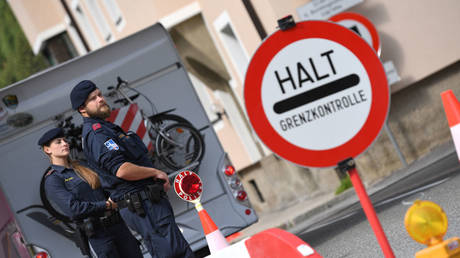
Bilateral stability depends entirely on cooperation from Moroccan authorities. When diplomatic friction arises between Madrid and Rabat, the physical barrier immediately reflects the strain. Moroccan state security forces control the approach routes on the southern side of the fence; when enforcement slackens, thousands can converge on the border infrastructure within hours.
Observers note that Morocco frequently uses migration management as a strategic instrument in its broader diplomatic negotiations with Madrid and Brussels, particularly concerning the sovereignty status of the enclaves and fishing or trade rights. By maintaining a posture that treats the border as a moveable barrier, Rabat retains substantial leverage over Spanish domestic politics.
The Domestic Political Fallout
Back on the Iberian Peninsula, the events in Ceuta weaponized an already polarized political landscape. Opposition parties seized on the migration surge to challenge the central government's handling of national security and border integrity, framing the situation as a failure of state sovereignty. Conservative leaders accused Madrid of projecting weakness in its dealings with Morocco, demanding more aggressive deterrence measures and immediate expulsions.
Conversely, humanitarian organizations and human rights monitors cast a harsh light on the methods used to manage the aftermath. Reports surfaced detailing alleged abuses by security forces during clearance operations on beaches and makeshift camps, prompting official investigations into police conduct. This placed the progressive administration in Madrid in a difficult defensive posture, trying to balance EU human rights obligations with domestic demands for order and border security.
The local government in Ceuta found itself caught squarely in the middle. During the royal visit, local officials presented the King with the key to the city, using the platform to articulate a sense of profound abandonment by mainland institutions. The local leadership argued that an enclave of 84,000 residents simply lacks the demographic and financial capacity to absorb thousands of displaced individuals indefinitely without structural assistance from Brussels and Madrid.
Beneath the Surface of Coexistence
The social fracture within Ceuta runs deeper than partisan politics. In interviews across the city's diverse districts, long-standing residents expressed a weariness that transcends religious lines. Business owners and neighborhood associations reported that public services, healthcare facilities, and local charities were stretched past their breaking points.
At the same time, hundreds of unaccompanied underage migrants remained visible in public spaces, sleeping rough near ports and beaches while awaiting bureaucratic determinations that moved at a glacial pace. Local volunteers and religious charities stepped in to run makeshift soup kitchens, attempting to fill a vacuum left by overwhelmed state agencies. However, goodwill has worn thin as the economic and social costs of a semi-permanent encampment culture weigh heavily on the local economy.
The royal visit was meticulously choreographed to project unity, featuring stops at multicultural schools and a local cemetery where unidentified victims of the crossing were buried. King Felipe's call for relations with Morocco to be conducted in "good faith" was a diplomatic signal intended to soothe tensions. Yet, speeches and royal ceremonies cannot rewrite the geographic and economic realities of a border town squeezed between two worlds.
As long as the structural economic disparities between North Africa and Europe persist, and as long as migration policy remains intertwined with territorial disputes, Ceuta will continue to serve as the canary in the coal mine for European border policy. The cameras have since moved on to other global crises, leaving the residents of the enclave to manage a complex human reality that no single royal visit can resolve.
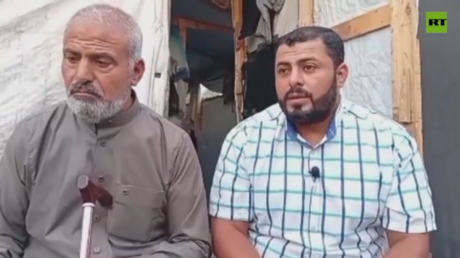
This video provides an on-the-ground look at the makeshift camps, local resident interviews, and the socioeconomic tensions in Ceuta surrounding the royal visit and migration crisis.