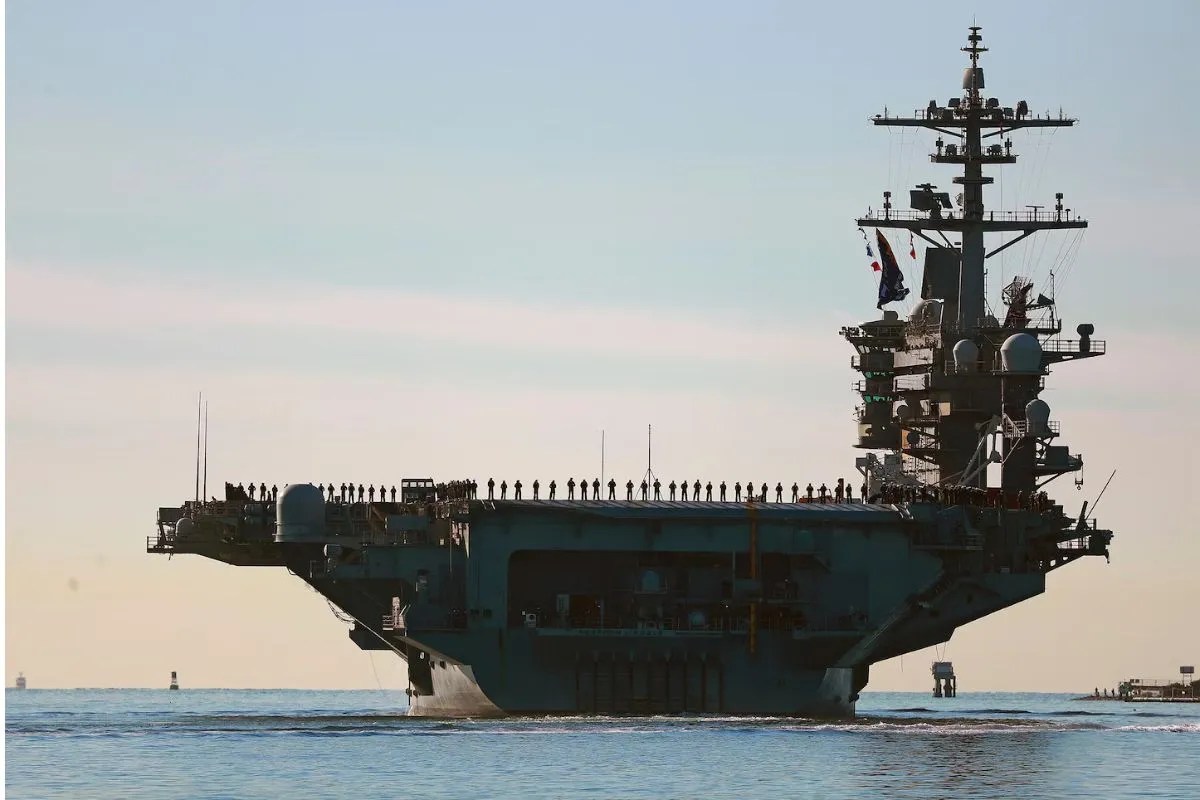
The modern carrier strike group is often misunderstood as a stationary fist, waiting in a single combat zone for orders to strike. Recent headlines tracking American nuclear-powered flat-tops steaming into Southeast Asian ports like Phuket or Laem Chabang after operating in Middle Eastern waters have sparked widespread confusion. Observers looking at maps scratch their heads over why a warship would leave the Arabian Sea for Thailand while a high-stakes confrontation with Iran simmers. The reality of naval logistics reveals a completely different story. These port visits are not retreats, nor are they political signals directed at Bangkok. They are the mechanical heartbeat of a grueling, multi-month maritime campaign that tests the absolute limits of machinery and human endurance.
The Cost of Extended Rotations
When a Nimitz-class or Gerald R. Ford-class aircraft carrier spends months enforcing a naval blockade or launching continuous air sorties against targets in the Middle East, the strain on both vessel and crew accumulates rapidly. Nuclear reactors provide virtually unlimited propulsion, but the thousands of sailors, pilots, and maintenance personnel aboard operate on finite reserves. High-tempo flight operations require constant mechanical overhauls of catapults, arresting gear, and electronic warfare suites. Salt air, extreme heat, and relentless operational tempos degrade equipment far faster than peacetime exercises ever could.
Port calls in Thailand or similar regional hubs serve a vital maintenance and psychological function. After months of operating within the United States Central Command area of operations, crews require mandatory crew rest, psychological decompression, and critical logistical replenishment. Fresh food, mail delivery, and minor structural repairs that cannot be performed safely while underway must take place in a stable, friendly harbor.
The Rotation Cycle Explained
To understand why a carrier appears to move thousands of miles away from a conflict zone, one must examine the broader replacement schedule of the United States Navy. Carriers do not simply vanish from a theater; they are rotated out when relief arrives, or they execute scheduled mid-deployment breaks before re-entering the area of responsibility.
For instance, as carriers like the USS George H.W. Bush or earlier deployments like the USS Abraham Lincoln shifted toward Southeast Asian waters for extended port stops, other strike groups—such as the USS Theodore Roosevelt—steamed in to maintain a continuous three-carrier posture in Middle Eastern waters. This theater-wide chess game ensures that the Pentagon maintains continuous air power projection without burning out single hulls through unbroken, year-long deployments.
Beyond the Headlines
Sensationalized reports often frame these movements as sudden retreats or tactical blunders. Military analysts know better. Naval power projection relies on depth, rotation, and maintenance cycles. An aircraft carrier returning from the Arabian Sea to a Southeast Asian port is preparing for its next phase of service, whether that involves heading back toward the theater of operations or rotating home after a grueling multi-month deployment.
The friction between Washington and Tehran continues to dictate a heavy naval footprint in the Arabian Sea and surrounding waters. Yet behind the political posturing lies the unglamorous, grinding reality of maritime logistics. Steel fatigues, sailors grow exhausted, and supply chains must be fed. The movement of these floating airbases through Asian ports is simply the mechanism by which the world's most powerful navy sustains its global reach.


