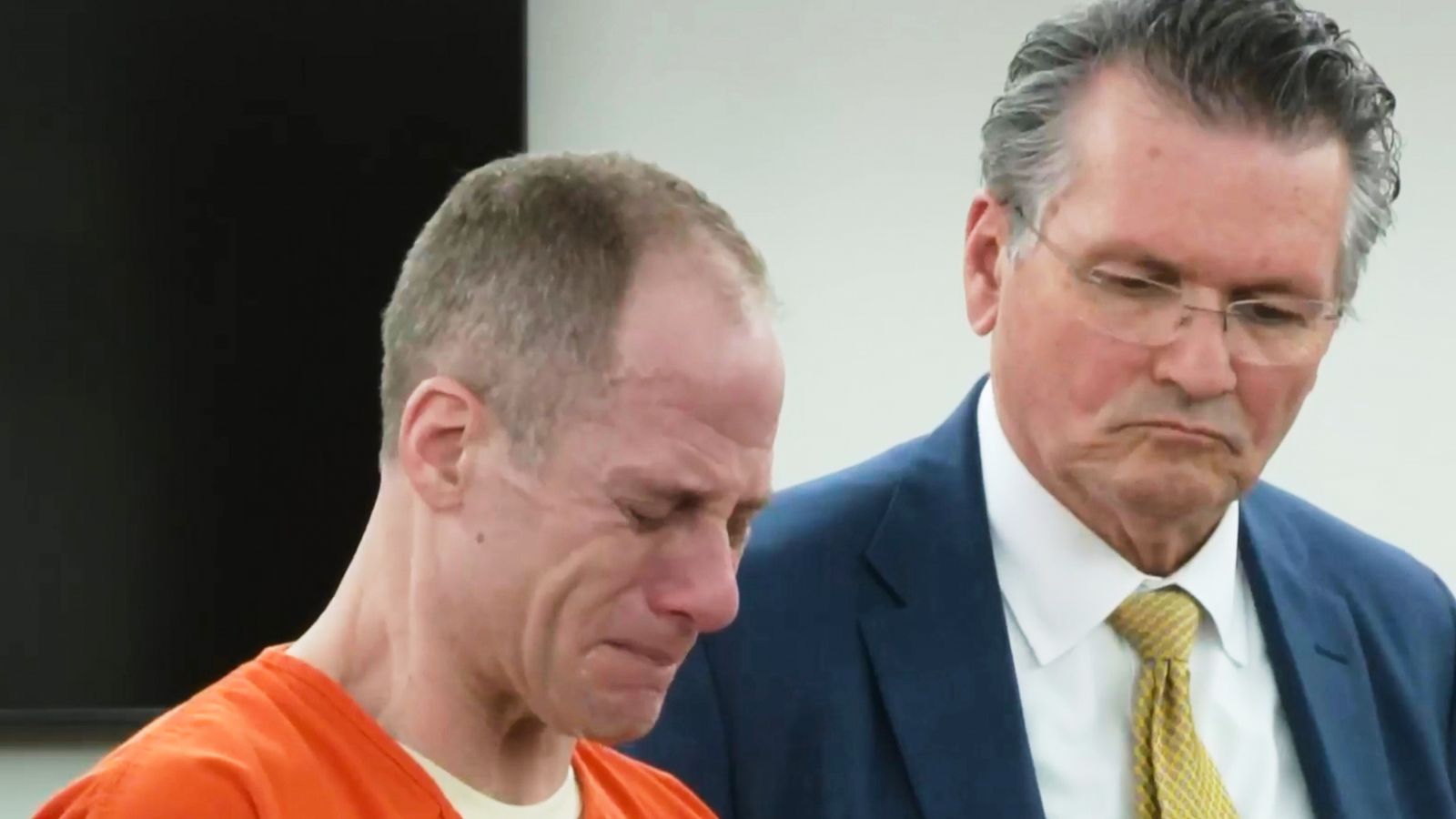
When former American Idol contestant and Ohio music pastor Caleb Flynn stood before a judge to hear his fate, the public saw a man sobbing uncontrollably, clutching tissues, and pleading for mercy. Behind that dramatic courtroom performance lay a chilling reality. Flynn was sentenced to life in prison without the possibility of parole for the premeditated murder of his wife, Ashley Flynn. This high-profile trial exposed a dark undercurrent of narcissism, religious hypocrisy, and a calculated execution disguised as a home invasion.
The primary query surrounding the case focuses on how a local religious leader could orchestrate such a crime and fail so catastrophically to cover his tracks. The answer lies in the digital trail he left behind, a trail that prosecutors used to systematically dismantle his staged crime scene and shatter his facade of innocence.
The Anatomy of a Calculated Deception
On February 16, 2026, emergency dispatchers in Tipp City, Ohio, received a frantic call from Flynn. He claimed an intruder had broken into their suburban home and shot his 37-year-old wife, Ashley, twice in the back of the head while she slept. It was a classic playbook maneuver designed to invoke immediate panic and divert suspicion away from the domestic sphere.
Yet, veteran investigators immediately found anomalies that did not fit a random break-in. There were no signs of forced entry. Valuables remained untouched. Most damningly, forensic analysis of Flynn's personal devices placed him moving around the house at the exact time he claimed to be fast asleep. His DNA and fingerprints were recovered from the scene, directly contradicting his narrative of detachment.
The veneer began to crack long before the trial started. Flynn was living a compartmentalized existence, maintaining a respected position in his church community while cultivating an intense, manipulative extramarital affair with a young church intern named Alleigha Botner.
The Digital Paper Trail of a Murderer
Modern criminal investigations rarely rely solely on physical evidence; they thrive on the unedited thoughts defendants type into their phones. Text messages presented during the trial revealed an escalation from marital dissatisfaction to explicit homicidal ideation.
Months before the shooting, Flynn texted Botner detailing his exhaustion with his marriage and his desire to bypass legal separation. In one shocking message, he wrote that he was up late trying to figure out how to kill his wife and avoid jail, noting that if he could do it without facing eternal damnations, he would execute the plan immediately.
The night before Ashley Flynn was murdered, the digital countdown reached its climax. Flynn sent a series of chilling text messages to his mistress: "I choose you," "I'm free," and "Actions will come tomorrow". To prosecutors, these words were not metaphorical references to a pending divorce, but a clear declaration of intent. He viewed his wife not as a partner, but as an obstacle to his personal gratification.
The Courtroom Theater and the Collapse of Sympathy
During the trial, the prosecution faced the task of proving motive and intent beyond a reasonable doubt without ever recovering the murder weapon. They achieved this by presenting a portrait of a man consumed by greed and arrogance. Prosecutors argued that Flynn wanted out of his marriage but refused to pursue a lawful divorce because it would cost him his social standing, his finances, and his community status.
Flynn's defense attempted to paint him as a grieving husband caught in a nightmare, arguing that a failing marriage did not equate to homicide. But this narrative evaporated under the weight of the victim impact statements delivered by the couple's daughters. The emotional gravity of the courtroom shifted permanently when the court heard words from the children he had orphaned, with one daughter explicitly stating she refused ever to visit him behind bars.
Even during his sentencing hearing, Flynn maintained a contradictory stance. He apologized for breaking his wedding vows and using hateful language, yet he stood before the bench and insisted on his absolute innocence regarding the murder itself. The presiding judge cut through the performative grief, characterizing his actions as a masterclass in deceit, manipulation, and profound cruelty.
The mask had slipped entirely, revealing a reality far more ordinary and destructive than any stage performance: a man trapped by his own hubris, unwilling to accept the consequences of his choices, who decided that ending a life was easier than admitting failure.
[The tragic case of Caleb Flynn highlights the devastating reality of domestic violence and hidden abuse. For more details on the court proceedings, watch this report on Caleb Flynn sentencing trial.]