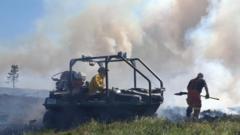
Smoldering Peat and Hidden Heat Threaten the Scottish Highlands
Fire crews in the Scottish Highlands continue to battle residual hot spots scattered across the charred terrain of the Cairngorms National Park. While surface flames have largely been subdued, firefighters face an insidious underground threat that can persist for weeks beneath the heather. Wildfires in peat-heavy ecosystems do not simply burn out when the open flames vanish. They burrow into the organic soil, creeping undetected below the surface before re-emerging days later downwind.
Extinguishing these deep-seated hot spots requires hundreds of thousands of liters of water, heavy machinery, and grueling manual labor. Crews must systematically rake through acres of burning embers buried up to a meter underground. Without rain and prolonged suppression efforts, a single gust of wind can reignite a dormant smolder into a roaring front. For another view, consider: this related article.
The Invisible Threat of Subsurface Fires
When a surface wildfire sweeps over moorland, it burns off vegetation quickly. What lies beneath, however, presents the true long-term hazard.
Peatlands act as natural carbon sinks, built from millennia of decaying organic material. When conditions turn dry, this compressed vegetation transforms into high-grade fuel. Similar reporting regarding this has been shared by The Washington Post.
Why Subsurface Heat Persists
- Oxygen Efficiency: Peat can sustain slow combustion at remarkably low oxygen levels.
- Thermal Insulation: The upper layer of ash acts as a blanket, trapping intense heat underneath.
- Hydrophobic Soil: Severely dried soil repels water, causing surface runoff rather than deep absorption.
Firefighters cannot rely on simple air drops or hose lines to clear these zones. They must flood the area systematically while physically turning the soil to break up the hot spots. It is tedious, exhausting work that stretches emergency resources to their limits.
Historical Land Management Practices Under Scrutiny
The recurring nature of large-scale blazes in the Highlands highlights a broader debate surrounding land use and environmental policy. Decades of drainage, overgrazing, and controlled burning have altered the natural hydrology of the region.
Healthy, wet peatlands naturally resist fire. Degraded, dry peatlands act like gunpowder.
Restoration efforts across Scotland have accelerated, focusing on re-wetting drained bogs and blocking historic drainage ditches. Yet, millions of hectares remain vulnerable. When prolonged dry spells hit the Highlands, these altered landscapes lack the natural moisture needed to blunt the spread of flame.
The Human Factor Behind Highland Blazes
Natural ignitions like lightning strikes account for a small fraction of UK wildfires. The vast majority stem from human activity.
Campfires, discarded disposable barbecues, glass bottles acting as magnifying lenses, and thoughtlessly tossed cigarette butts trigger the overwhelming majority of incidents. As tourist numbers in national parks swell, the risk of accidental ignition climbs exponentially.
Public awareness campaigns often fall short during warm weather spells. Access rights under Scottish law allow broad freedom to roam, but that freedom carries a duty of care that is frequently overlooked by casual visitors. Strengthening enforcement mechanisms or introducing targeted bans during high-risk weather windows remain contentious political topics, balancing public access against ecological preservation.
Long-Term Ecological Damage
The impact of a major peat fire extends far beyond immediate surface destruction.
- Carbon Release: Burning peat releases ancient carbon directly into the atmosphere, reversing centuries of natural storage.
- Habitat Destruction: Ground-nesting birds, rare insects, and native flora suffer devastating population loss.
- Soil Erosion: Once vegetation is stripped and the topsoil bakes, rain washes away the nutrient-rich upper layers, leaving bare rock that takes decades to recover.
Local wildlife trusts face years of rehabilitation work after a single major blaze. The recovery process is slow, expensive, and never fully restores the original biodiversity.
Strategic Shift in Wildfire Prevention
Emergency services are re-evaluating how they manage rural fire risks. Relying solely on reactive suppression is no longer viable given the scale of recent incidents.
The focus must pivot toward proactive landscape management. Creating strategic fuel breaks, restoring natural water tables, and deploying early-detection thermal drones represent the most effective path forward. Preventing the initial spark remains vital, but ensuring the land itself possesses the resilience to suppress smoldering embers before they spread is the ultimate defense against recurring disasters.