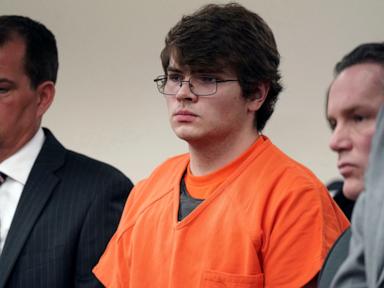
Jury selection in the federal hate crimes trial stemming from the May 2022 mass shooting at a Tops Friendly Market in Buffalo, New York, forces a reluctant public to re-examine the mechanics of domestic terrorism and federal capital punishment. The proceedings, unfolding in a courtroom charged with grief and political friction, bypass the immediate question of guilt. The perpetrator entered state-level guilty pleas long ago, accepting consecutive life sentences without the possibility of parole. Instead, this federal proceeding focuses entirely on whether the defendant will face the ultimate federal penalty: execution.
This trial represents a rare collision between the Department of Justice's prosecution priorities and the messy reality of modern capital litigation. When federal prosecutors rejected an offer from the defense team to plead guilty in exchange for taking the death penalty off the table, they initiated an expensive, emotionally draining process that will span months. Legal analysts understand the underlying friction. The federal government maintains an active death penalty prosecution track despite internal debates and shifting administrative stances on capital punishment. For the families of the ten victims killed and the three wounded, the courtroom doors opening once more mean an unhealed wound is pulled back into the harsh light of public scrutiny. Learn more on a connected topic: this related article.
The Anatomy of Radicalization on Trial
Beyond the legal battle over sentencing lies a broader societal reckoning that many institutional actors would prefer to avoid. Survivors and family members, such as Garnell Whitfield—whose 86-year-old mother, Ruth Whitfield, was murdered in the attack—have repeatedly pointed out that the gunman did not operate in a vacuum. Whitfield and other community advocates have emphasized that the trial must confront the structural architectures of online radicalization, algorithmic echo chambers, and mainstream rhetoric that normalizes white supremacist ideologies.
The defense strategy in a federal capital case typically involves a granular dissection of the defendant's background, psychological state, and environmental influences from an early age. Legal experts note that defense attorneys will present reams of data regarding social media exposure, isolation, and mental health histories not to excuse the atrocities, but to construct a narrative against execution. For the community, sitting through weeks of testimony detailing the defendant's digital footprint and manifesto creation risks turning the courtroom into an unintended platform for the very ideology that fueled the massacre. More analysis by Associated Press highlights related perspectives on this issue.
The Divergent Views on Retribution
Within Buffalo's tight-knit East Side community, consensus on the outcome of this federal trial is notably absent. Retributive justice does not present a single, unified face. Zeneta Everhart, a Buffalo Common Council member whose son survived being shot in the neck during the rampage, has voiced strong support for pursuing the death penalty, framing the act as domestic terrorism that demands the highest legal condemnation. For Everhart and others, the sheer scale of anti-Black violence witnessed that afternoon warrants a federal response that matches the terror inflicted.
Conversely, other family members express deep exhaustion regarding the protracted appeals process that accompanies a federal death sentence. Wayne Jones, who lost his mother, Celestine Chaney, in the shooting, has pointed out the grueling reality of decades of legal maneuvers. The prospect of a condemned inmate spending twenty or thirty years navigating federal appeals while generating continuous legal headlines offers little peace to those seeking a definitive conclusion. This split reveals a fundamental tension within modern American justice: the emotional desire for maximal punishment versus the practical weariness of a broken, protracted appellate system.
The Broader Context of Bias-Motivated Violence
The statistical backdrop of the Buffalo courtroom underscores a persistent domestic crisis. Hate crime data compiled over successive years consistently demonstrates that anti-Black bias remains the leading motivator behind ideologically driven violent incidents across the United States. The supermarket massacre stands out not merely due to its body count, but because it laid bare the lethal pipeline connecting obscure internet message boards to suburban armories and local grocery aisles.
Law enforcement and intelligence analysts face a continuous challenge in tracking lone-wolf actors who consume extremist literature online. Traditional counterterrorism frameworks, built largely around foreign threats or organized cells, struggle to intercept individuals who radicalize entirely in solitude before executing a plan. The trial forces a spotlight onto these systemic blind spots, asking jurors not only to weigh the fate of one young gunman, but to comprehend an environment where hate is easily packaged, consumed, and acted upon.
As jury panels are vetted and questioned regarding their views on capital punishment, race, and media consumption, the proceedings settle into a long rhythm. The outcome of the sentencing phase will inevitably provide a legal benchmark, yet it leaves untouched the deeper cultural questions about how communities heal when the institutions meant to protect them fail to intercept the hatred beforehand.
This video provides a direct local news report on the commencement of jury selection for the federal trial involving the Buffalo supermarket mass shooting.


