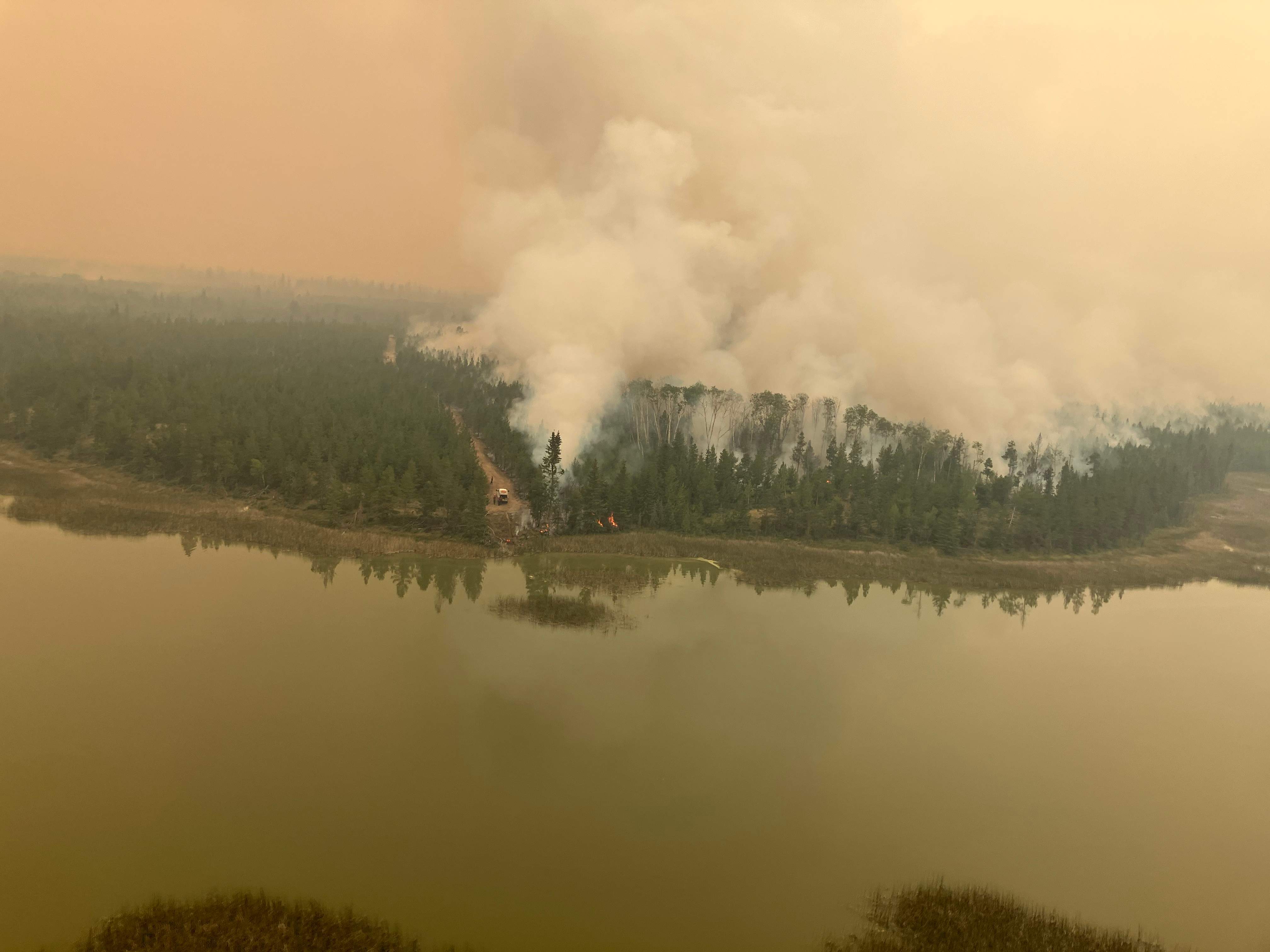
The ash falling across British Columbia is not just the remnants of incinerated pine and Douglas fir. It is the physical debris of a predictable, systemic breakdown. As out-of-control wildfires tear through the province’s interior, destroying homes and forcing thousands to flee, the public narrative remains focused entirely on the immediate horror of the flames. Emergency sirens wail, evacuation orders flash across smartphones, and officials give somber press conferences detailing the loss of structures.
But this reactive focus obscures the structural failures that allow these blazes to turn catastrophic long before the first spark ignites. The brutal truth is that British Columbia’s current crisis is the direct result of decades of flawed forest management, resource misallocation, and a stubborn refusal to adapt to a rapidly changing climate.
The province is caught in a vicious cycle. By treating every forest fire as an isolated emergency to be suppressed at all costs, fire suppression policies have inadvertently created tinderbox conditions across millions of hectares.
The Illusion of Suppression and the Fuel Load Crisis
For more than a century, the operational mandate of wildfire management in western Canada has been simple. Detect the fire, attack it aggressively, and put it out as quickly as possible. This approach worked exceptionally well in the short term. It protected commercial timber supply and shielded rural communities from immediate danger.
The strategy, however, suffered from a fundamental misunderstanding of forest ecology.
Wildfires are a natural, necessary component of the ecosystem. Historically, low-intensity blazes regularly swept through the interior of British Columbia. These frequent, smaller fires cleared away the underbrush, consumed dead wood, and thinned out young trees. This natural process kept the total amount of available fuel low, ensuring that subsequent fires remained manageable and rarely reached the crowns of mature trees.
By suppressing every single smoke plume for decades, humans have interfered with this cycle. Dead wood has accumulated on the forest floor. Understory vegetation has grown thick and choked.
Imagine a warehouse where flammable material is continuously stacked from floor to ceiling without ever being cleared out. A spark in that warehouse will not result in a manageable fire. It will cause an uncontrollable inferno.
This accumulation of fuel is now colliding with hotter, drier summers. The result is high-intensity crown fires. These blazes burn so hot and move so fast that traditional firefighting methods—air tankers, water bombers, and ground crews—become completely ineffective. The province is fighting 21st-century fires with a 20th-century mindset that prioritizes suppression over prevention.
The Legacy of Commercial Forestry Decisions
To fully understand why these fires are burning with such unprecedented ferocity, one must look closely at the history of industrial logging in the province.
For decades, the commercial forestry sector prioritized monoculture replanting. After a section of old-growth or mixed forest was harvested, it was frequently replanted with a single, highly marketable species, usually lodgepole pine or interior Douglas fir.
These dense, even-aged plantations are highly vulnerable to fire. Unlike a diverse, natural forest containing a mix of deciduous trees like aspen and birch—which act as natural firebreaks due to their higher moisture content—monoculture pine plantations function as continuous fuel beds. Once a fire enters a monoculture plantation, it can race through the canopy uninterrupted for kilometers.
The Deciduous Eradication Policy
The problem was exacerbated by historical silviculture practices that actively eradicated deciduous trees. For years, government regulations required logging companies to spray broadleaf stands with herbicides like glyphosate. The goal was to eliminate competition for the more valuable coniferous trees.
By systematically removing aspen, birch, and willow from the landscape, the province inadvertently removed nature’s speed bumps. A forest dominated entirely by resinous, flammable conifers is significantly more prone to explosive fire behavior than a diverse, mixed-wood forest.
The False Economy of Emergency Funding
There is a glaring imbalance in how public funds are allocated to deal with wildfires. British Columbia routinely spends hundreds of millions, sometimes billions, of dollars on direct fire suppression during the height of the summer crisis. Air tankers are leased at exorbitant rates, emergency camps are deployed, and international crews are flown in to help stem the tide.
When the smoke clears in the autumn, the funding dries up.
The budget allocated for proactive mitigation—such as prescribed burning, mechanical thinning around communities, and community forest initiatives—is a tiny fraction of what is spent on emergency response.
- Emergency Suppression: Billions spent retroactively to fight uncontrollable blazes.
- Proactive Mitigation: Chronically underfunded programs that struggle for consistent, multi-year backing.
This is a classic failure of public policy budgeting. It is politically popular to deploy massive resources when a town is actively threatened; it looks decisive on the evening news. It is far less politically rewarding to invest quietly in thinning out a forest five years before a spark ever lands there. Yet, every dollar spent on fuel reduction yields massive savings in avoided property damage and emergency response costs.
The Bureaucratic Hurdles to Prescribed Burning
The most effective tool for reducing fuel loads is the deliberate application of fire under controlled conditions, known as prescribed burning. Indigenous communities across British Columbia practiced cultural burning for millennia, successfully managing the landscape and keeping fuel levels low.
Today, executing a prescribed burn is a bureaucratic nightmare.
A practitioner must navigate an intricate maze of regulations, liability risks, and strict weather windows. The air quality branch frequently denies permits out of fear that smoke will drift into urban centers, causing temporary public discomfort.
Consequently, the window of opportunity to conduct these burns safely—usually a few weeks in the spring and autumn—is regularly missed. The fear of a controlled burn escaping dominates the regulatory framework, leading to a paralysis that guarantees far larger, uncontrollable wildfires in the summer.
The risk calculation is completely backward. The province accepts the certainty of catastrophic summer smoke to avoid the minor, manageable smoke of a controlled spring burn.
Defending the Wildland-Urban Interface
As cities and towns expand outward into the valleys and foothills of the interior, more homes are being built directly within the wildland-urban interface. This is the zone where residential developments meet uninterrupted forest fuels.
Many of these communities are built with little regard for the reality of wildfire.
Subdivisions are designed with single access roads, making evacuation chaotic and dangerous. Homes are constructed using flammable materials like vinyl siding and asphalt shingles, with cedar hedges planted directly against the foundations.
While programs like FireSmart BC exist to educate homeowners on how to reduce risks around their properties, participation remains largely voluntary. Municipalities are often hesitant to enforce strict wildland-urban interface building codes or zoning bylaws out of fear of stalling real estate development or increasing construction costs.
The burden of this inaction ultimately falls on local volunteer fire departments and structural protection crews. When an out-of-control wildfire approaches a community, these crews are forced to wage a desperate, house-by-house defense that could have been avoided through smarter urban planning and mandatory building standards.
Reimagining the Provincial Landscape
Addressing this crisis requires an immediate shift away from the emergency response model toward a strategy of landscape-level resilience. This change cannot happen through minor adjustments to existing policies. It requires a fundamental overhaul of how British Columbia manages its public lands.
Restoring Deciduous Buffers
Forestry policies must be rewritten to mandate the retention and promotion of deciduous species. Broadleaf trees must no longer be viewed as weeds that compete with commercial timber. Instead, they must be recognized as vital infrastructure for community defense. Creating wide, permanent belts of aspen and birch around rural towns can act as a natural shield, slowing down incoming wildfires and giving ground crews a realistic chance to contain them.
Reforming the Liability Framework
The provincial government needs to assume the liability for prescribed burns conducted by certified professionals and Indigenous fire practitioners. By shifting the financial and legal risk away from individual contractors and communities, the province can break the bureaucratic gridlock that currently prevents widespread fuel reduction efforts.
Mandatory Interface Zoning
Local governments must implement mandatory wildfire zoning regulations for all new developments within high-risk zones. This means banning flammable building materials, requiring a minimum 30-meter defensible space around structures, and ensuring all new subdivisions have multiple evacuation routes.
The current path is entirely unsustainable. Expecting different results while maintaining the same suppression-heavy, commercially driven forest management policies is a form of collective denial. Until British Columbia stops treating wildfires as unexpected seasonal surprises and begins addressing the systemic fuel crisis on the ground, the province will continue to burn. The real tragedy is not that these homes and structures are being lost, but that the knowledge required to save them is being ignored year after year.


