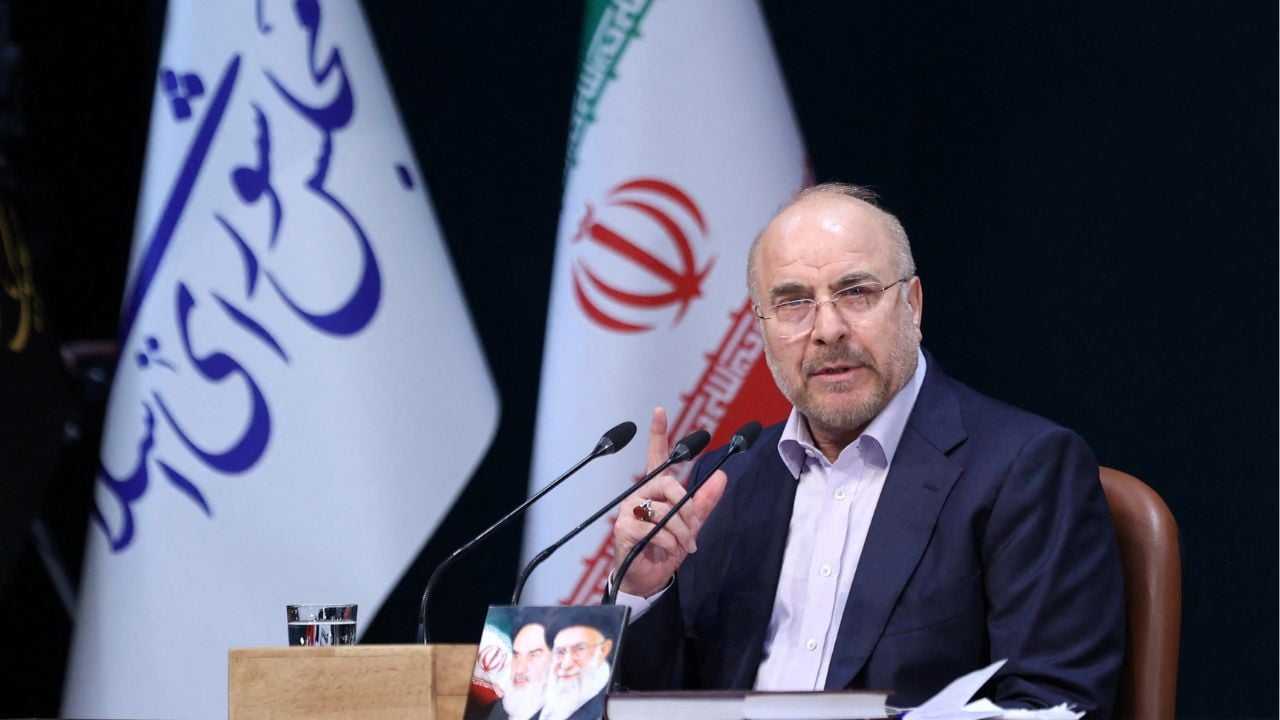
The diplomatic backchannel between Washington and Tehran in Bürgenstock, Switzerland, stalled after threats from U.S. President Donald Trump pushed the Iranian delegation to the edge of departure. Iranian chief negotiator Mohammad Bagher Ghalibaf confirmed that a public warning regarding the Strait of Hormuz effectively halted face-to-face talks, forcing diplomats into informal channels to sustain dialogue. Tehran structured its defense around domestic political survival, framing its presence as a necessity to prevent escalated violence in Lebanon. While the public spat suggests total failure, the underlying machinery of the negotiations remains operational, revealing an intentional strategy of maximum public friction paired with urgent private communication.
The Threat That Halted Bürgenstock
Public posture often dictates the boundaries of private compromise. The direct trigger for the stagnation in Switzerland was a statement from Trump indicating that the United States could seize control of or block access to the Strait of Hormuz if Tehran failed to comply with American terms. The rhetoric was explicit, warning the Iranian delegation that any move to close the maritime choke point would result in devastating national consequences.
For Ghalibaf, who also serves as Iran's parliamentary speaker, continuing formal, open-door sessions under the weight of such statements became politically impossible. The Iranian delegation paused active participation to avoid appearing responsive to overt coercion. In Tehran, hardline factions immediately demanded a full withdrawal from European venues, criticizing the diplomatic team for remaining in Switzerland while facing aggressive public mandates.
Domestic Friction and the Lebanon Factor
Ghalibaf faced severe blowback upon his return to Iran. Internal critics argued that state airports should have been barred from facilitating the delegation's transit to Europe, interpreting any dialogue with the current American administration as an admission of weakness. To counter this, Ghalibaf pivoted to a regional security narrative. He publicly stated that the Swiss negotiations were directly responsible for averting further escalation and military devastation within Lebanon, a core geopolitical priority for Tehran's foreign policy framework.
By tying the unpopular Western talks to the preservation of regional alliances, the Iranian negotiating team created a domestic shield. They framed the diplomatic gridlock not as a submissive retreat, but as a calculated intervention to secure regional stability. This defense reflects the internal balancing act required of Iranian officials who must satisfy strict domestic mandates while acknowledging the economic reality of isolating the country from international financial channels.
Deconfliction and Asset Liquidation Behind the Scenes
Despite the dramatic public pause, technical progress occurred on the sidelines. The primary objective for the Iranian delegation was the establishment of a formal maritime communication line. This mechanism is intended to prevent accidental military encounters in the Strait of Hormuz, ensuring that commercial transit remains distinct from naval standoffs.
| Negotiation Priority | Public Posture | Behind the Scenes Status |
|---|---|---|
| Strait of Hormuz | Threat of seizure vs. closure claims | Agreement on technical communication line |
| Sanctions Relief | Denunciation of Western desperation | Framework for unfreezing specific financial assets |
| Nuclear Verification | Resistance to foreign dictates | Discussions on structured regulatory inspections |
Simultaneously, discussions advanced regarding the release of billions of dollars in frozen Iranian assets. U.S. Vice President JD Vance confirmed that Washington could permit the liquidation of these funds provided they are legally restricted to the purchase of American agricultural commodities, specifically soybeans, corn, and wheat. This structural compromise satisfies the American requirement that sanctions relief remains non-military, while offering Tehran a tangible economic return to present to its domestic critics.
The Fragile Reality of Partial Agreements
The current diplomatic impasse demonstrates that a comprehensive treaty is entirely out of reach for both administrations. Instead, the focus has shifted toward a narrow, transaction-based arrangement. This partial approach aims to lower the immediate geopolitical temperature, allowing global shipping routes to stabilize and oil markets to absorb volatility without committing either nation to long-term political alignment.
This limited strategy draws significant criticism from legislative bodies in Washington, where lawmakers argue that offering targeted sanctions relief undermines the broader leverage built by years of economic isolation. Yet, for diplomats on the ground, the alternative is an unmanaged escalation where an accidental encounter in the Persian Gulf could ignite an immediate regional conflict. The Bürgenstock deadlock proves that while public threats can freeze a formal conference room, the structural necessity of keeping global trade channels open forces both sides back to the table through regional intermediaries.