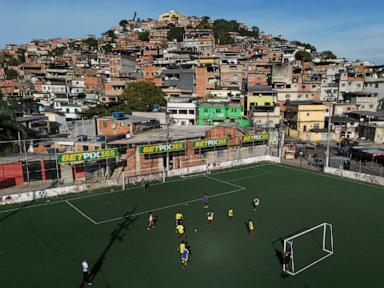
The stands across Brazil are shaking as the World Cup progresses, but the real, quiet earthquake is happening on millions of smartphone screens. Over twenty-five million Brazilians now participate in the country’s newly regulated sports betting market, an industry that generated over 37 billion reais in its first official year. What was sold as a progressive fiscal victory to claw back tax revenue has mutated into a structural debt crisis. This is no longer a localized problem of sports integrity. It is an economic siphon pulling billions out of the pockets of the poorest citizens and altering the nature of consumer credit across Latin America.
The explosion of the regulated market since its official launch has exposed deep cracks in the social fabric. While international operators celebrated the transition from the black market, the immediate fallout landed squarely on the country’s most vulnerable populations.
The Pix Siphon and the Welfare Leak
The problem started with efficiency. The integration of Brazil’s instant payment system, Pix, made depositing money into online betting platforms immediate. It also made losing that money immediate. Central Bank data revealed that billions of reais were transferred to betting accounts by recipients of Bolsa Família, the government’s flagship welfare program designed to combat extreme poverty.
Policymakers panicked. The Ministry of Finance implemented a strict ban preventing welfare recipients from using state benefits for fixed-odds betting. But blocking digital transfers based on specific welfare accounts is a logistical nightmare that relies heavily on the compliance of private operators. The money is fungible. A recipient can withdraw cash or shuffle funds through secondary bank accounts, bypassing the automated blocks.
This financial drainage has reshaped retail behavior. Local shop owners from Salvador to São Paulo report a noticeable drop in the purchase of basic household goods. Money that previously went toward food, clothing, and small-scale community commerce is now being vaporized in the digital accounts of licensed betting conglomerates.
The Myth of the Level Playing Field
The official narrative from the betting industry focuses heavily on compliance, licensing fees, and sports integrity. The government successfully collected billions of reais in authorization fees, requiring a steep 30 million reais payment for a five-year operating license. On paper, this creates a secure, transparent environment.
The reality on the ground contradicts this polished corporate vision. For every licensed brand running prime-time advertisements during the World Cup matches, dozens of illegal offshore sites continue to target citizens via social media networks. The Secretária de Prêmios e Apostas blocked over 25,000 illegal websites, but new domains appear within hours.
Licensed operators argue they are victims of unfair competition, facing high corporate tax burdens while bad actors operate with impunity. The tax rate is scheduled to climb to 15 percent, with politicians pushing for further hikes to fund expanding social investment packages. This escalating tax pressure creates a dangerous paradox. As taxes on legal companies rise, the incentives for consumers to seek out illegal platforms with better odds increase.
Debt Relief Interventions and Corporate Pushback
The executive branch is scrambling to contain the bleeding. A new federal debt renegotiation program named Desenrola Adimplentes has been introduced to help financially vulnerable citizens clear their names. To stop the cycle of gambling-induced insolvency, the government introduced a radical countermeasure. Any citizen who enrolls in the debt relief program faces an automatic six-month ban across all legal betting platforms in the country.
This intervention treats gambling addiction as a direct threat to macroeconomic stability rather than a private vice. It is an admission that the state cannot afford to bail out consumers while allowing sportsbooks unrestricted access to their wallets.
The industry is pushing back. The Brazilian Football Confederation and various club leadership groups have quietly expressed alarm at proposals to completely rewrite or repeal the current betting framework. Sports betting sponsorship has become the lifeblood of modern Brazilian football. Stripping these funds away during a World Cup cycle would jeopardize the financial viability of major clubs, affecting everything from stadium maintenance to player transfers.
Biometrics and the Privacy Tradeoff
To comply with strict government mandates, operators now require mandatory biometric face matching during player onboarding. A user cannot simply upload a photo of an ID card. They must take a live selfie cross-referenced in real-time with the national tax database.
This has turned betting apps into massive repositories of sensitive biometric data. While it effectively curbs underage gambling and multi-accounting fraud, it creates an enormous cybersecurity target. In a country already plagued by sophisticated digital banking fraud, the accumulation of millions of verified facial profiles by private gambling companies presents a massive corporate liability.
The current public debate remains hyper-focused on match-fixing and tournament integrity. Yet the underlying crisis is one of domestic engineering. Brazil has built one of the most technologically advanced, highly taxed, and rapidly growing gambling ecosystems on earth. It has done so without fully understanding that when an entire population treats a smartphone app as a financial investment tool, the house always wins, and the local economy loses.
The government's next moves will determine whether this regulatory experiment stabilizes or collapses under the weight of consumer insolvency. Tighter advertising restrictions are currently being drafted in Brasília to limit public exposure during broadcasts. For millions of indebted households, the intervention may already be too late.