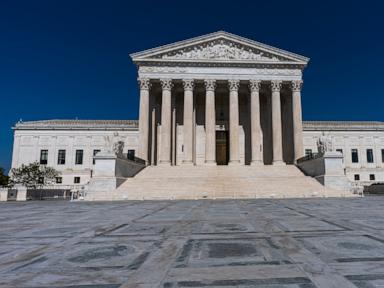
The constitutional consensus that has anchored American immigration law for generations is fracturing from within. While casual observers view the legal battle over birthright citizenship as a routine partisan skirmish, the deep ideological fissures exposed within the Supreme Court reveal a much more volatile reality. The high court is no longer merely interpreting the text of the Fourteenth Amendment. Instead, the justices are locked in a fundamental war over the very definition of American identity, signaling a willingness to upend over a century of legal precedent. This brewing judicial realignment threatens to destabilize the legal status of millions and reshape the demographic future of the nation.
For decades, the conventional understanding of the Citizenship Clause seemed absolute. Anyone born on United States soil was automatically a citizen. That baseline survived shifting political tides, executive orders, and legislative broadsides. But beneath the surface, a sophisticated, well-funded legal movement has been quietly chipping away at this foundation, waiting for a judiciary receptive to radical reinterpretation.
The current division among the justices goes far beyond simple policy disagreements. It exposes an irreconcilable conflict between competing legal methodologies that can no longer coexist quietly.
The Fiction of the Settled Precedent
Legal textbooks often present the 1898 landmark case United States v. Wong Kim Ark as the final word on the matter. That ruling affirmed that the Fourteenth Amendment applies to children born in the United States to foreign nationals. For more than one hundred and twenty years, that decision served as the bedrock of birthright citizenship.
It was a fragile peace. The text of the amendment contains a crucial phrase that has become the primary battleground for modern restrictionists: "subject to the jurisdiction thereof."
Fourteenth Amendment, Section 1:
"All persons born or naturalized in the United States, and subject to the jurisdiction thereof, are citizens of the United States and of the State wherein they reside."
The brewing crisis stems from how different factions on the bench interpret those five words. The traditional consensus holds that "subject to the jurisdiction" simply means being bound by American laws. If you commit a crime on US soil, you are prosecuted under US law. Therefore, you are under its jurisdiction.
The revisionist wing of the court argues something entirely different. They contend that the phrase requires a political allegiance, not just a legal obligation. Under this theory, children of undocumented immigrants, or even temporary visa holders, do not possess this allegiance. They argue that the authors of the amendment never intended to grant automatic citizenship to the children of foreign nationals who entered the country without permission.
This is not a minor academic debate. It is a structural assault on the principle of stare decisis, the doctrine that obligates courts to follow historical precedent. When a court shows a willingness to revisit doctrines once considered unassailable, the entire legal framework becomes unstable.
The False Promise of Originalism
The internal rift on the court highlights a glaring contradiction within the conservative legal movement itself. For years, originalism was championed as a neutral methodology designed to constrain judicial activism by focusing strictly on the original public meaning of the constitutional text at the time of its adoption.
The debate over birthright citizenship has turned originalism against itself.
On one side, conservative textualists look at the plain words of the Fourteenth Amendment and find no exceptions for the immigration status of parents. They note that the text explicitly excludes only very specific groups, such as the children of foreign diplomats or Native Americans living on tribal lands at the time. To them, expanding those exclusions requires a constitutional amendment, not a judicial decree.
On the other side, an aggressive strain of original intent focused heavily on historical context argues that the Reconstruction-era framers were solely focused on securing the citizenship of newly freed slaves. They assert that the authors could not have envisioned modern immigration patterns or the concept of unlawful entry as it exists today.
This divide destroys the myth that originalism yields predictable, objective outcomes. Instead, the court has split into factions that weaponize history differently. One side uses historical dictionaries to enforce a literal reading, while the other curates historical debates to justify a restrictive outcome. The result is total instability.
The Operational Fallout for Corporate America and Local Infrastructure
The consequences of this judicial uncertainty extend far beyond the walls of the Supreme Court. The mere possibility of a rollback of birthright citizenship sends shockwaves through the American economy and municipal governance.
Consider the immediate administrative nightmare for state and local governments. Currently, a birth certificate issued by a hospital serves as prima facie evidence of citizenship. It is an efficient system.
If the court validates a restrictive reading of the Fourteenth Amendment, the birth certificate loses its ultimate authority. Hospitals and vital statistics bureaus would be forced to verify the legal status of parents before issuing a definitive citizenship credential. Local bureaucrats would effectively become frontline immigration enforcement agents.
The business community is equally unprepared for this shift. Modern corporate compliance relies heavily on the I-9 verification process to ensure a legal workforce. A rolling back of birthright citizenship would create a tiered class of individuals born in the United States whose legal right to work is contingent on historical documentation regarding their parents' entry decades prior.
- Title Insurance and Property Rights: Real estate transactions rely on clear chains of title and ownership rights, which are deeply tied to citizenship status in various jurisdictions.
- Labor Supply Stability: Industries ranging from agriculture to technology rely on the predictable influx of workers who enter the economy with full legal rights from birth.
- Tax Base Erosion: Creating a permanent underclass of residents without access to formal legal status drives economic activity into the underground economy, draining municipal tax revenues.
The financial sector has largely ignored these risks, operating under the assumption that the status quo is permanent. That is a dangerous miscalculation.
Shifting Strategies in the Lower Courts
The division at the top has signaled to ambitious conservative litigators in the lower courts that the door is wide open. For decades, challenges to birthright citizenship were dismissed out of hand as frivolous. Now, a coordinated strategy is underway to feed the Supreme Court the exact case it needs to force a definitive ruling.
State attorneys general are crafting localized statutes designed to deny state-level benefits to children of undocumented immigrants born within their borders. These laws are intentionally unconstitutional under current precedent. That is precisely the point. The objective is to provoke a lawsuit, lose in the lower courts, and appeal the case to a Supreme Court that has shown a distinct appetite for dismantling long-standing jurisprudence.
This bottom-up strategy copies the blueprint used to overturn reproductive rights. It relies on relentless incrementalism, passing state laws that test the boundaries of judicial tolerance until the supreme bench feels emboldened to take the final step.
The rift among the justices ensures that this strategy will continue. When the highest court sends mixed signals, it acts as an accelerant for activist litigation across the country.
The Global Precedent of Affirmative Nationality
To understand the isolation of the American model, one must look beyond its borders. The United States is one of the few developed nations that maintains an unrestricted policy of jus soli, or birthright citizenship by soil. Most European nations long ago transitioned to jus sanguinis, where citizenship is determined by the nationality of the parents.
The domestic movement to end birthright citizenship frequently points to the international model as proof that the American system is an anomaly. They argue that transitioning to a merit- or parentage-based system would align the country with global standards.
This argument ignores the profound historical and social context of the American experiment. European nations built their identities on shared ethnicity and ancient geographic boundaries. The United States constructed its identity on a legal framework designed to integrate diverse populations and prevent the formation of hereditary castes.
Dismantling birthright citizenship would not align the nation with Europe. It would instead create a domestic crisis unique in its scale, leaving millions of individuals stateless within the borders of their own birth.
The sharp rifts among the Supreme Court justices are not a temporary disagreement over legal nuance. They are the opening tremors of a systemic shift that threatens to redraw the boundaries of American law and society, leaving the very concept of citizenship hanging in a precarious balance. Unexpectedly, the ultimate decision may not come from a place of consensus, but from a raw exercise of judicial power that leaves the country permanently altered.