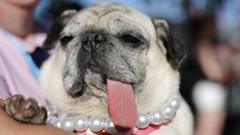
Every August at the Sonoma County Fairgrounds in Santa Rosa, California, a peculiar ritual plays out under the blinding flashbulbs of international media. A female pug named Jinny Lu was crowned the World's Ugliest Dog for 2026, taking home five thousand dollars and a scheduled flight to New York for morning television. The headlines lean into the eccentric carnival atmosphere. They treat the event as a harmless, heartwarming celebration of unconventional aesthetics. Millions scroll past pictures of bulging eyes, crooked tongues, and hairless bodies, smiling at the triumph of the underdog.
Beneath the wholesome veneer of rescue advocacy lies a deeply uncomfortable cultural tension. This competition sits at the strange intersection of commercial exploitation, systemic animal overbreeding, and our insatiable desire to find entertainment in genetic failure. We tell ourselves it is all for charity. We repeat the organizers' line that the event raises awareness for pet adoption and highlights the inner beauty of neglected animals. Yet, looking closer at the lineage of the contestants reveals a darker trajectory. We are not just celebrating survivors. We are actively rubber-stamping the biological disasters manufactured by human vanity. Discover more on a related topic: this related article.
The Manufacturing of Physical Distress
To understand the mechanics of the event, one must look past the red carpet and examine the veterinary reality sheets. A massive portion of the competing dogs belong to brachycephalic breeds or hairless mutations intentionally propagated by breeders for centuries. Pugs, Chinese Cresteds, and various bulldog mixes dominate the roster year after year.
These physical traits are not random quirks of nature. They are the direct result of selective breeding choices that prioritize aesthetic exaggeration over basic biological function. The compressed skulls, protruding eyes, and folded skin flaps that make a dog competitive for this specific title are the exact same features responsible for chronic respiratory distress, dental overcrowding, and agonizing skin infections. Additional reporting by BBC News explores comparable perspectives on this issue.
When an audience cheers for a dog whose tongue permanently lolls out of its mouth due to jaw deformities, they are applauding a anatomical malfunction. The line between cherishing a rescue animal with a hard past and turning a genetic defect into a spectator sport has grown dangerously thin. Organizers emphasize that the competition rewards personality and spirit, which is true. The handlers love their pets fiercely, and the animals are treated with immense affection backstage. But the cultural signal sent to the wider public remains wildly contradictory. We condemn puppy mills on one hand while paying top-dollar admission fees to gawk at the physical extremes those very mills produce.
The Rescue Paradox
The narrative arc of almost every top contender leans heavily on a rescue background. Jinny Lu's story is a harrowing tale of survival. Activists found her trapped in a wooden box during freezing weather in South Korea, allegedly facing a grim fate before she was intercepted and brought to the United States. Other contestants regularly feature similar histories of abandonment, abuse, or miraculous recovery from severe medical trauma.
This redemption arc acts as the primary moral shield for the institution. How can anyone criticize a show that pulls broken animals from the brink and showers them in prize money?
It works because the public loves a redemption narrative. However, it glosses over the systemic pipeline that keeps these shelters full. Brachycephalic and specialized toy breeds have surged in popularity over the last two decades. Uninformed buyers purchase them online or from backyard breeders without realizing the immense veterinary costs required to keep a severely deformed animal alive. When the medical bills mount or the breathing difficulties become too expensive to manage, these dogs end up in municipal shelters.
The stage in Santa Rosa functions as a bizarre pressure valve for this crisis. It brings visibility to rescue organizations, but it simultaneously normalizes the existence of dogs engineered to suffer. By framing their appearance as a joke or a quirky badge of honor, the broader culture avoids confronting the uncomfortable ethics of continuing to breed animals that cannot breathe, walk, or see properly.
Shifting Cultural Appetites
Public reactions to the annual pageant have evolved significantly over its fifty-year history. Decades ago, the event was a localized county fair novelty, raw and unpolished. Today, it is a global digital phenomenon optimized for viral video clips and morning show segments.
This commercialization alters the fundamental nature of the gathering. What once felt like a quirky community gathering now carries the weight of a multi-million-dollar PR machine for pet product brands and tourism boards. When corporate sponsorships enter the ring, the messaging has to stay clean. It must remain strictly uplifting. Any critique of the underlying breeding practices is quickly drowned out by feel-good segments about inner beauty and unconditional love.
Media outlets eagerly play along. They package the winners into neat, digestible morning television spots that boost ratings and drive web traffic. The complexity of animal welfare gets flattened into a simple binary. You either love funny-looking dogs, or you are a joyless scold who hates fun.
This false choice prevents any genuine reckoning with the ethics of pet fashion. We refuse to ask whether breeding a dog with a skull so small its brain is crowded is actually a form of cruelty. We prefer to laugh at the resulting underbite and buy another plush toy.
The Financial Realities Behind the Ribbons
Let us look at the economics of the event. The prize money itself is modest. Five thousand dollars for the first-place winner barely covers a specialized canine dental surgery or a round of advanced pulmonary treatments. For the owners, the real value lies in the secondary media blitz. Book deals, sponsored social media channels, and local appearances often follow the crowning moment.
Meanwhile, the veterinary charities and rescue groups working behind the scenes shoulder the actual financial burden of fixing what human greed broke in the first place. These organizations operate on razor-thin margins, relying on donations to pay for corrective palate surgeries, skin treatments, and emergency extractions. They pick up the pieces after backyard breeders cash out on litters of deformed puppies.
The contest draws thousands of spectators who spend money on local hospitality, merchandise, and fair tickets. The economic engine relies entirely on the novelty of biological mutation. If every dog walked out with a standard muzzle and a healthy spine, the grandstand would empty out by sunset. The commercial viability of the spectacle is directly tied to the severity of the animals' physical abnormalities.
Confronting the Mirror
We keep returning to these events because they force us to confront our own relationship with physical perfection. Humans possess an innate psychological bias toward neoteny, the retention of infantile features. We love big eyes, short snouts, and helpless expressions. We love them so much that we are willing to break the biological machinery of an entire species just to get a closer look at a perpetual puppy face.
When we crown a winner in Santa Rosa, we are essentially crowning the ultimate victim of human aesthetic obsession. We look at the twisted limbs and the bulging eyes and we project our own capacity for redemption onto the beast. We tell ourselves that by loving the ugliest dog, we are proving our own moral superiority.
The brutal truth is that those dogs should never have had to look that way in the first place. Every wrinkled face and crooked jaw is a monument to selective human vanity, a living archive of generations of bad choices made in the name of cuteness. Until we stop treating animal genetics like a design sandbox for novelty items, no amount of prize money or morning show appearances will change the underlying tragedy. The applause fades, the cameras pack up, and the breathing difficulties remain.